Clear Sky Science · en
Identification and bioinformatic functional analysis of novel and known polymorphisms in the myostatin gene of Ukrainian Carpathian Mountain sheep
Why muscle genes in mountain sheep matter
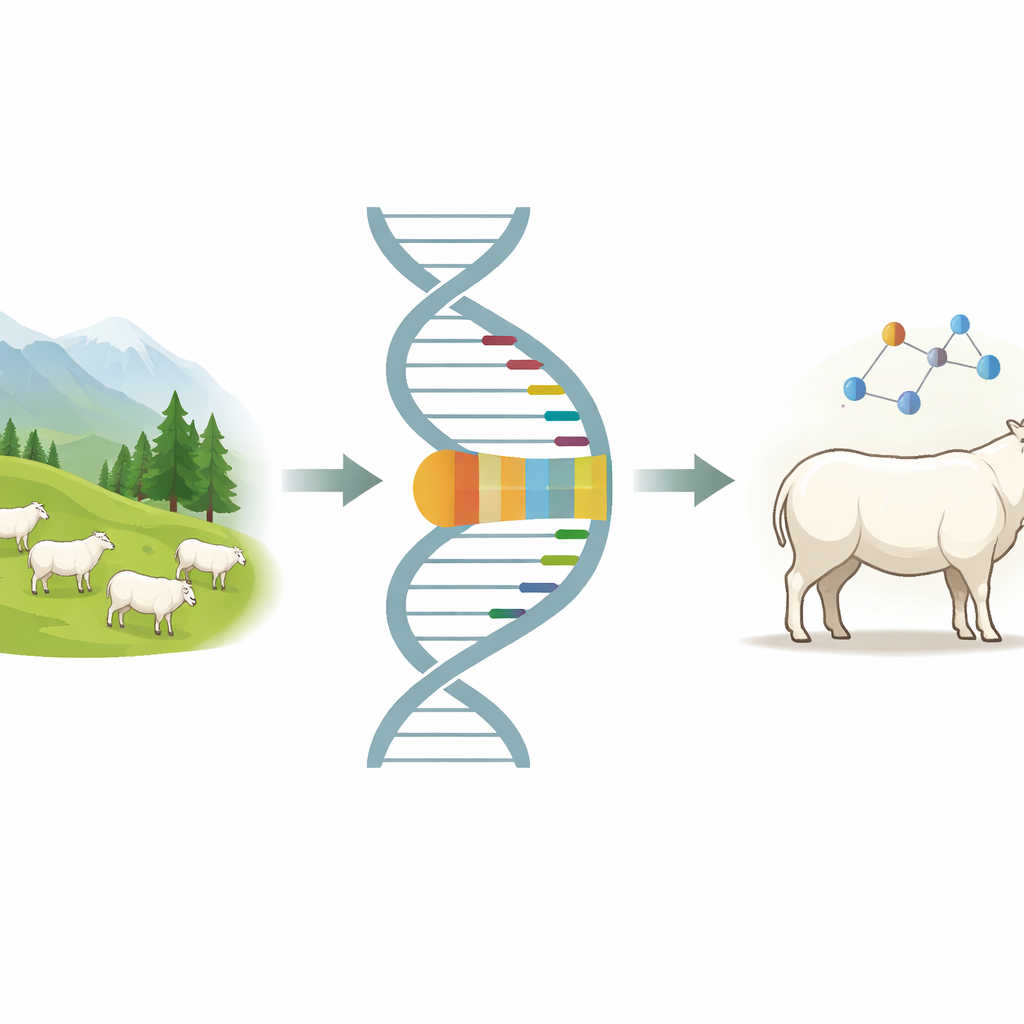
The sheep that graze high in Ukraine’s Carpathian Mountains are more than picturesque livestock. They are a hardy local breed that feeds families, supports traditional cultures, and must stay productive in a harsh climate. This study looks inside the DNA of these animals at a single powerful gene called myostatin, which helps control how much muscle an animal builds. By uncovering tiny differences in this gene and using computer models to predict their effects, the researchers hope to lay the groundwork for smarter, more sustainable breeding—producing sheep that grow well without losing their hard‑won resilience.
A key brake on muscle growth
Myostatin acts like a brake pedal for muscle growth in many mammals, including humans, cattle, and sheep. When this brake is weakened or broken, animals can develop unusually bulky muscles, a trait that has already been linked to specific myostatin mutations in some breeds of cattle and sheep. But many DNA changes in and around the myostatin gene lie in so‑called “non‑coding” stretches that do not directly alter the protein itself. Instead, they can subtly affect how much of the gene is switched on, when, and in which tissues. Because muscle size strongly influences meat yield and feed efficiency, even small changes in this regulatory layer can have big economic and biological consequences.
A close look at a hidden DNA segment
The team focused on intron 1, a non‑coding portion inside the myostatin gene that has drawn increasing attention in livestock research. They collected blood from 54 purebred Ukrainian Carpathian Mountain sheep and sequenced a 1,062‑base‑pair stretch of this intron. Within it they found nine single‑letter DNA changes, known as single‑nucleotide polymorphisms, or SNPs. Eight of these had been reported previously in other breeds; one, located 283 bases after the first exon, was entirely new. Most of the altered letters were rare and appeared only in animals carrying one copy of the change and one normal copy, reinforcing that this region is generally quite conserved in this breed.
Patterns of variation in a traditional breed
By reconstructing longer DNA segments (haplotypes) that combine several SNPs, the researchers showed that one “reference” version of intron 1 dominated the population, accounting for nearly 88 percent of all haplotypes. The remaining variants were scattered across a handful of rare combinations. Compared with other breeds studied earlier, Ukrainian Carpathian Mountain sheep thus show unusually low diversity in this portion of myostatin, with most animals carrying the same standard sequence. The newly discovered SNP stood out: unlike the others, it displayed all three possible genotypes in the flock and deviated from the simple expectations of random mating, hinting at recent evolutionary forces or subtle population structure.
What computers reveal about molecular behavior
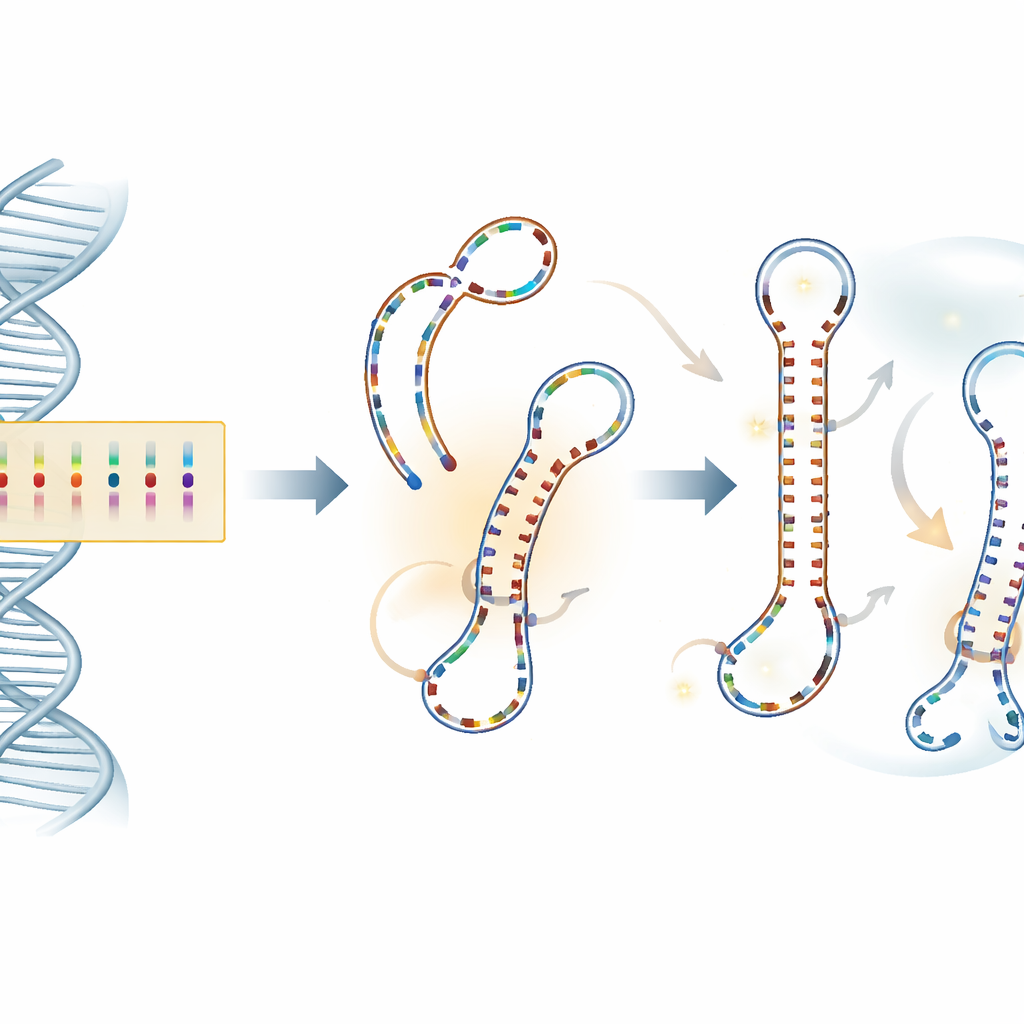
Finding variation is only the first step; the harder question is whether any of these DNA changes actually matter for how the gene behaves. To tackle this, the team used several layers of bioinformatic analysis. They modeled how each SNP might alter the folding and stability of the long RNA copy produced from the gene, how close the changes lie to binding sites for known regulatory proteins, and whether segments of the intron might fold into hairpin shapes that could serve as precursors for microRNAs—tiny RNA molecules that fine‑tune gene activity. For the most promising hairpin, which overlaps one particular SNP (c.373+607G>A), they went further and ran detailed molecular dynamics simulations, tracking how different alleles led the RNA structure to flex, compact, or bend over time in a simulated watery environment.
Two standout candidates for future breeding tools
Across these tests, two SNPs emerged as especially interesting: the previously known c.373+607G>A and the newly identified c.373+283T>C. Both are predicted to change the stability of the myostatin RNA in ways that could influence how the gene is processed and expressed. The 607 variant also appears to alter the three‑dimensional behavior of a candidate microRNA hairpin, potentially affecting whether such a regulatory molecule is made at all or how efficiently it is produced. Although none of these predictions prove that the SNPs change muscle or growth on their own, they provide concrete targets for future laboratory work and on‑farm association studies.
From DNA clues to better mountain sheep
For now, this research does not claim that any particular variant will give heavier carcasses or faster‑growing lambs. Instead, it offers a map: a first catalogue of myostatin intron 1 variation in Ukrainian Carpathian Mountain sheep and a ranked list of changes most likely to have real biological effects. With this map, future studies can test how these genetic markers relate to growth, meat quality, and adaptation to mountain conditions. Ultimately, combining traditional knowledge about this local breed with DNA‑based selection could help shepherds improve meat production while preserving the resilience and cultural value of their flocks.
Citation: Buslyk, T., Peka, M., Saienko, A. et al. Identification and bioinformatic functional analysis of novel and known polymorphisms in the myostatin gene of Ukrainian Carpathian Mountain sheep. Sci Rep 16, 14628 (2026). https://doi.org/10.1038/s41598-026-44326-6
Keywords: myostatin, sheep genetics, muscle growth, marker-assisted selection, Ukrainian Carpathian Mountain sheep