Clear Sky Science · en
A unified low-carbon cybersecurity framework integrating energy-efficient intrusion detection, lightweight cryptography, and carbon-aware scheduling for edge–cloud architectures
Why Cyber Safety and Climate Impact Now Go Hand in Hand
Every click, video stream, and smart sensor on our networks quietly consumes electricity. The systems that defend these networks, especially those that hunt for digital intruders, are among the biggest power users. As our lives shift to cloud services, smart homes, and connected cars, the question is no longer just “Are we secure?” but also “At what environmental cost?” This paper introduces GreenShield, a cybersecurity framework designed to keep hackers out while sharply cutting the energy use and carbon emissions of modern security tools.
The Growing Cost of Staying Safe Online
Modern intrusion detection systems sift through enormous volumes of network traffic to spot attacks. The most accurate versions rely on deep learning, a type of artificial intelligence that is powerful but energy-hungry. Running such systems continuously across edge devices, local hubs, and distant data centers means that security alone can account for a significant slice of global data-center electricity use. Because the carbon intensity of power grids varies widely from place to place and hour to hour, the same amount of electricity can produce very different climate impacts. Traditional designs focus almost entirely on catching attacks quickly; they rarely consider how much energy they burn or when and where that energy is cleanest.
A Layered Shield from Gadget to Cloud
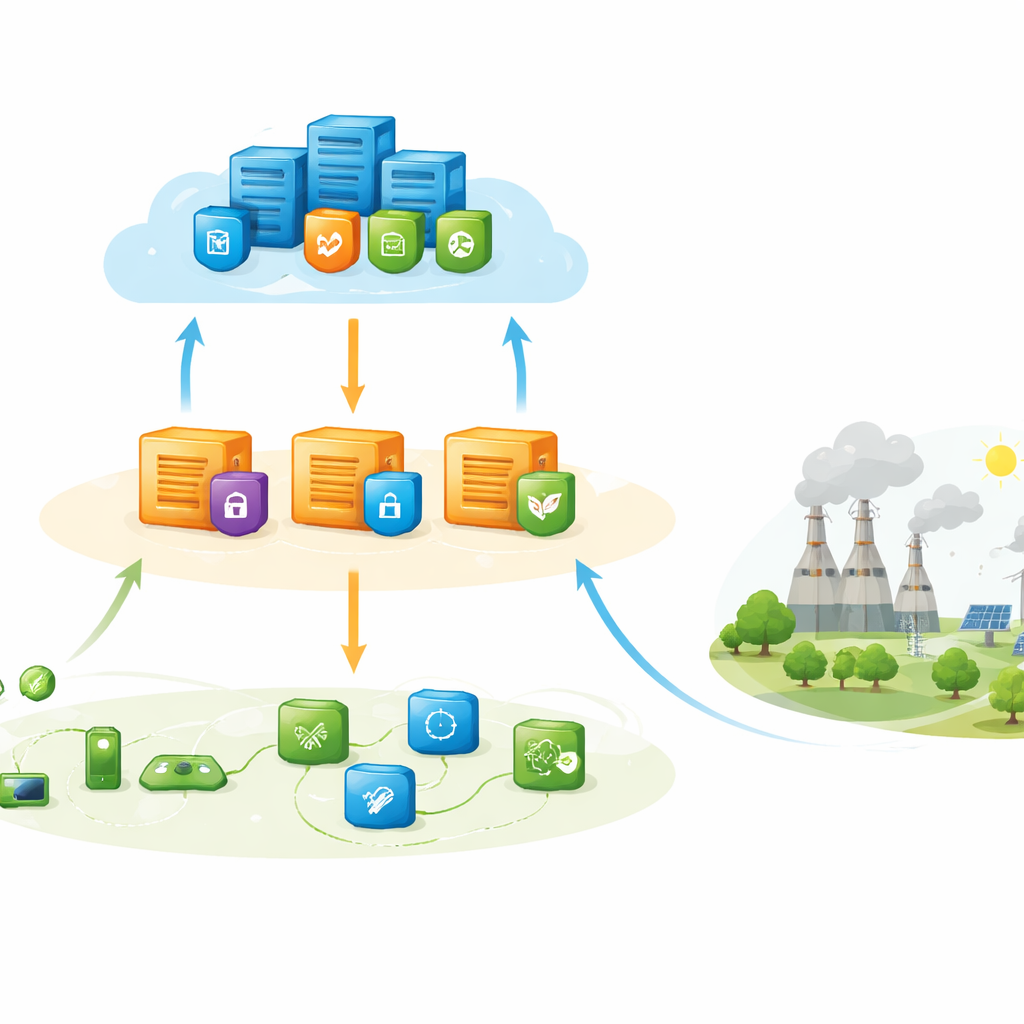
GreenShield tackles this problem by redesigning cybersecurity as an end-to-end, low-carbon service that stretches from tiny edge devices to large cloud servers. Edge devices such as sensors and gateways perform simple, fast checks using compact neural networks and lightweight encryption. Nearby fog nodes collect and refine these results, while powerful cloud servers coordinate global learning and scheduling. Across all three tiers, the framework weaves together four ideas: an energy-frugal attack detector, a streamlined encryption engine, a collaborative learning scheme that avoids shipping raw data, and a scheduler that prefers moments and locations where electricity is cleaner.
Smarter Brains That Use Less Power
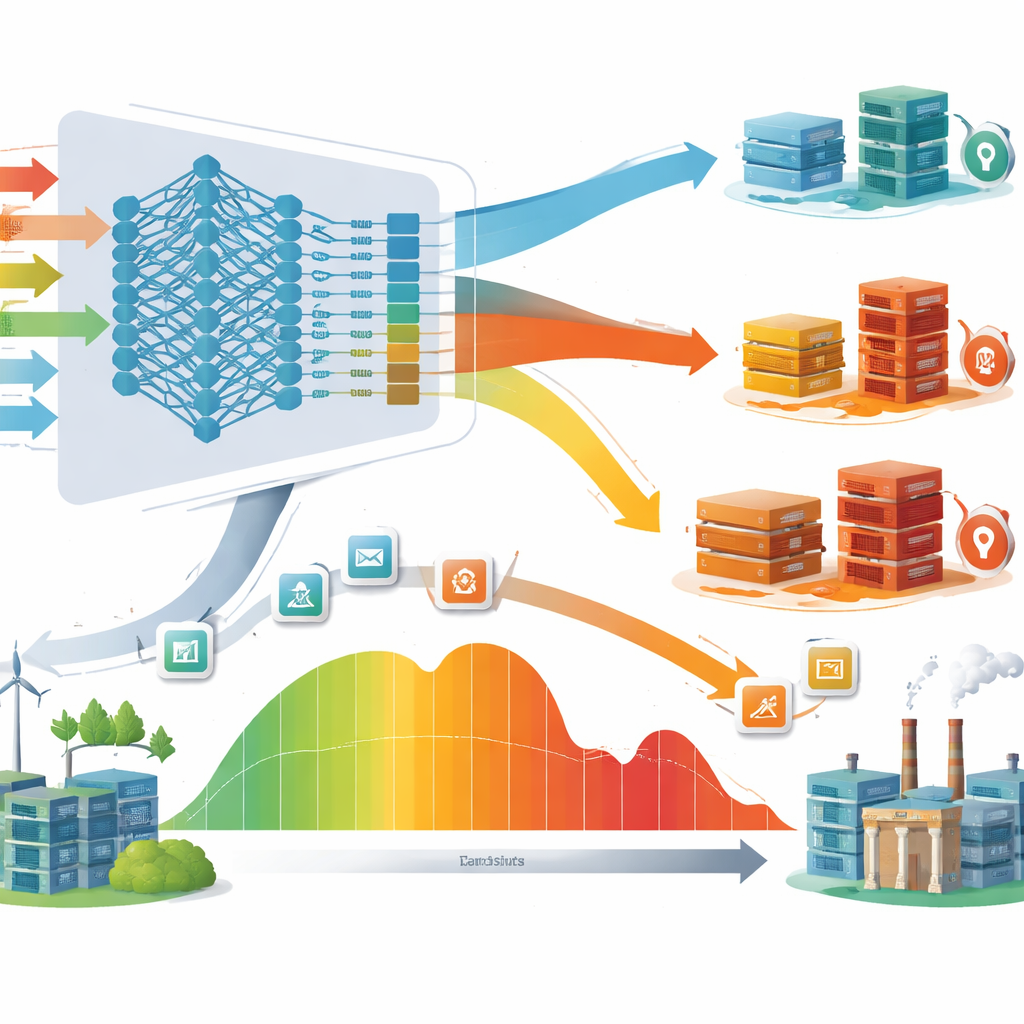
At the heart of GreenShield is an intrusion detector that learns from a large, accurate “teacher” neural network but runs as a smaller “student” model on constrained devices. This knowledge transfer preserves most of the teacher’s accuracy while slashing the number of calculations. GreenShield goes further by adjusting how precisely the student computes, in real time, based on current danger levels. During calm periods, it uses very compact numerical representations that are cheap to process; when attacks spike, it automatically switches to higher precision to avoid missing threats. Tests on two major cybersecurity datasets show that this design maintains about 98.7% detection accuracy while cutting the energy used for each decision by more than two-thirds on low-power hardware.
Working Together Without Sharing Secrets
To keep models up to date, GreenShield uses a form of collaborative training in which edge and fog nodes learn locally from their own traffic and share only model updates, not raw data. These updates are combined in a hierarchy: fog nodes first merge results from nearby devices, and then the cloud fuses summaries from many regions. A compression strategy that only sends the most important pieces of each update shrinks the communication load dramatically. This approach reduces network traffic and its associated energy use while preserving the accuracy and stability of the overall model, and it improves privacy because sensitive packets never leave their original sites.
Letting Clean Energy Guide Security Work
GreenShield’s scheduler adds a time-and-place dimension often missing from security design. It monitors forecasts of how carbon-intensive the power grid will be at different locations and hours, and then assigns security tasks—such as retraining models or running heavy analyses—to the nodes and times with more renewable energy. It respects strict limits on how quickly attacks must be detected, so urgent jobs are never delayed for the sake of emissions. In experiments that emulate grids ranging from coal-heavy to renewable-rich, this carbon-aware scheduling, combined with the other optimizations, cuts estimated operational emissions by up to 97.6% compared with a conventional deep learning-based intrusion detector, while still meeting real-time response needs.
A Safer Internet with a Smaller Footprint
The study concludes that strong cybersecurity and environmental sustainability do not have to be in conflict. GreenShield demonstrates that careful design—using smaller yet still sharp AI models, efficient encryption, collaborative learning, and smart timing of heavy tasks—can keep detection rates near state-of-the-art levels while dramatically reducing energy use and carbon output. For organizations trying to meet both security obligations and climate commitments, this framework offers a roadmap for turning security from a hidden energy drain into a visible part of a greener digital infrastructure.
Citation: Alshammari, A. A unified low-carbon cybersecurity framework integrating energy-efficient intrusion detection, lightweight cryptography, and carbon-aware scheduling for edge–cloud architectures. Sci Rep 16, 10603 (2026). https://doi.org/10.1038/s41598-026-44260-7
Keywords: green cybersecurity, intrusion detection, edge cloud computing, energy efficient AI, carbon aware computing