Clear Sky Science · en
Evaluating iSAT climate-informed agro-advisories for farm decisions and system performance in Senegal’s drylands
Why Smarter Weather Advice Matters for Farmers
For many families in Senegal’s drylands, a single failed rainy season can mean going hungry. Most smallholder farmers rely on rain alone, have little savings, and often receive weather forecasts that are too vague or too late to guide real farm decisions. This study looks at a new way of turning climate and weather information into simple, spoken advice delivered directly to farmers’ phones. The goal is to see whether this tool, called the Intelligent Agricultural System Advisory Tool (iSAT), can help farmers grow more food, spend less on inputs, and better withstand a changing climate.
A Phone Call Before the Storm
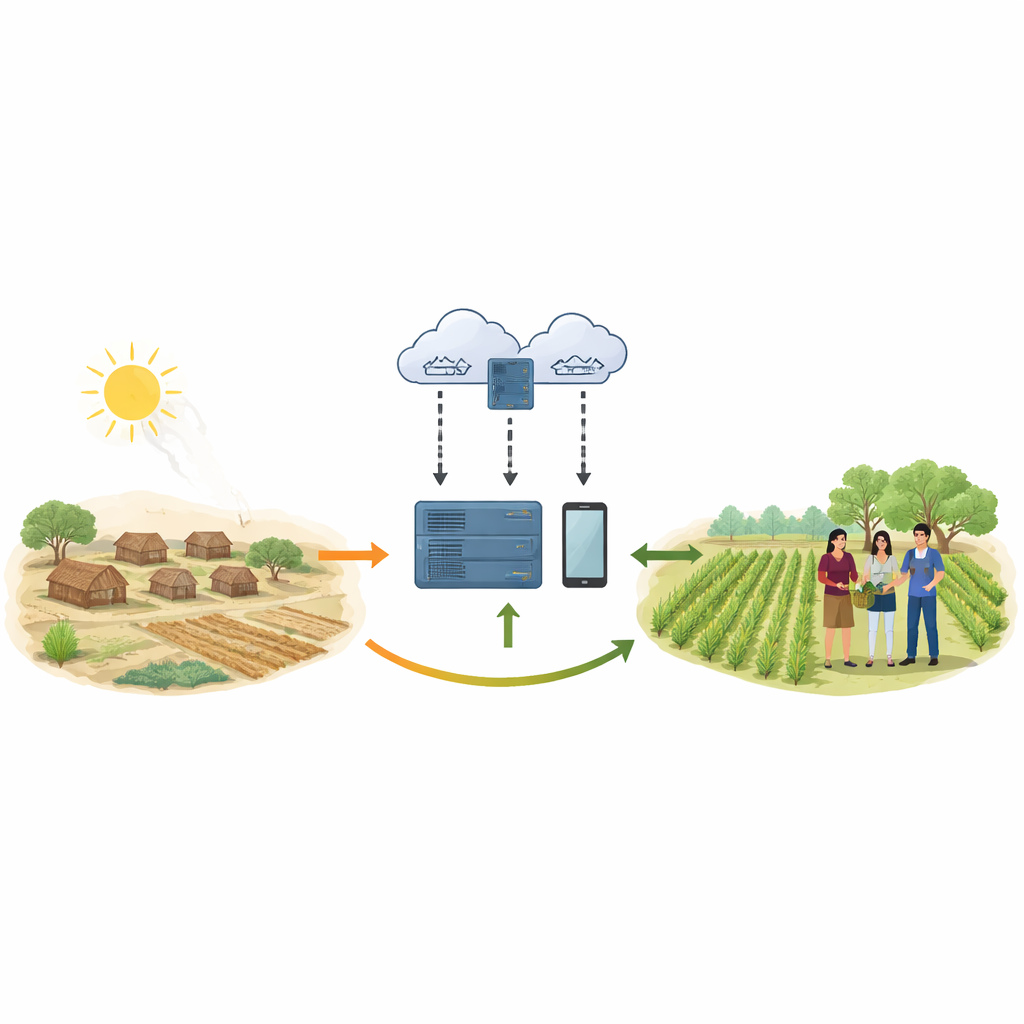
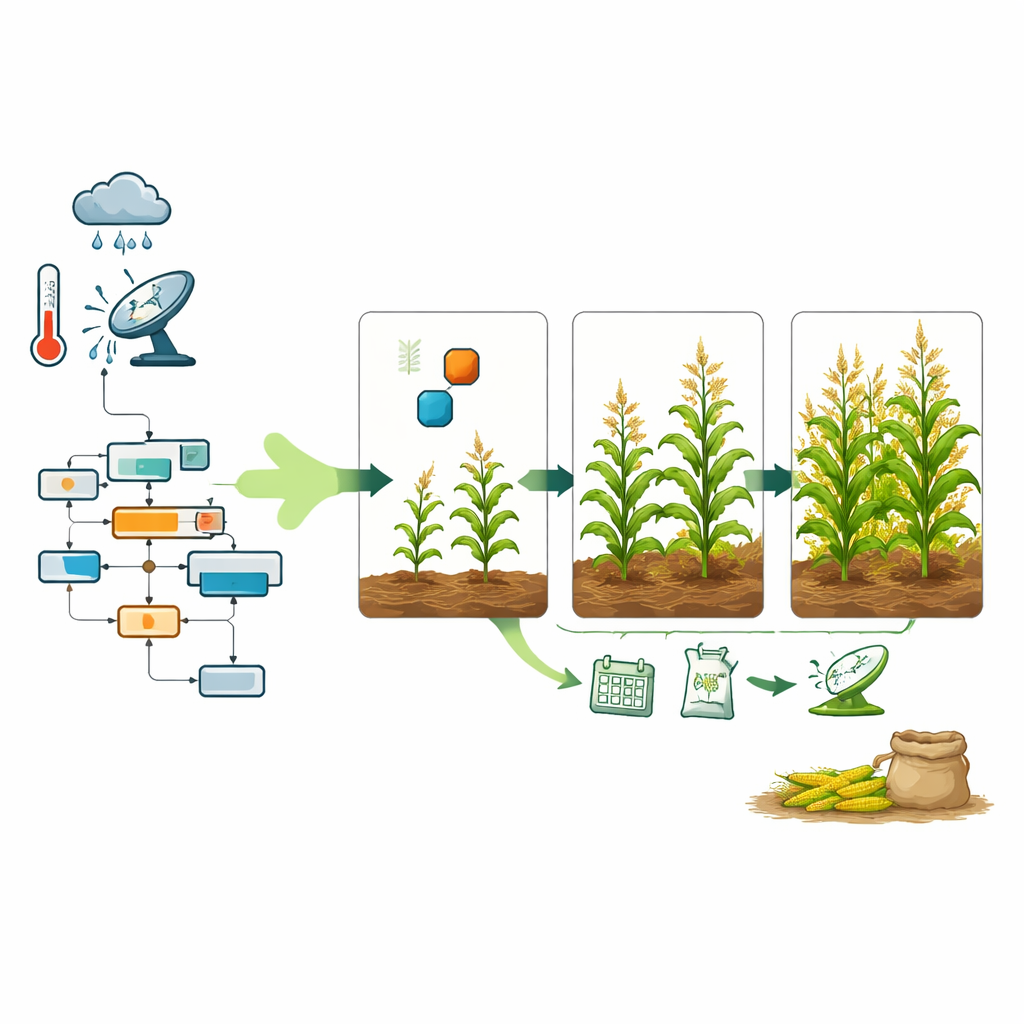
Instead of sending farmers complex charts or text messages, iSAT delivers short voice calls in local languages such as Wolof, Manding, and Pula. These weekly calls provide guidance before the season starts and throughout the growing period. Before planting, farmers hear advice on which crops and varieties are most suitable for the coming season, when to plant, and how to prepare their soil. During the season, they receive tips based on recent rain and short-term forecasts—such as whether to apply fertilizer now or wait, how to manage weeds and pests, and how to protect fields from too much or too little water. Behind the scenes, iSAT blends historical climate records, ongoing weather observations, and seasonal forecasts, then runs them through rule-based decision trees that have been tailored with input from local agronomists, extension workers, and the farmers themselves.
Testing the Tool in Real Villages
The researchers deployed iSAT in 18 villages across three regions of Senegal—Kaffrine, Louga, and Thies—covering four major agroecological zones with different rainfall patterns and soils. More than 2,700 farmers subscribed to the weekly calls during the 2022 and 2023 rainy seasons. To find out whether the advisories truly made a difference, the team compared these “treatment” villages with carefully matched “control” villages that did not receive iSAT. They used household surveys, focus group discussions, and statistical matching methods to ensure the comparison groups were similar in climate, soils, farm size, and access to services. The surveys captured crop yields, labor and input costs, and whether farmers adopted practices often described as climate-smart, such as crop diversification, better soil management, or improved water conservation.
More Grain, Lower Costs
The results show that simple, well-timed phone calls can pay off. Farmers who received iSAT advisories harvested substantially more from key rainfed crops. Millet yields were on average 41% higher and groundnut yields 21% higher than those of comparable farmers without access to iSAT, and the overall distributions of yields differed strongly between the two groups. At the same time, advisory users spent about 24% less on inputs and labor per hectare. By better timing fertilizer and pesticide applications and avoiding wasted effort, farmers increased their net benefits. For millet, villages using iSAT shifted from a negative gross margin to a healthy positive return over the two seasons. Cowpea yields did not differ significantly between groups, likely because this low-input crop already requires relatively little in-season management and was grown by fewer advisory users, many of them women with limited land and inputs.
Helping Farmers Plan and Adapt
Beyond yields and profits, farmers reported that the advisories made their decisions easier and less stressful. Those receiving iSAT were more proactive with pre-season planning—choosing crops, setting budgets, and preparing land with climate risks in mind—and more confident in their day-to-day choices during the season. Many also used the guidance to adopt at least one climate-smart practice, such as improved soil conservation. Still, not everyone benefited equally. Women represented only about 23% of subscribers and often had smaller plots and fewer resources. Even so, women who did use the service reported similar cost reductions to men and felt that it supported their role in crop and input decisions, suggesting room for greater gains if access barriers can be reduced.
What This Means for the Future
To a non-specialist, the message of this study is straightforward: when detailed climate science is translated into clear, local, spoken advice that arrives just when farmers need it, they can grow more food with fewer resources, even under harsh and shifting weather. iSAT shows that relatively simple rule-based tools, if grounded in good climate data and co-designed with farmers and extension agents, can work in data-poor, low-literacy settings. Scaling up such services will require better weather and soil monitoring networks, reliable digital platforms, and strong local partnerships, along with efforts to ensure women and the poorest farmers can access and act on the advice. If those conditions are met, climate-informed phone advisories could become a powerful, low-cost pillar of climate-smart agriculture across Africa’s drylands.
Citation: Joseph, J.E., Whitbread, A.M., Akinseye, F.M. et al. Evaluating iSAT climate-informed agro-advisories for farm decisions and system performance in Senegal’s drylands. Sci Rep 16, 10493 (2026). https://doi.org/10.1038/s41598-026-44231-y
Keywords: climate-smart agriculture, smallholder farmers, digital agro-advisories, Senegal drylands, weather-based farming decisions