Clear Sky Science · en
Bovine tuberculosis resulting from infection with Mycobacterium orygis in a closed herd of Indian water buffalo (Bubalus bubalis)
Why sick buffalo matter to us
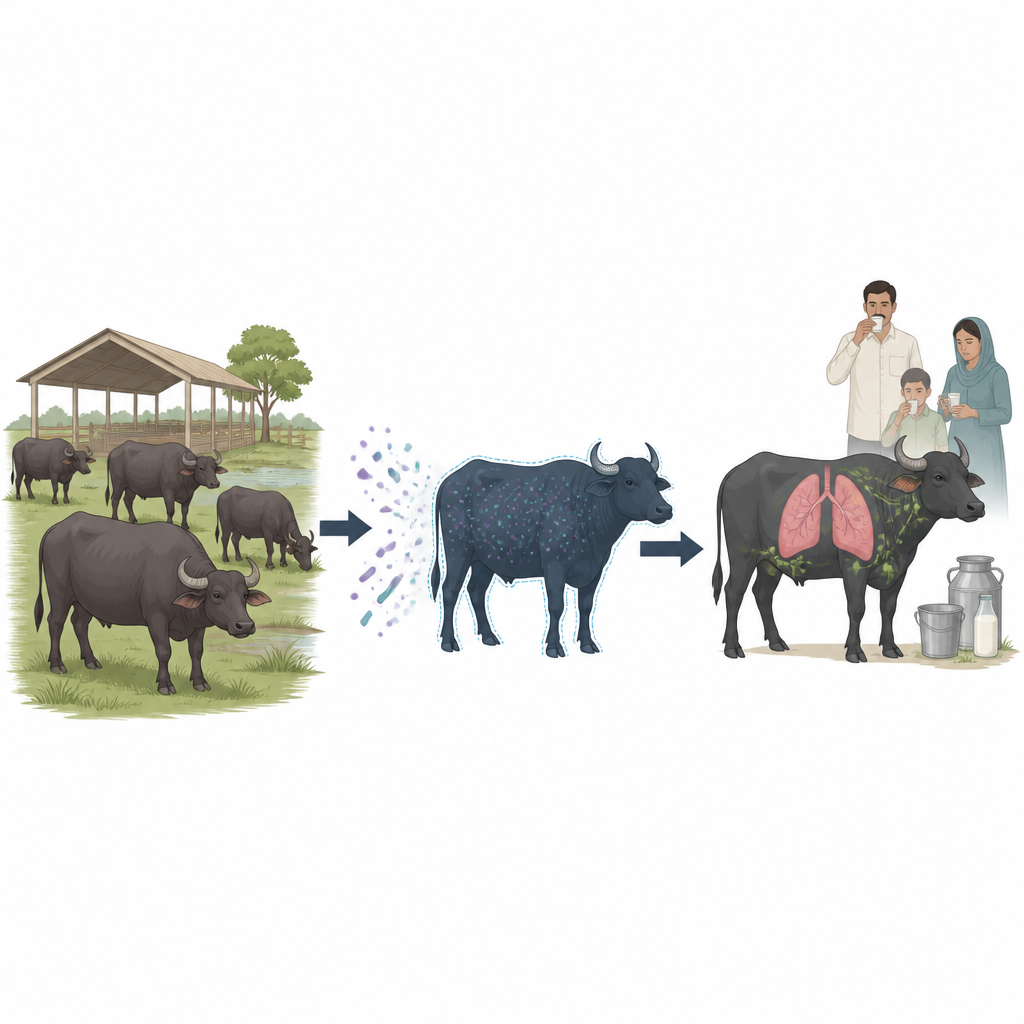
Indian water buffalo supply much of the milk that millions of families drink every day. This study looks at a quiet but serious disease, bovine tuberculosis, caused here by a germ called Mycobacterium orygis. Understanding how this infection behaves in buffalo, and how well current tests find it, helps protect animal welfare, dairy production, and the people who live and work with these animals.
A closer look at a hidden herd problem
Researchers examined a single large herd of 279 female water buffalo in the Indian state of Haryana. The herd was considered closed, meaning animals were rarely brought in from outside, which makes it a good setting to study how disease persists and spreads within a group. The team first used standard screening tools for bovine tuberculosis: two kinds of skin tests on the neck and an interferon gamma blood test, which measures the animal’s immune response to tuberculosis proteins. These tests flagged 26 buffalo as suspect; 20 of them were positive on follow up, and 15 non-pregnant adults with consistent positive results were chosen for intensive study, including full post-mortem exams.
What the post-mortem exams revealed
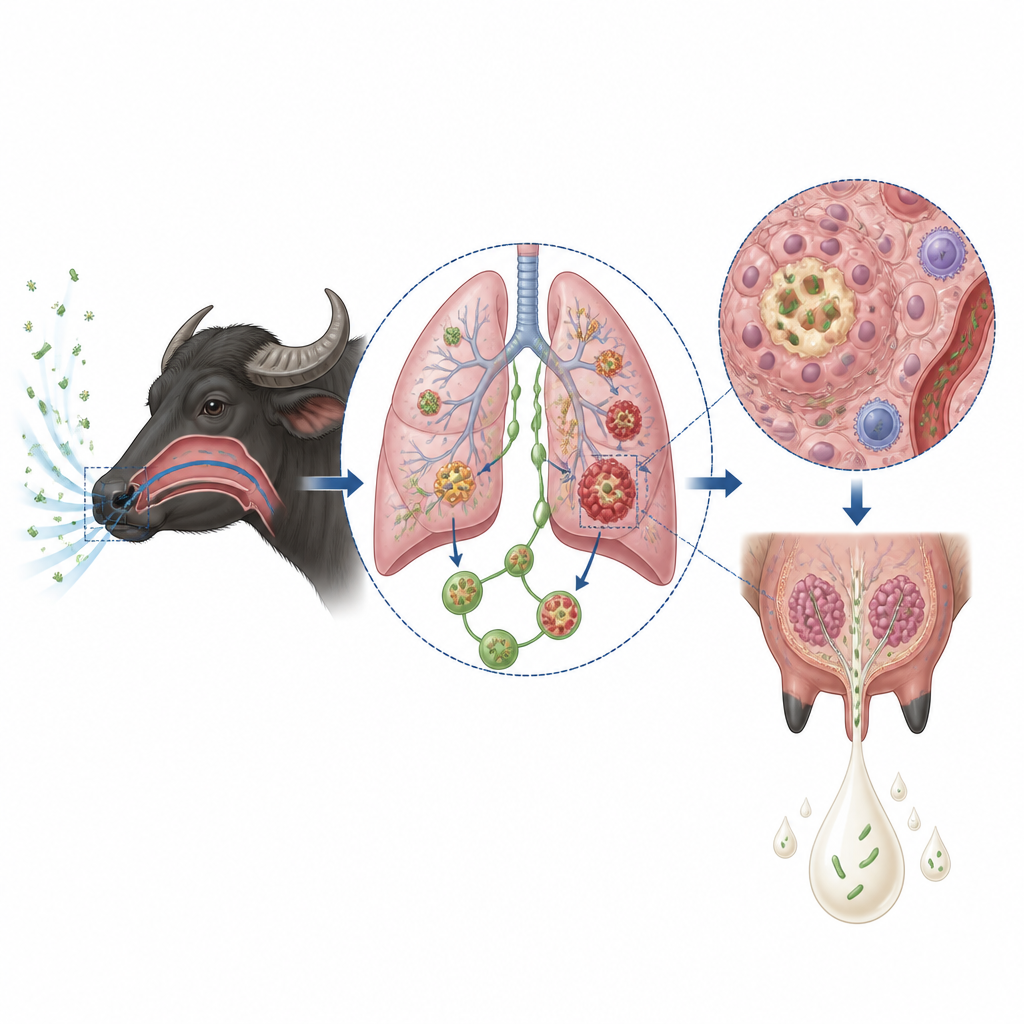
Inside the bodies of these outwardly healthy animals, the disease told a different story. Thirteen of the 15 buffalo showed clear visible signs of tuberculosis during necropsy, especially in the lungs and nearby lymph nodes. The lungs often contained yellow-white nodules and clusters that felt gritty when sliced, a sign of tissue death and mineral deposits. The affected lymph nodes in the chest and head were enlarged and filled with cheesy, crumbly material. Under the microscope, 14 animals had classic tuberculosis patterns: tight clusters of immune cells forming rounded nodules, areas of dead tissue, and in advanced cases, widespread scarring and calcification. Special stains revealed pink, rod-shaped bacteria in many of these lesions.
Tracking the germ and its paths
To pin down which tuberculosis germ was present, the team combined several laboratory methods. They attempted to grow mycobacteria from pooled tissue samples from each animal and tested individual organs by a DNA-based method known as PCR. Nine buffalo yielded live mycobacterial cultures, and DNA testing showed that eight of these were Mycobacterium orygis while one sample contained a mix of M. orygis, M. tuberculosis, and another related species. Overall, DNA from the tuberculosis complex was found in tissue from nine animals. Notably, some buffalo with many visible lesions had strong positive lab results, while others with fewer or no visible lesions still carried the germ, showing how uneven the infection can be inside a single herd.
Surprising signs in udders and genetic clues
One unexpected finding involved the udders. None of the udders looked abnormal by eye or under a standard microscope, yet DNA from tuberculosis bacteria appeared in udder tissue from five animals. Those buffalo tended to show stronger skin test reactions and had more organs testing positive overall, suggesting udder infection may signal a more widespread disease. Because raw milk is still widely consumed in parts of India, such silent udder infection could matter for human exposure. The team also sequenced the full genomes of nine isolates and compared them with other strains from around the world. The buffalo germs fell into two clearly different genetic clusters, even though they came from a single closed herd. This pattern hints at either more than one introduction of M. orygis into the herd’s past or slow genetic branching of the germ over time within the herd.
What this means for farmers and public health
Overall, the study shows that Mycobacterium orygis can cause typical bovine tuberculosis in Indian water buffalo, that standard tests are helpful but not perfect, and that infection may quietly involve udders and multiple body sites. Finding two distinct genetic branches of the germ in one herd underlines how complex its spread can be. For a lay reader, the takeaway is that better testing, closer tracking of infection, and careful control measures in buffalo herds are important not just for animal health and milk yields, but also as part of a broader "One Health" effort to reduce tuberculosis risks shared between animals and people.
Citation: Jangir, B.L., Kumar, M., Kumar, R. et al. Bovine tuberculosis resulting from infection with Mycobacterium orygis in a closed herd of Indian water buffalo (Bubalus bubalis). Sci Rep 16, 15855 (2026). https://doi.org/10.1038/s41598-026-44186-0
Keywords: bovine tuberculosis, Indian water buffalo, Mycobacterium orygis, dairy herd health, zoonotic TB