Clear Sky Science · en
Self-care management in patients with heart failure in Nakhon Si Thammarat Province, Thailand: a descriptive qualitative study
Why everyday care at home matters
Heart failure is often described in terms of hospital machines and powerful drugs, but most of the work of staying well actually happens far from the hospital, in people’s homes. This study looks closely at how men and women living with heart failure in Nakhon Si Thammarat Province, Thailand, look after themselves day to day. By listening in detail to their experiences, the researchers show how simple habits—such as eating differently, resting at the right time, and paying attention to warning signs—can mean the difference between a year at home and an early return to the emergency room.
Life with a weaker heart
The researchers interviewed 19 adults with heart failure who were well enough to live at home but still faced serious limits in daily life. They used long, in‑depth conversations to understand how people eat, move, sleep, take medicines, and respond when they feel worse. Heart failure is a long‑lasting condition in which the heart can’t pump blood as well as it should, so extra strain—from salty food, too much fluid, or missed tablets—can quickly lead to swollen legs, sudden weight gain, and breathlessness. In Thailand, as in many countries, hospital readmissions for heart failure are rising, so finding out what helps people stay stable in their own communities is an urgent question for health services.
Food, family, and daily routines
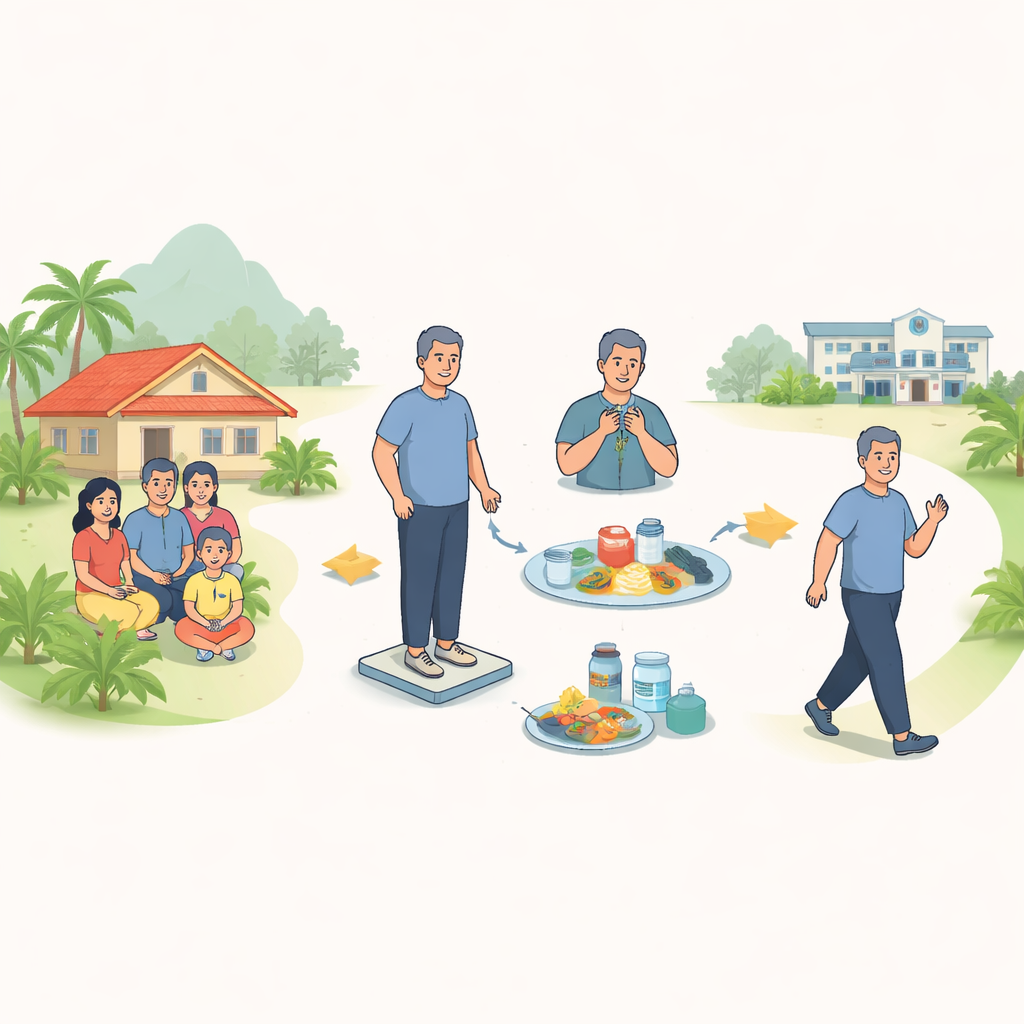
One major theme was how self‑care shaped people’s entire lifestyle. Many participants described changing the way they ate: cutting back on salty seasonings, avoiding added monosodium glutamate, reducing sugary or heavy foods, and limiting how much they drank each day. These changes were rarely made alone. Children, spouses, and other relatives often prepared separate low‑salt meals, measured drinking water, and helped with shopping and cooking. Daily activity was also adjusted. Walking was the most common form of exercise, chosen because it felt safe and manageable, and most people tried to remain as independent as their strength allowed, bathing, dressing, and doing light housework when possible. At the same time, some needed help with tasks such as changing dressings or using the toilet, showing how closely family support and self‑care are intertwined.
Medicines, monitoring, and listening to the body
Another key thread was how people handled medicines and watched their own bodies. Many participants used pill boxes, stuck to fixed schedules, and checked for side effects. Others admitted to occasionally changing doses on their own when they felt better or worse, a risky habit that underlines the need for clearer guidance. Home devices—bathroom scales, blood pressure machines, and blood sugar meters—were common, but not always used regularly. Some weighed themselves daily; others had equipment but only checked once in a while. People also described “body listening”: noticing when breathing became harder, when they could no longer lie flat, when their legs puffed up, or when chest discomfort returned. These sensations became personal alarms that told them when it was time to rest more, raise their legs, or head to the hospital.
Acting early to stay out of the hospital
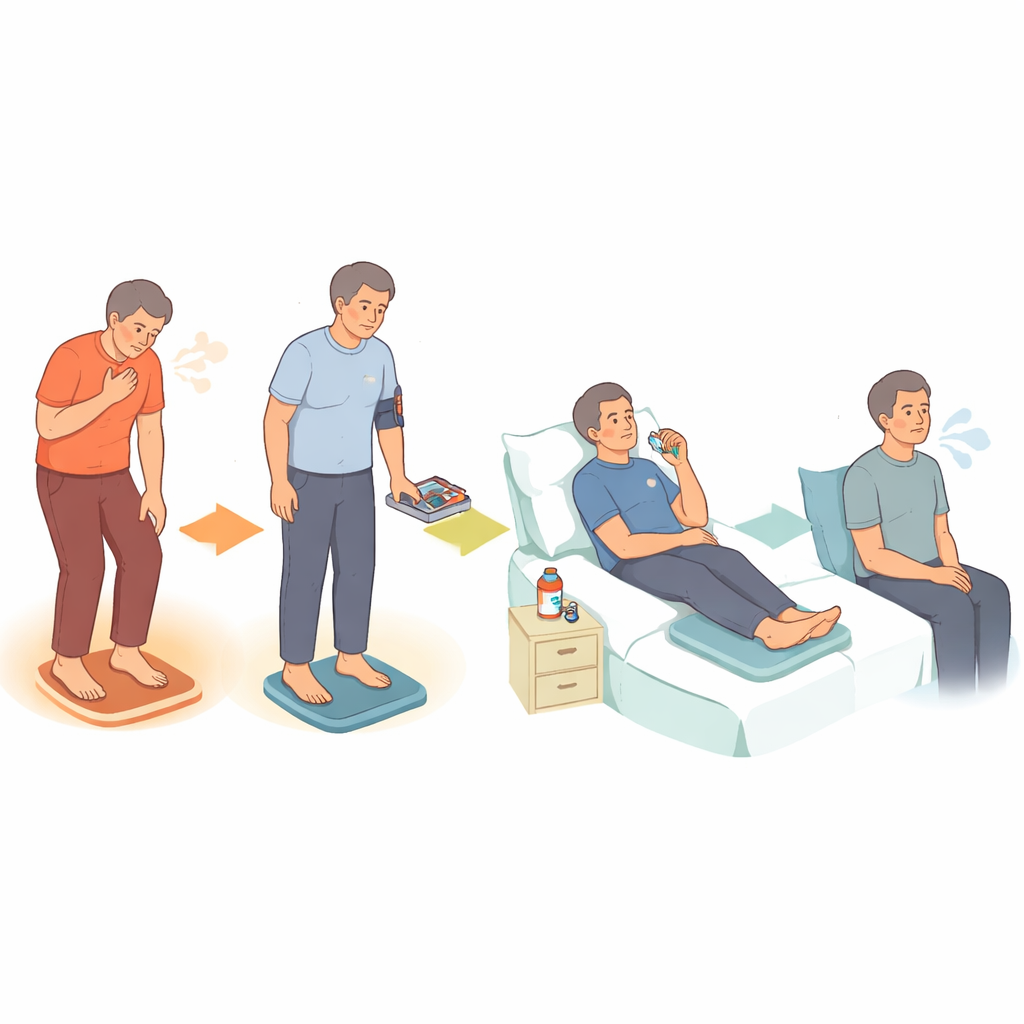
The study highlights how early, simple actions can prevent a bad spell from turning into a crisis. When shortness of breath flared up, many people sat upright, propped themselves on extra pillows, slowed down, or stopped strenuous chores until their breathing eased. Swollen legs were managed by elevating the feet, massaging the calves, and taking water‑removing tablets exactly as the doctor had advised. Some used under‑the‑tongue tablets when they felt chest tightness and agreed to seek urgent care if the discomfort did not settle. Those who followed these plans, often with encouragement from nurses and doctors, were able to stay at home for many months—sometimes a full year—before another hospital stay was needed.
Support, technology, and what comes next
Beyond individual habits, the findings point to the power of encouragement and information. People were strongly motivated when health professionals told them their test results looked good or their condition had improved. Many also searched for health information online or through videos, while family members double‑checked this material with doctors. The authors argue that nurses, community health workers, and digital tools—such as home‑monitoring apps—can work together to give patients clear, locally relevant advice about food, fluids, activity, and warning signs. Tailoring this guidance to people’s education level, income, religion, and family situation is essential so that everyone can put it into practice.
What this means for patients and families
In plain terms, the study concludes that people with heart failure do best when they, their families, and their health team share the work of everyday care. Careful attention to salt and fluid, steady use of medicines, simple exercise like walking, and quick responses to symptoms such as sudden weight gain, swollen legs, or trouble lying flat can prevent many emergencies. Regular check‑ins—whether through home visits or digital monitoring—help catch problems early. Rather than relying solely on hospital treatment, heart failure management becomes a partnership woven into daily life, giving patients a better chance to live more comfortably and stay out of the hospital longer.
Citation: Opasrattanakon, S., Jaraeprapal, U. & Punsawad, C. Self-care management in patients with heart failure in Nakhon Si Thammarat Province, Thailand: a descriptive qualitative study. Sci Rep 16, 13695 (2026). https://doi.org/10.1038/s41598-026-44071-w
Keywords: heart failure self-care, community health, family caregiving, symptom monitoring, digital health tools