Clear Sky Science · en
Update, translation, cross-cultural adaptation, and validation of Nottingham Stroke Dressing Assessment into Spanish
Why getting dressed after a stroke matters
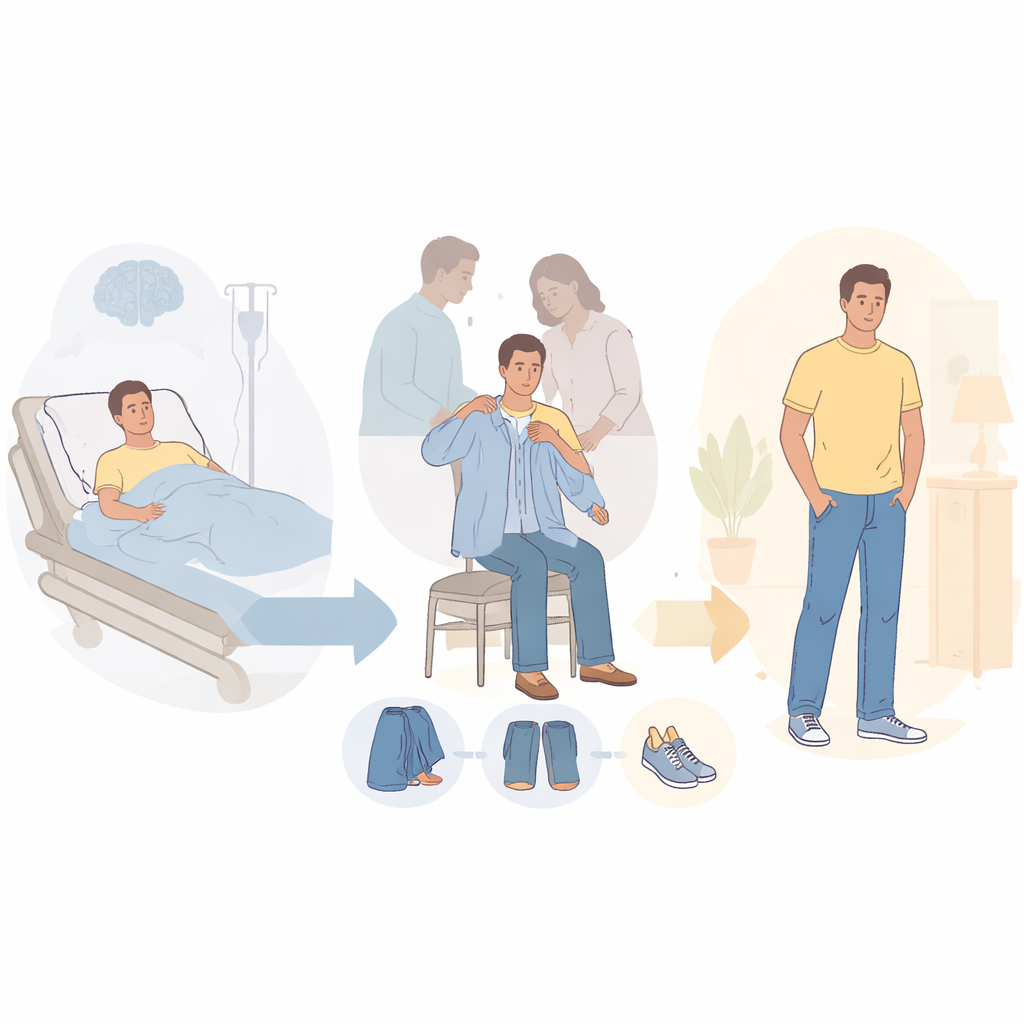
For many people recovering from a stroke, one of the most frustrating losses is the simple act of getting dressed without help. Pulling on a shirt or fastening shoes demands strength, coordination, planning, and attention. When these abilities are affected, everyday dressing can suddenly require another person, limiting privacy and independence. This study describes how a well‑known British tool for measuring dressing ability after stroke was carefully updated and then translated and validated for Spanish speakers, so therapists can better understand and support patients on their road back to self‑care.
A closer look at dressing problems after stroke
Stroke is a leading cause of long‑term disability worldwide, and in Spain it is the main cause of adult disability. Many survivors live with ongoing difficulties in basic daily tasks such as washing, eating, or dressing. Research suggests that more than half of stroke survivors still struggle to dress independently six months after the event. Dressing is complex: it involves choosing and handling different garments, moving weakened limbs, knowing where each sleeve or leg opening goes, and staying motivated to finish the task. Because so many abilities are involved, clinicians need precise tools to pinpoint where and why dressing breaks down, rather than relying on a single broad score for daily living.
Updating a classic dressing checklist
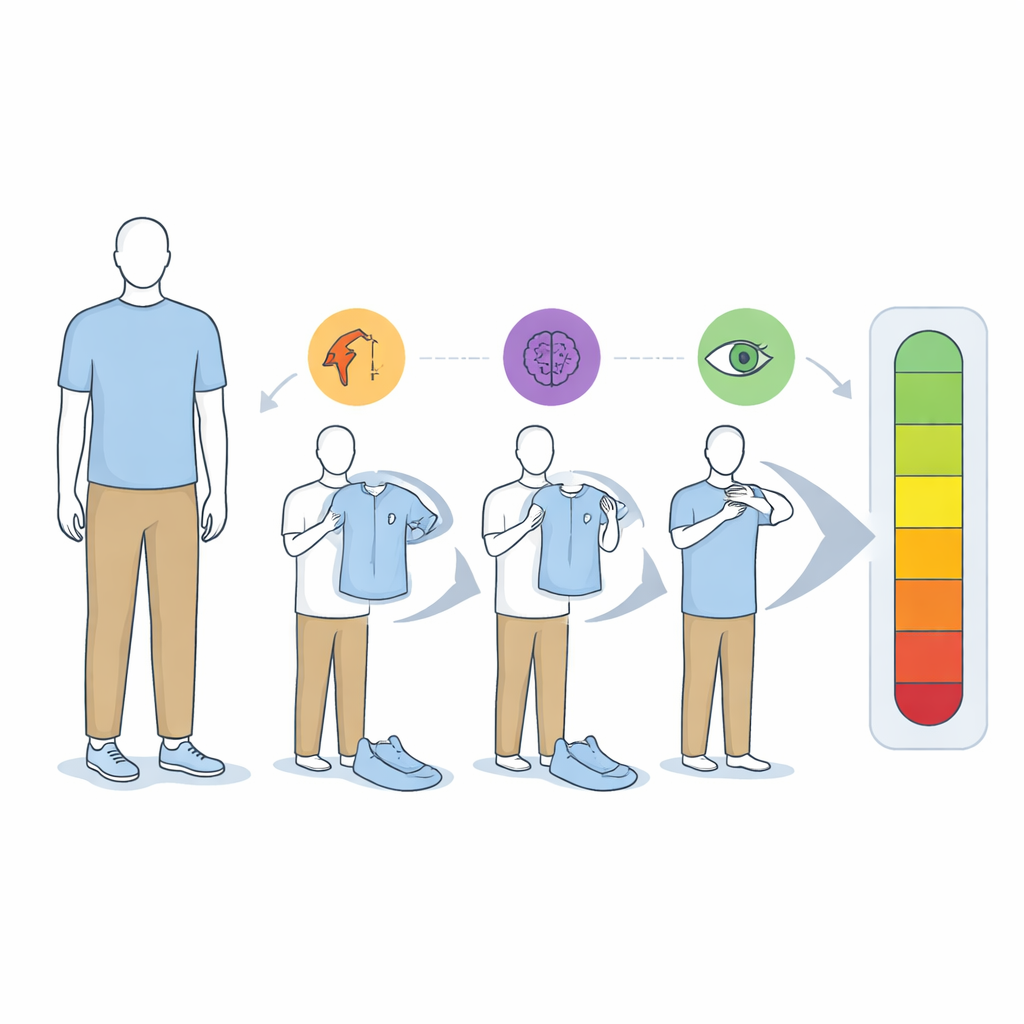
The Nottingham Stroke Dressing Assessment (NSDA), created in the early 1990s in the United Kingdom, is one of the few tools that examines dressing in detail. It breaks dressing into small steps for a variety of garments and notes whether problems arise from movement, thinking, or perception. However, clothes and clinical practice have changed over the decades, and the original version existed only in English. In this study, a panel of experienced occupational therapists reviewed every part of the NSDA. They modernized the instructions, merged separate versions for men and women into one table, updated garment categories, and added photographs to make the form faster and clearer to use. With the original author’s approval, the refreshed English tool was named the Nottingham Stroke Dressing Assessment–Revised (NSDA‑R).
Bringing the tool into Spanish clinics
To create a Spanish version, the team followed international guidelines for translating and adapting health questionnaires. Two bilingual translators independently produced Spanish drafts, which were then combined and reviewed by a committee of occupational therapists. A native English speaker translated the result back into English so it could be compared with the updated NSDA‑R, and any mismatches were discussed with the original author and an additional expert. After several rounds of refinement, the final Spanish instrument—called the Escala Nottingham de Vestido en Ictus–Revisada (ENVI‑R)—was produced. It includes 12 clothing categories, from fasteners and underwear to skirts, trousers, socks, and footwear, for a total of 44 scored steps that together give a percentage from complete dependence to full independence in dressing.
Testing how well the Spanish scale works
The researchers then tested ENVI‑R with 110 adults who had experienced a stroke, most of them in the chronic phase of recovery. Therapists used the new scale to observe and score how each person dressed, and a portion of the group was re‑assessed one to four weeks later by the same examiner. Statistical analyses showed that the items on the scale fit together well as a coherent measure and that scores were very consistent when patients were assessed twice, indicating strong reliability. When ENVI‑R scores were compared with a separate, widely used test of limb movement after stroke, the two measures were moderately linked: people with better arm and leg control tended to dress more independently, as expected, but the association was not perfect. This pattern suggests that ENVI‑R is capturing more than just raw strength—it reflects the broader skill of managing the full dressing task.
What this means for patients and therapists
In plain terms, the study shows that the updated English checklist (NSDA‑R) and its Spanish counterpart (ENVI‑R) provide trustworthy ways to measure how well stroke survivors can dress themselves and where they need help. For Spanish‑speaking patients, ENVI‑R is currently one of the only tools designed specifically for dressing, rather than for general daily living. Therapists can use it to track progress over time, tailor rehabilitation goals to particular steps—such as pulling up trousers or fastening shoes—and compare results across clinics and studies. Ultimately, having a clear, shared way to assess dressing ability should help more people regain privacy, confidence, and independence in one of the most personal parts of everyday life.
Citation: de Blas-Zamorano, P., Merchán-Baeza, J., Fernández-Solano, A.J. et al. Update, translation, cross-cultural adaptation, and validation of Nottingham Stroke Dressing Assessment into Spanish. Sci Rep 16, 13974 (2026). https://doi.org/10.1038/s41598-026-44069-4
Keywords: stroke rehabilitation, dressing independence, occupational therapy, assessment scale, Spanish translation