Clear Sky Science · en
Divergent vascular courses in the submental lymph node flap revealed by cadaveric study
Why this matters for people with chronic swelling
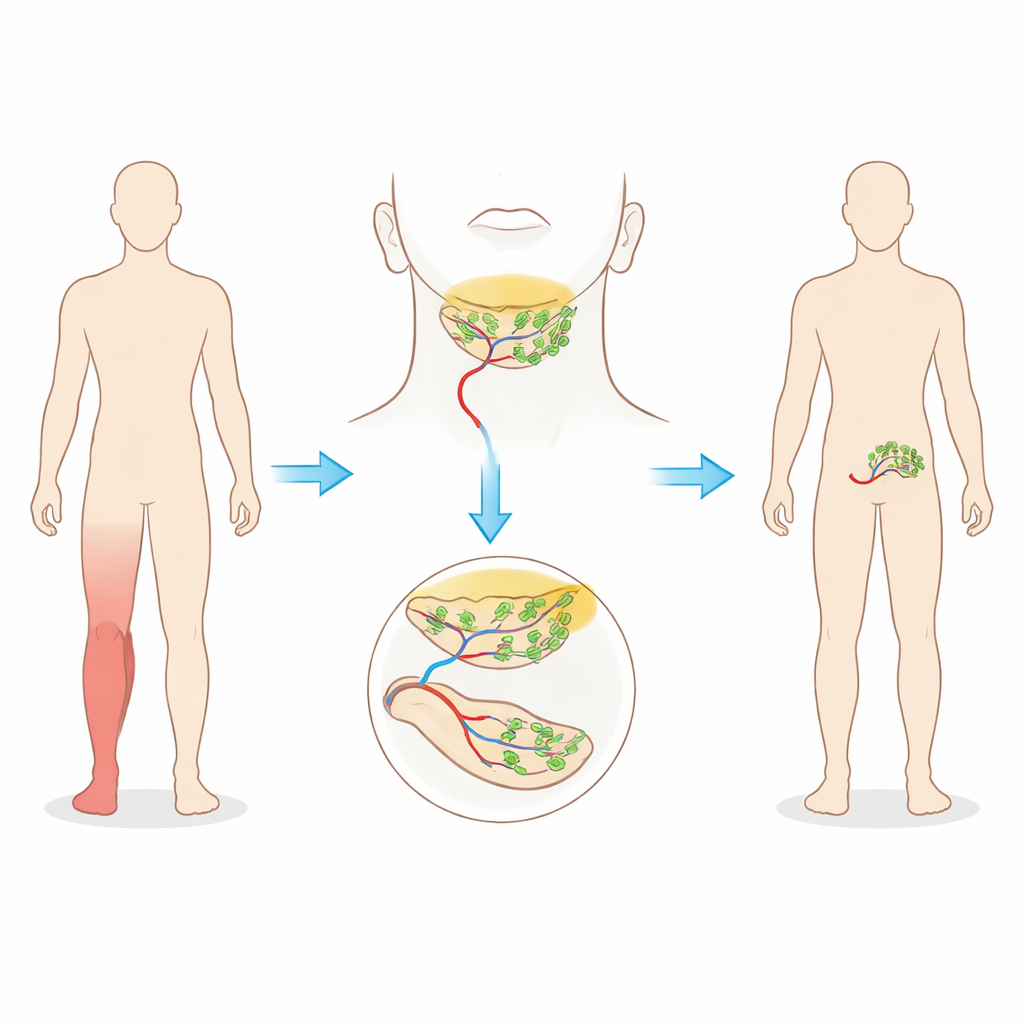
Lymphedema, a long‑lasting swelling of the arms or legs, can make everyday tasks heavy, painful, and limiting. One modern operation to ease this problem moves a tiny patch of tissue containing lymph nodes and blood vessels from under the jaw to the swollen limb. This study digs deeply into the fine blood‑vessel layout in that donor area, using donated bodies, to learn how surgeons can perform this operation more safely and more effectively.
A closer look at a promising surgical fix
In vascularized lymph node transfer, surgeons borrow a small “flap” of tissue containing lymph nodes and their feeding artery and draining vein, then connect these vessels to blood vessels in the swollen arm or leg. The new lymph nodes act as a biological sponge and pump: they collect trapped lymph fluid and release it into nearby veins, helping to reduce swelling and discomfort. One popular donor site is the submental region, the soft area just beneath the chin, because it hides scars well and usually carries a good number of useful lymph nodes with reliable blood vessels.
How the study was done
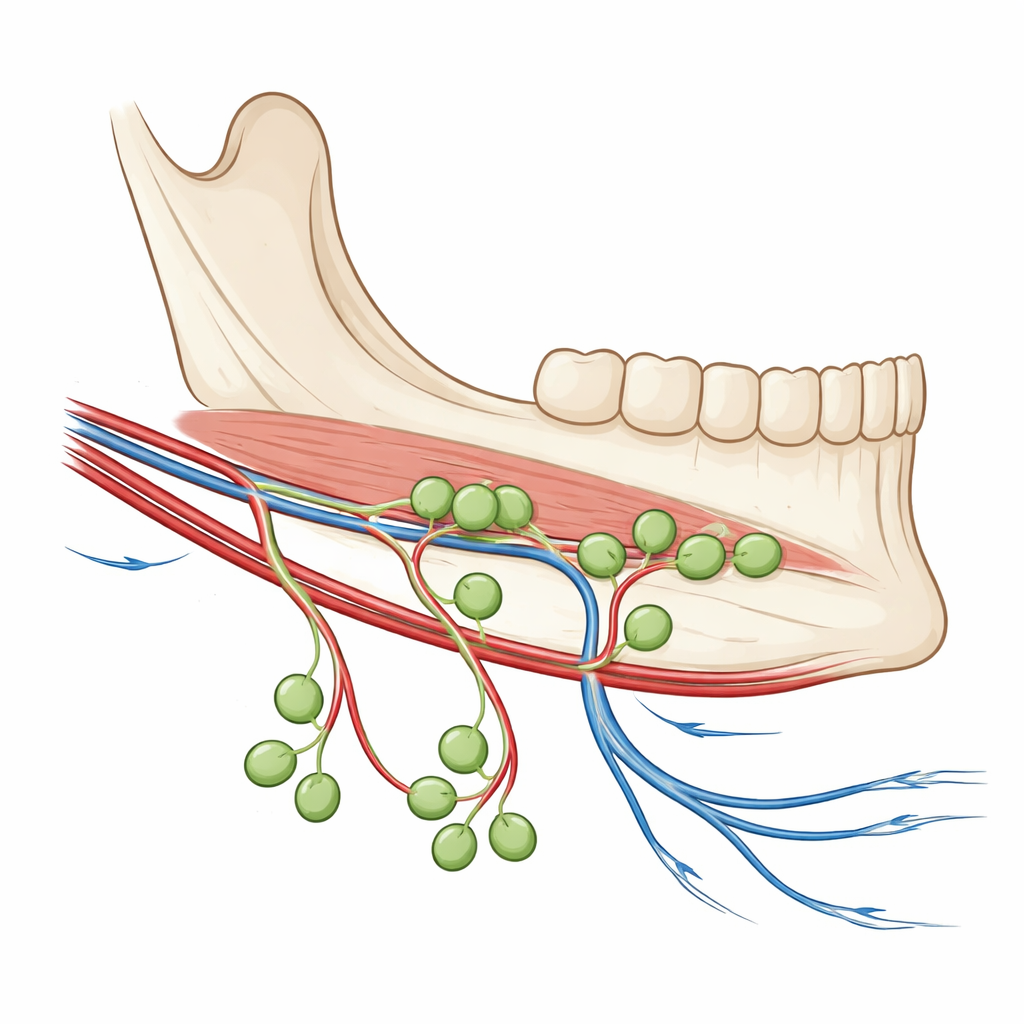
To map this area in detail, the researchers examined 40 submental flaps from 20 Thai body donors. They injected colored latex into the major neck arteries and veins to make them stand out, removed the lower jaw and surrounding tissues as one block, and then sliced the specimens into thin sections. Using a stereomicroscope, they traced the paths of arteries and veins, measured their diameters and distances, and counted and located every lymph node in the flap area. They paid special attention to how the main “submental” artery and vein related to a nearby muscle called the anterior belly of the digastric, as well as to which veins the lymph nodes ultimately drained.
Parallel highways, branching side roads
The team found that in most cases—about four out of five—the main submental artery and vein run side by side in a neat, parallel route beneath the digastric muscle. That predictable pairing is good news: it means surgeons can usually count on finding a dependable main blood supply if they gently lift or include this muscle in the flap. However, the tiny vessels that actually reach into each lymph node do not follow such a simple pattern. While more than 70% of lymph nodes received blood from the submental artery, only about half sent their drained blood back through the matching submental vein. Many instead emptied into the facial vein, and a surprising share—about one in seven—drained into the anterior jugular vein at the front of the neck.
Hidden veins with big impact on surgery
These split drainage routes have direct consequences for the operation. First, the study highlights the previously underestimated role of the anterior jugular vein. Because it quietly drains a meaningful group of lymph nodes, including it as an extra “backup” drainage channel in the flap could help prevent dangerous blood pooling and improve how well the transplanted nodes work. Second, the facial vein proved even more important than its matching artery, handling blood from about 30% of lymph nodes, including some fed by the submental artery. This supports flap designs that keep the facial artery and vein connected in one continuous chain with the submental vessels, instead of relying on a smaller, more limited piece of tissue.
What this means for patients with lymphedema
To put it simply, this research shows that while the main blood vessels under the chin run like two tidy parallel highways, the side roads that serve each lymph node branch off in several different directions. For people considering lymph node transfer surgery, that insight translates into clearer guidance for surgeons: lift or include the small chin muscle when needed to protect the main blood vessels, always keep the facial vessels connected to the submental pair, and, when possible, capture the front‑of‑the‑neck vein as an extra outlet. By respecting this hidden roadmap, surgeons can better protect the transplanted lymph nodes from congestion, increasing the chances that the operation truly lightens the burden of chronic swelling.
Citation: Lueangritthiwut, S., Piyaman, P., Apichonbancha, S. et al. Divergent vascular courses in the submental lymph node flap revealed by cadaveric study. Sci Rep 16, 13550 (2026). https://doi.org/10.1038/s41598-026-44057-8
Keywords: lymphedema surgery, lymph node transfer, submental flap, neck blood vessels, microsurgery anatomy