Clear Sky Science · en
Baseline and three-month De Ritis ratio and gamma-glutamyltransferase as prognostic biomarkers in metastatic renal cell carcinoma treated with targeted therapy
Blood Clues for a Hard-to-Treat Cancer
For people with advanced kidney cancer that has already spread in the body, predicting how long treatments will work is critically important, yet still imperfect. This study asks a simple question with big implications: can routine blood tests that check liver health also offer an early window into how a patient with metastatic kidney cancer is likely to fare on modern targeted drugs? By looking at changes in two common liver-related measures over the first three months of therapy, the researchers explore whether these everyday lab numbers can sharpen doctors’ ability to judge risk and guide care.
Why Kidney Cancer Needs Better Roadmaps
Kidney cancer is among the more common cancers worldwide. When found early and confined to the kidney, most patients do well. But once it spreads—becoming metastatic renal cell carcinoma—survival drops sharply. Doctors currently rely on clinical scoring systems that combine factors such as blood counts, symptoms, and time from diagnosis to treatment to sort patients into favorable, intermediate, or poor-risk groups. While helpful, these tools do not fully capture the biological differences between tumors. The authors therefore turned to ordinary liver function tests, which are already run on nearly every cancer patient, to see whether they could reveal more about how aggressive each person’s disease may be.
Turning Routine Liver Tests into Cancer Signals
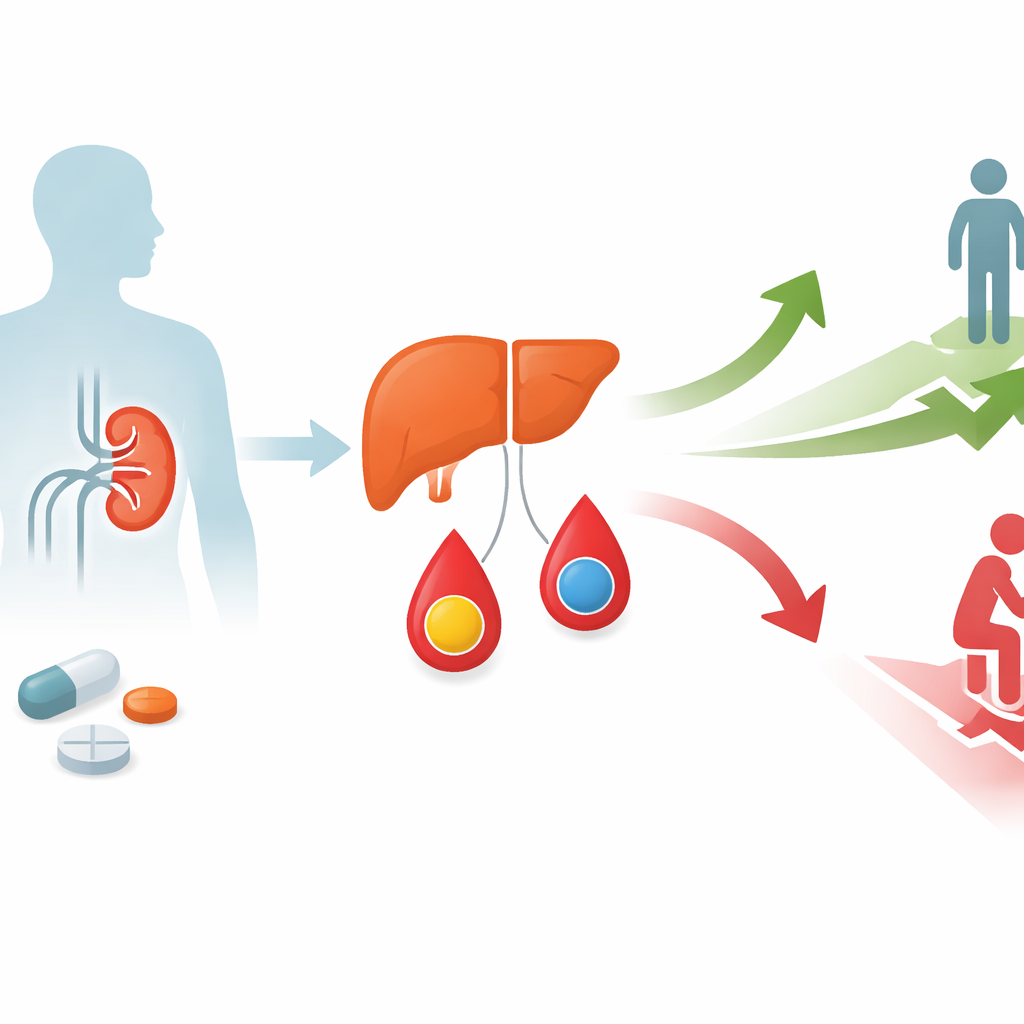
The team focused on two markers derived from liver blood tests: the De Ritis ratio and an enzyme called gamma-glutamyltransferase. The De Ritis ratio compares the levels of two enzymes, AST and ALT, which reflect different energy and nutrient pathways used by cells. Gamma-glutamyltransferase is involved in managing the body’s defenses against damaging oxygen-containing molecules and is linked to inflammation and oxidative stress. Because cancers often hijack metabolism and stir up chronic inflammation, the researchers suspected that these markers might mirror the underlying behavior of metastatic kidney tumors, not just the state of the liver itself.
Following Patients Through Treatment
Researchers reviewed records from 264 adults treated at two major cancer centers in Turkey, all of whom had metastatic kidney cancer and received a first targeted drug such as pazopanib, sunitinib, or cabozantinib. They collected liver test results just before treatment started and again about three months later, a time point that aligns with the first routine scan used to check whether therapy is working. Patients with known chronic liver disease or heavy alcohol use were excluded to reduce confusion from unrelated liver damage. The investigators then tracked how long patients lived without their disease worsening and their overall survival, using standard statistical tools to account for other risk factors like sites of metastasis and established risk scores.
What Higher Enzyme Levels Revealed
By three months into treatment, a clear pattern emerged. Patients whose De Ritis ratio exceeded a data-derived cut-off had shorter periods before their cancer progressed and shorter overall survival than those with lower ratios. Similarly, those whose gamma-glutamyltransferase values were above the normal laboratory limit did worse than patients whose levels stayed within the usual range. These associations held even after adjusting for other powerful predictors, including the widely used International Metastatic Renal Cell Carcinoma Database Consortium risk categories and the presence of liver, bone, or brain metastases. Other liver-related measures, such as alkaline phosphatase, showed weaker and less consistent ties to outcome. The robustness of the findings was further supported by repeated statistical sampling to test the stability of the chosen cut-off value.
What Might Be Happening Inside the Tumor
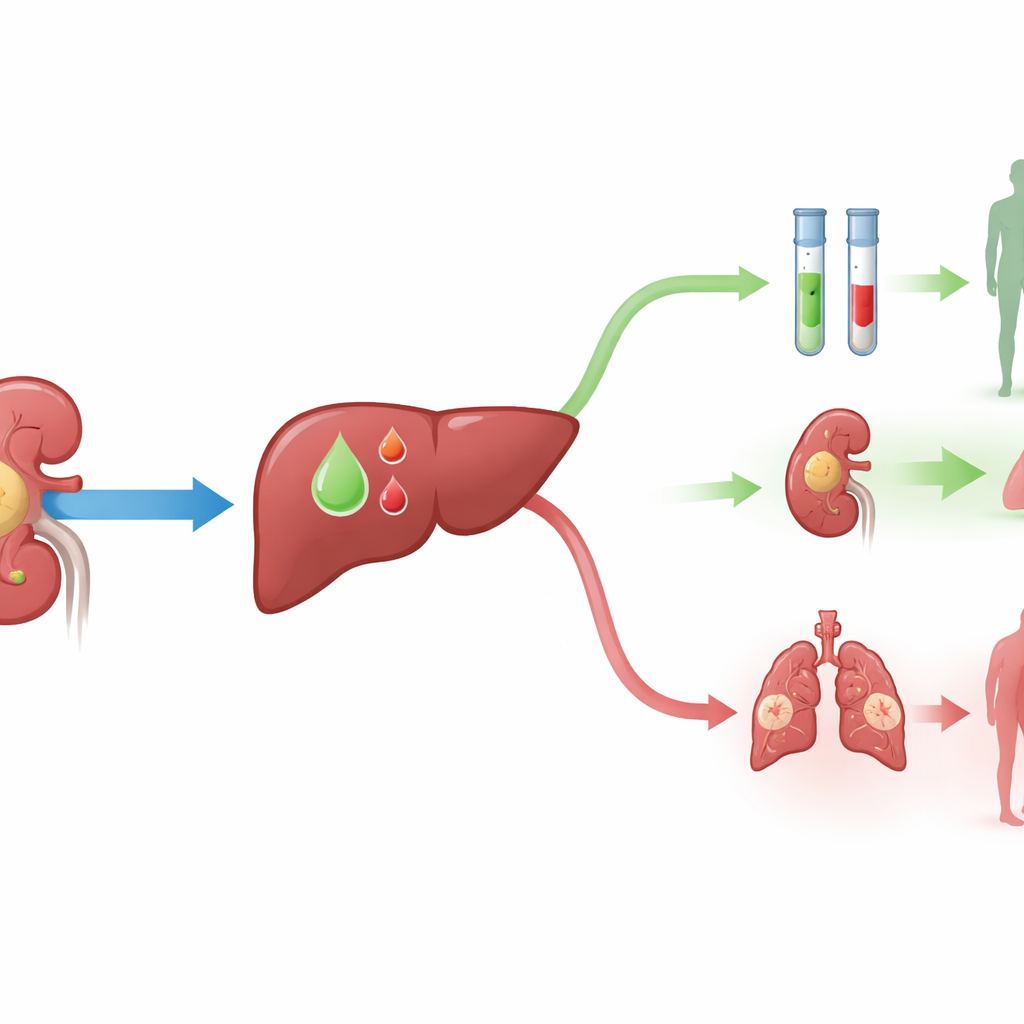
The authors discuss several biological reasons why these simple blood markers might signal a more aggressive cancer. The enzymes that form the De Ritis ratio are heavily involved in how cells burn sugar and use amino acids, processes that cancers often rewire to fuel rapid growth. A higher ratio may therefore point to a tumor that is more metabolically active. Gamma-glutamyltransferase, for its part, helps regulate the balance of molecules that protect against or generate damaging reactive oxygen species. Elevated levels may promote DNA damage, stir up long-lasting inflammation, and activate growth-promoting pathways that encourage tumors to expand and spread. Together, these mechanisms suggest that the observed changes in blood tests reflect tumor-driven biology rather than just drug side effects on the liver.
What This Means for Patients and Doctors
The study concludes that elevated De Ritis ratio and gamma-glutamyltransferase at three months are independent warning signs of earlier progression and shorter survival in people with metastatic kidney cancer receiving targeted therapies. For patients, this means that information already hidden in routine blood work could offer an extra layer of insight into how their disease is behaving. For clinicians, tracking these markers over time—not just at baseline—may refine risk estimates, highlight those who might need closer monitoring or earlier treatment changes, and inspire new research into the metabolic and inflammatory underpinnings of this cancer. Prospective studies in newer treatment combinations will be needed, but this work suggests that simple, inexpensive lab tests could become valuable guides in a complex disease.
Citation: Aktepe, O.H., Ulasli, T., Unek, I.T. et al. Baseline and three-month De Ritis ratio and gamma-glutamyltransferase as prognostic biomarkers in metastatic renal cell carcinoma treated with targeted therapy. Sci Rep 16, 13106 (2026). https://doi.org/10.1038/s41598-026-43971-1
Keywords: metastatic kidney cancer, liver blood tests, cancer biomarkers, targeted therapy, patient prognosis