Clear Sky Science · en
Platform-visible sentiment and topics in Ningbo’s community revitalization: evidence from short videos
Why phone videos matter for city life
When people point their phones at their streets, courtyards, and new apartment towers, they create a living record of how a city feels as it changes. This study looks at such everyday videos from Ningbo, a major city in eastern China, to ask a simple question with big consequences: as old neighborhoods are torn down, upgraded, or rebuilt as smart "future" communities, what emotions do residents and officials share on a popular short-video app—and what can that tell us about making urban renewal more humane?
Three kinds of changing neighborhoods
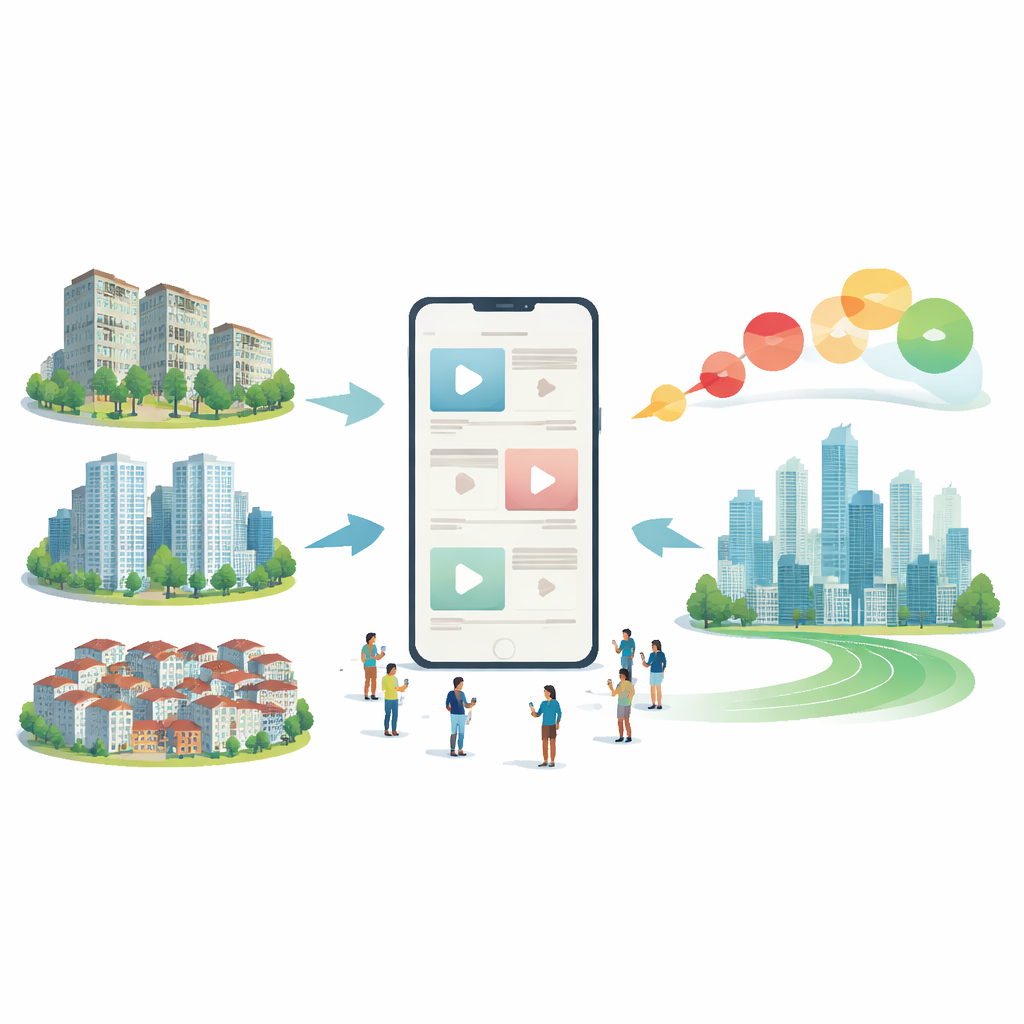
The researchers focused on three common types of projects. First are urban villages—dense, informal settlements squeezed between newer districts, often slated for full redevelopment and resident relocation. Second are old residential communities, mid-rise estates where people stay put while buildings, utilities, and courtyards are refurbished around them. Third are future communities, a Zhejiang Province pilot model that aims to build smart, green neighborhoods from the ground up, packed with sensors, digital services, and eye-catching architecture. All three sit at the heart of China’s shift from expanding outward to improving what already exists.
Listening to voices and looking at scenes
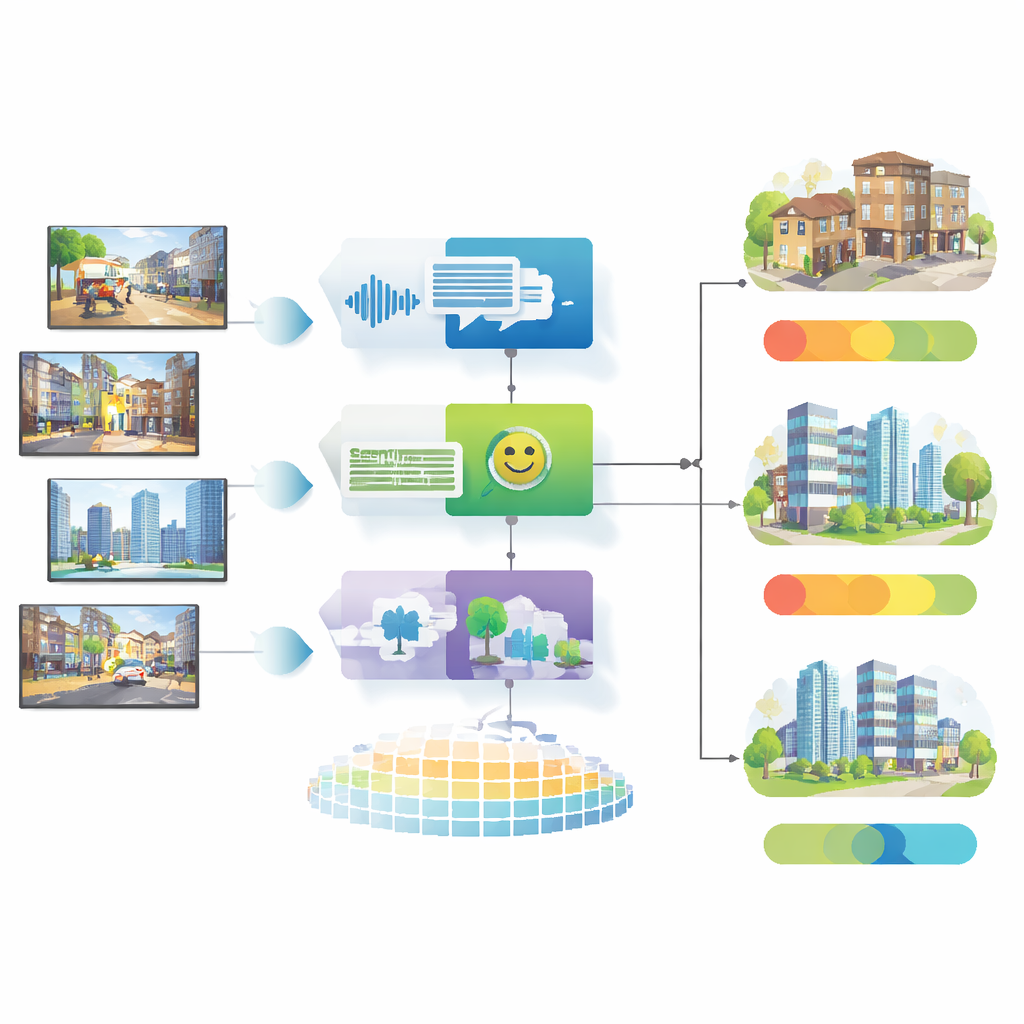
Instead of surveys or town-hall meetings, the team turned to Douyin, China’s leading short-video platform. They collected just over 300 clips from 2024 to mid-2025 that mentioned Ningbo and one of the three project types, mixing mostly user-made videos with a smaller share of official or news-style pieces. They used automatic speech recognition to turn spoken Chinese into text, then ran sentiment analysis software to score how positive or negative each narration sounded. In parallel, a computer-vision system scanned video frames to tag visual elements such as buildings, roads, rooms, people, vehicles, and trees. By pairing tone of voice with what appears on screen, the study could see not only whether a video was upbeat or critical, but also which parts of city life those feelings latched onto.
Different projects, different emotional landscapes
The emotional map that emerged is sharply divided by project type. Future communities came out looking the rosiest: among videos that clearly expressed an opinion, the overwhelming majority were positive, and the average sentiment score was highest. Many of these clips, often produced by local media or government-linked accounts, showcase sleek towers, landscaped plazas, and high-tech interiors, framing the projects as symbols of modern, sustainable living. Old residential community renovations told a more conflicted story. Here, positive videos proudly tour brighter stairwells, new elevators, and refreshed facades, but negative ones complain about noise, dust, blocked roads, and parking headaches as work drags on. Urban village redevelopment sat in between. Viewers and presenters praised promises of safer, cleaner housing and better city integration, yet videos also highlighted cramped alleys, clutter, and anxieties over relocation, fairness, and the loss of familiar social ties.
What the camera chooses to show
Across all three project types, certain images repeat: buildings, streets, vehicles, and people dominate the visual networks, reflecting a shared basic vocabulary of city change. Yet each renewal model emphasizes a different slice of that world. Urban village videos frequently walk through narrow lanes packed with scooters and aging homes, signaling everyday crowding and deterioration. Old-community clips often move indoors, lingering on rooms, windows, lighting, furniture, and other details of domestic comfort, especially when showing off upgrades or unfinished repairs. Future community footage is more outward-looking and polished, filled with new high-rises, broad boulevards, planted greenery, digital screens, and ceremonial scenes with workers in hard hats. Linking these visuals to sentiment reveals telling pairings: parking areas and torn-up roads show up more often in negative old-community posts, while newly lit streets and tidy courtyards tilt positive; maps, renderings, and skyline shots cluster with upbeat future-community narratives that lean heavily on promise and spectacle.
From online feelings to better city decisions
For city leaders, the study suggests that short-video platforms act less like a scientific poll and more like a sensitive radar. They cannot stand in for face-to-face consultation, but they do surface where frustrations and hopes concentrate. In Ningbo’s case, the online mood points to three priorities: managing daily disruption and secondary problems such as parking during in-place renovations; keeping expectations realistic and communication transparent for showcase-style future communities; and handling relocation, compensation, and community ties carefully in urban village redevelopment. By treating platform-visible emotions as one layer of evidence—alongside surveys, complaints, and field visits—planners can tune their messages and responses to the different pressures each kind of project creates, making the long march toward “better community life” feel fairer and more livable on the ground.
Citation: Liu, S., Zhao, L., Liu, J. et al. Platform-visible sentiment and topics in Ningbo’s community revitalization: evidence from short videos. Sci Rep 16, 13445 (2026). https://doi.org/10.1038/s41598-026-43891-0
Keywords: urban renewal, social media sentiment, short video platforms, community revitalization, Chinese cities