Clear Sky Science · en
Daily associations of subjective and objective sleep parameters with restorative sleep and morning sleepiness in Japanese working adults
Why how you wake up matters
Many people judge their night by how long they slept, but what really shapes how refreshed or groggy we feel in the morning is more complicated. This study followed Japanese working adults in their everyday lives to find out which aspects of their sleep—and their mood—most strongly influence two everyday experiences: feeling restored on waking and feeling sleepy in the morning. Understanding these links can help workers, employers, and clinicians target the right habits and treatments to improve daytime energy and well-being.
Watching sleep in the real world
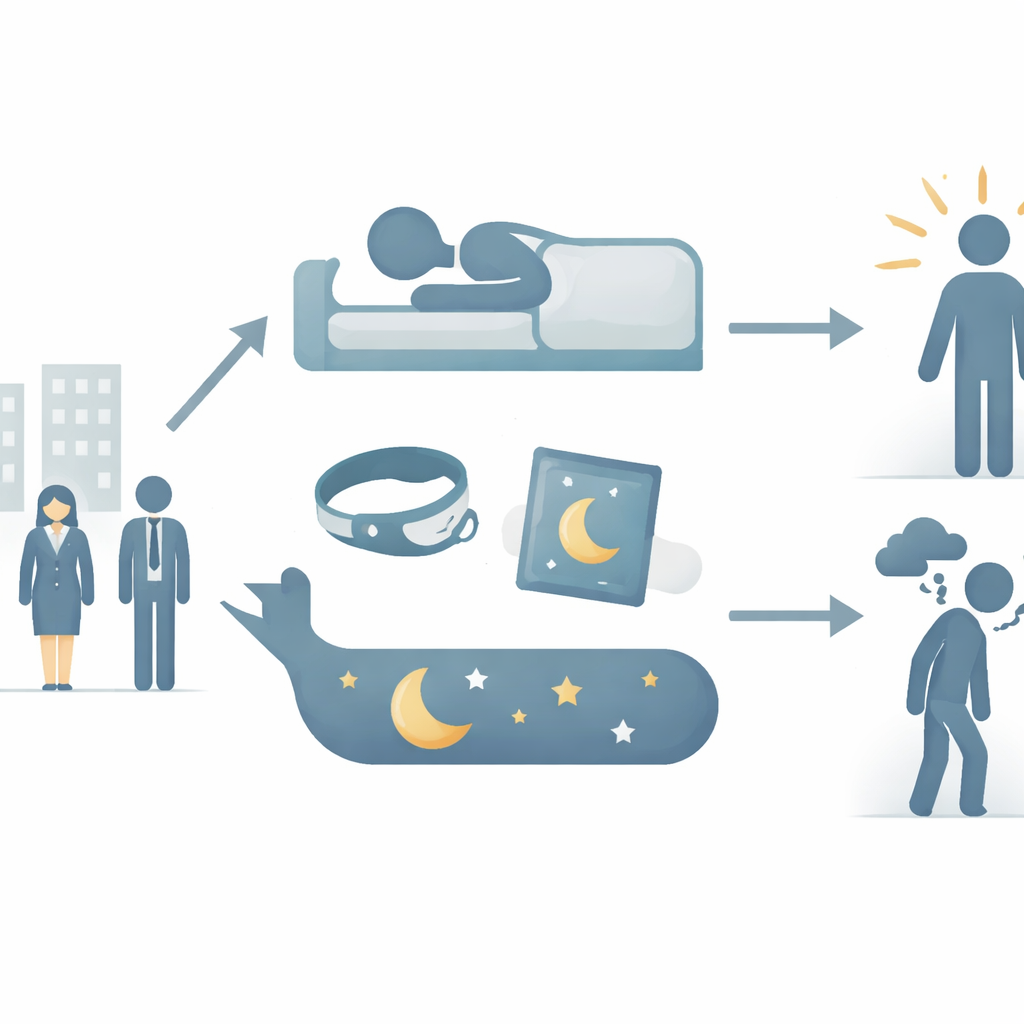
The researchers recruited 30 healthy adults with regular daytime jobs and no known sleep disorders. Over about a week, participants slept at home while wearing a simple head-mounted device that recorded their brain waves during sleep. Each morning they also filled out a short diary estimating how long they slept, how long it took them to fall asleep, how often they were awake in the night, how refreshed they felt, and how sleepy they felt upon waking. In addition, they completed a standard questionnaire that measured the severity of depressive symptoms, and the team calculated each person’s natural tendency toward being a “morning” or “evening” type based on their sleep times on workdays and free days.
Two different faces of a night’s sleep
The team focused on two morning outcomes. One was “restorative sleep,” meaning how refreshed and restored people felt on waking. The other was “morning sleepiness,” the heavy, foggy feeling many experience right after getting up. Although these two ratings were related—people who felt more refreshed tended to feel less sleepy—they were far from identical. Using statistical models that took into account repeated days from the same person, the researchers tested how both device-measured and self-reported sleep features predicted these next-morning feelings, while adjusting for age, gender, day of the week, natural sleep timing, and depressive symptoms.
What supports a refreshing night
Restorative sleep turned out to depend mainly on how long people slept and how smoothly they fell asleep. Longer sleep, whether measured by the device or estimated in the diary, was linked to feeling more restored the next morning. In contrast, taking longer to fall asleep—again, both according to the device and to people’s own estimates—was linked to feeling less restored. Other detailed features of sleep, such as time awake after first falling asleep or the split between dream sleep and deep sleep, did not show clear links to morning refreshment in this group. Interestingly, the gap between what people thought their sleep was like and what the device measured did not seem to matter for how restored they felt.
What drives morning grogginess
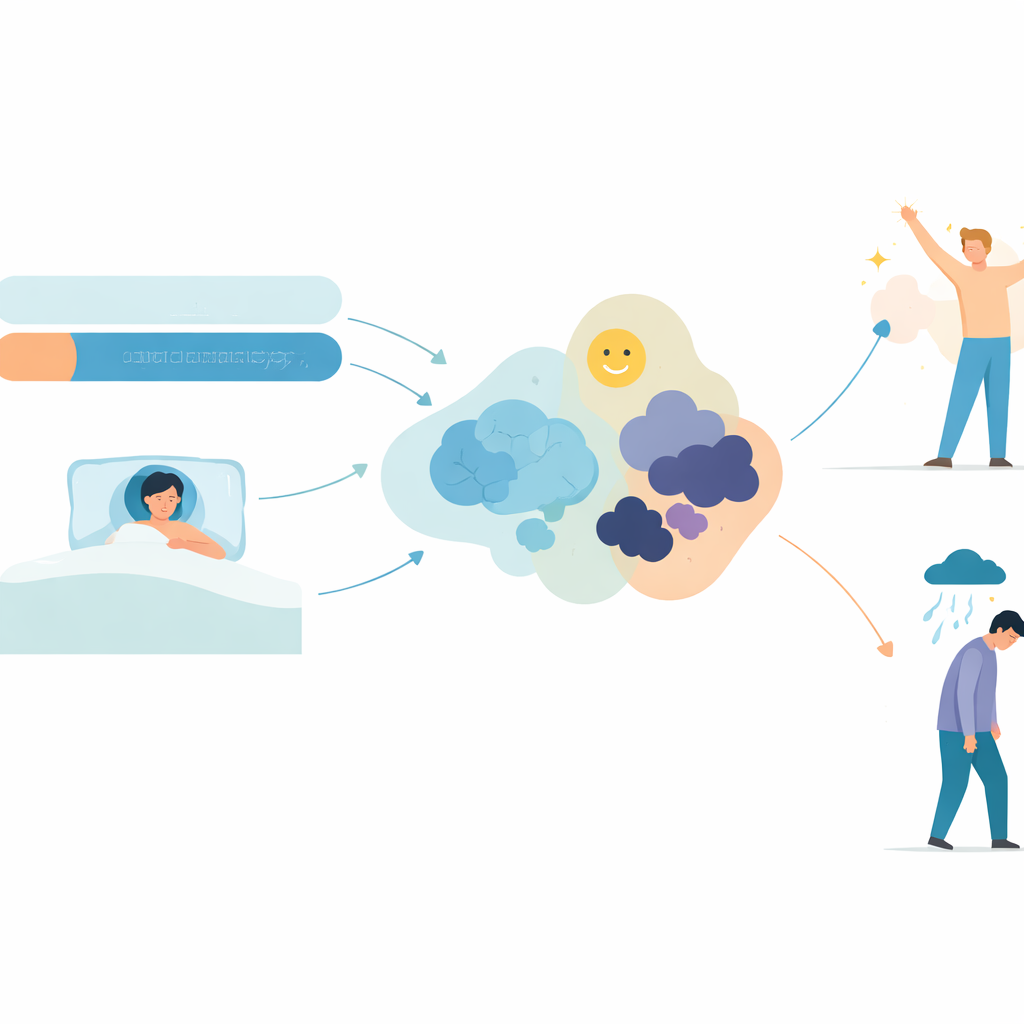
Morning sleepiness told a somewhat different story. Here, getting more total sleep—by both objective and subjective measures—again helped, with longer nights linked to less sleepiness on waking. But in addition, a higher proportion of deep sleep, the slow-wave stage often considered especially restorative for the body, was associated with less morning sleepiness. Time to fall asleep and other continuity measures were less important. Depressive symptoms stood out: even at relatively low levels in this non-clinical sample, higher depression scores consistently predicted greater morning sleepiness, regardless of how long or how deeply people slept. Chronotype, or being more of a morning or evening person, did not show a strong effect once other factors were considered.
What this means for everyday life
For workers and their clinicians, these findings suggest that “waking up well” has more than one pathway. Feeling restored seems especially sensitive to getting enough total sleep and avoiding long, restless periods at the start of the night. In contrast, shaking off morning grogginess depends not only on sleep duration but also on spending enough time in deep sleep and on underlying mood. The study highlights that using both wearable sleep trackers and simple questionnaires, and paying attention to depressive symptoms, can give a fuller picture than either alone. In practical terms, strategies that extend sleep time, ease the transition into sleep, and address mood problems—such as cognitive behavioral therapy for insomnia that also benefits depression—may be particularly effective in helping people start their days feeling both refreshed and alert.
Citation: Kawai, K., Iwamoto, K., Miyata, S. et al. Daily associations of subjective and objective sleep parameters with restorative sleep and morning sleepiness in Japanese working adults. Sci Rep 16, 10771 (2026). https://doi.org/10.1038/s41598-026-43784-2
Keywords: restorative sleep, morning sleepiness, wearable sleep tracking, deep sleep, depressive symptoms