Clear Sky Science · en
Salivary immune alteration persists after caries treatment
Why Your Spit Says More About Cavities Than You Think
Dentists usually look at your teeth to judge your risk for new cavities. This study suggests they may also want to look at your saliva. By tracking hundreds of tiny defense proteins in spit before and after dental treatment, the researchers found that even when bad teeth are fixed, the mouth’s immune system does not fully return to a “never-had-cavities” state. That lingering change could help explain why some people keep getting new decay and might one day guide more personalized prevention.
Tooth Decay as a Whole-Body Story in the Mouth
Tooth decay is not just about sugar and “bad bacteria.” It is a long-running tug-of-war between germs, diet, and the body’s own defenses. Saliva plays a starring role in this fight. It rinses food away, buffers acids, and carries proteins that kill or tame microbes and help repair tooth enamel. When saliva production or quality drops, cavities become more common. Yet scientists still know surprisingly little about how the immune side of saliva behaves in adults with cavities, and what happens to this internal defense system after the dentist has cleaned, sealed, and filled their teeth.
Following Patients and Their Saliva Through Treatment
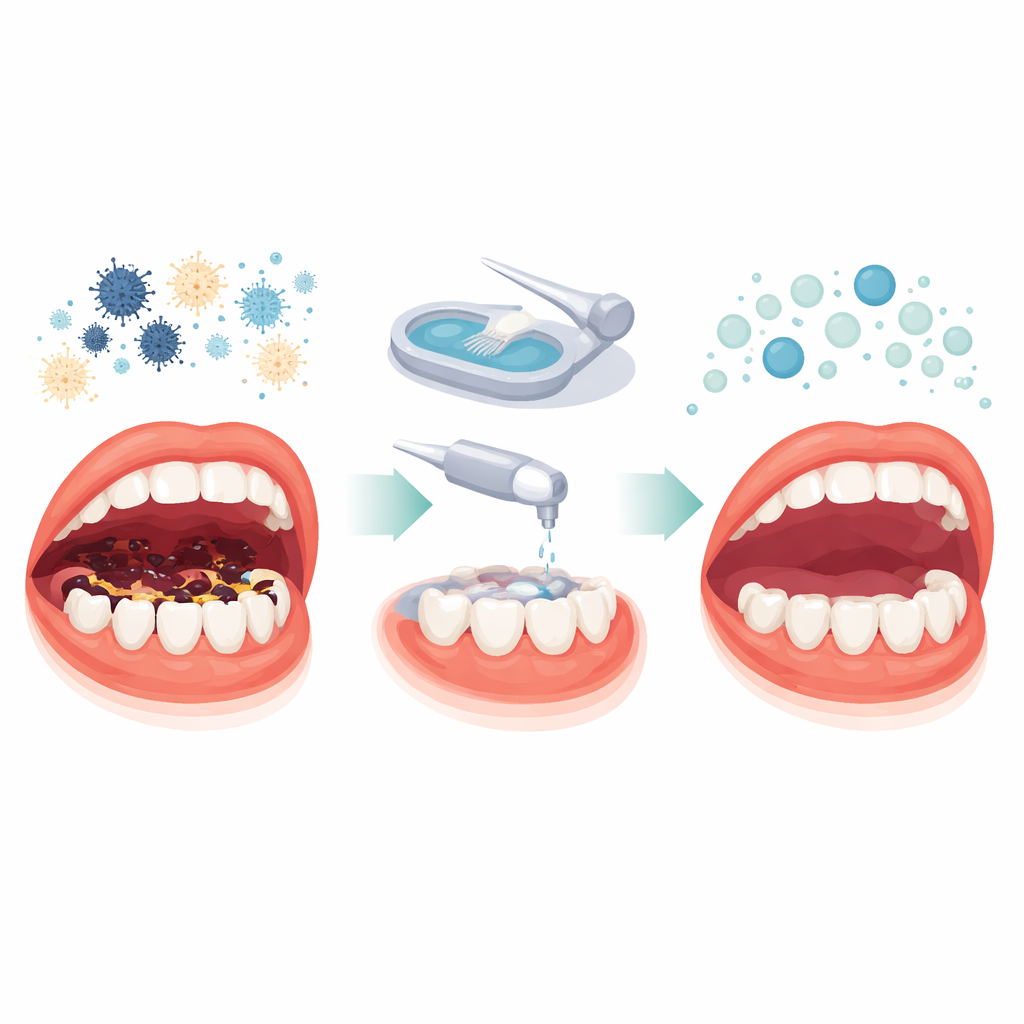
The researchers followed 46 healthy adults, some with extensive decay and some with relatively sound teeth. Over about three months, everyone received careful cleaning, fluoride applications, and advice on brushing and diet. Only the group with cavities received fillings for their damaged teeth. At three key points—before any treatment, after the non-invasive care, and after fillings—the team collected both resting saliva and saliva stimulated by chewing. Instead of testing just a few substances, they used advanced mass spectrometry to measure more than two thousand human proteins at once and to see which ones differed between people with and without cavities. They also profiled the bacteria present in whole saliva using another type of mass spectrometry.
Saliva’s Defenses Calm Down but Do Not Forget
At the start, people with cavities showed a highly disturbed pattern of immune activity in their saliva. Nearly 200 proteins were present at higher or lower levels than in people without decay, many of them involved in frontline defense systems such as innate immunity, the complement cascade, and the release of antimicrobial contents from white blood cells. After cleanings, fluoride, and eventually fillings, this storm steadily quieted: far fewer proteins remained abnormal, and whole immune pathways that were initially overactive looked much more like those in the healthy group. Yet one major pathway, linked to the release of substances from neutrophils—short-lived white blood cells that patrol the mouth—remained active, although its mix of proteins changed over time. This pattern suggested the mouth had moved from a highly inflamed state to a more controlled “surveillance” mode rather than complete rest.
A Lasting Molecular Mark of Past Cavities
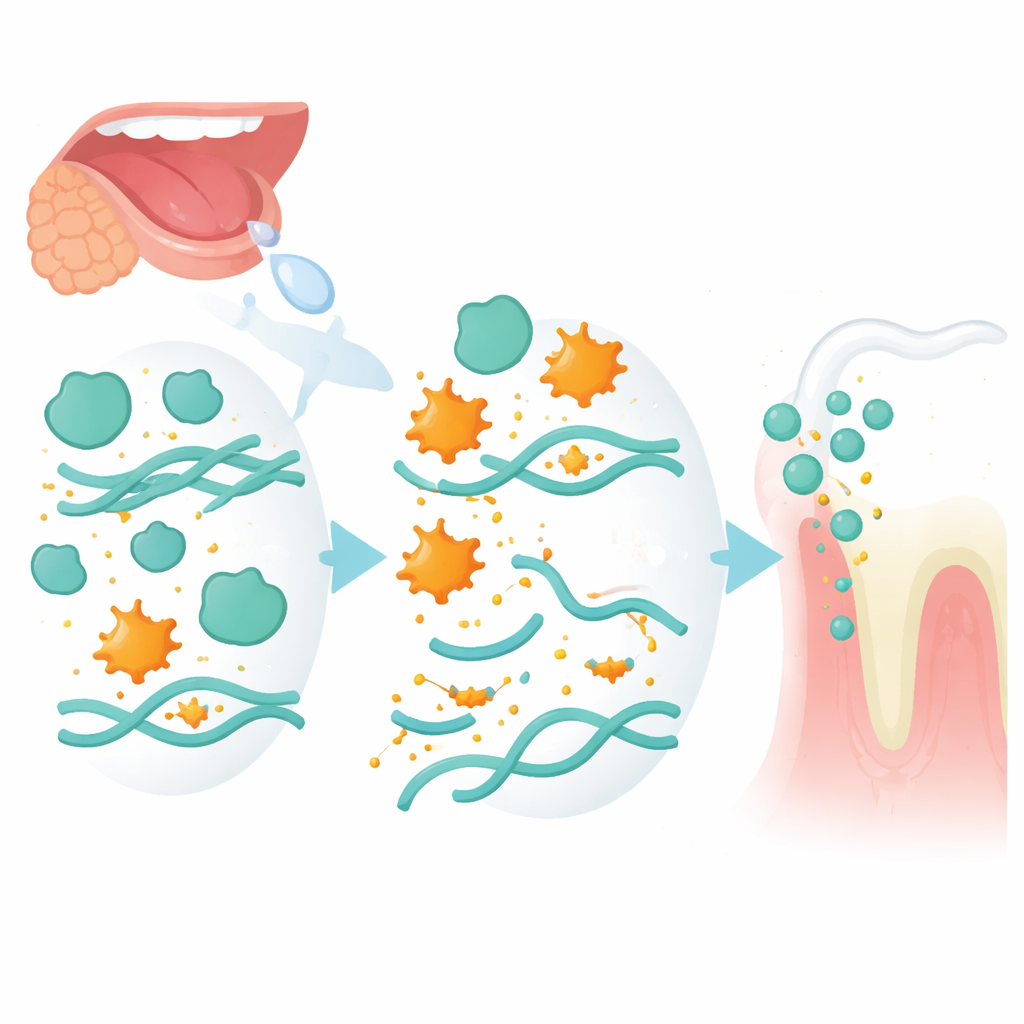
Even after treatment, a small group of proteins stayed consistently altered in people with a history of caries. Two stood out: a protective inhibitor called SLPI and a salivary mucin named MUC7, both found at lower levels in the caries group at every time point. SLPI normally reins in powerful enzymes released by neutrophils that can chew up tissue components, while MUC7 helps form a slippery barrier on teeth and interferes with bacterial attachment. The authors propose that when SLPI is reduced, these enzymes may more easily damage mucins like MUC7, thinning the protective coating and making it easier for cavity-causing bacteria to settle. Together, these two molecules appear to form a regulatory “axis” that shapes how well saliva can both control inflammation and keep microbes in check. Notably, while these host defenses shifted, overall bacterial diversity in saliva remained surprisingly stable, underlining that changes in the body’s response may be more telling than broad shifts in which species are present.
What This Means for Future Dental Care
The study suggests that fixing visible holes in teeth does not fully reset the mouth’s internal defenses to a truly healthy baseline. Instead, people who have had serious decay may carry a lasting molecular fingerprint in their saliva—a blend of persistent immune activity and weakened protective coatings—that could leave them more prone to future problems even when their fillings look perfect. If confirmed in larger, individual-level studies, measuring proteins such as SLPI and MUC7 in saliva could become a simple way to identify those at higher risk and tailor extra prevention, such as more frequent checkups or targeted therapies, before new cavities form.
Citation: Huerta-García, E.X., Camargo-Ayala, P.A., Dias, N.B. et al. Salivary immune alteration persists after caries treatment. Sci Rep 16, 13963 (2026). https://doi.org/10.1038/s41598-026-43748-6
Keywords: saliva, dental caries, salivary proteins, oral immunity, mass spectrometry