Clear Sky Science · en
Angiotensin‑converting enzyme 2 as an immune and prognostic biomarker in colorectal cancer
Why this matters for cancer patients
Colorectal cancer is one of the most common cancers worldwide, yet doctors still struggle to predict who will do poorly and who will respond to modern immune-based treatments. This study focuses on a protein called ACE2, already famous as the entry point for the virus that causes COVID-19, and asks a new question: can ACE2 in the gut also act as a warning flag and control switch for colorectal cancer and the body’s immune defenses?

A familiar protein in an unexpected place
ACE2 normally helps regulate blood pressure, inflammation, and even gut health. By mining several large cancer databases, the researchers discovered that ACE2 is unusually abundant in tumors from the colon and rectum, compared with nearby healthy tissue. They then confirmed this pattern in real-world samples: in 119 patients who had colorectal tumors surgically removed, ACE2 levels were consistently higher in the cancer cells than in their surrounding normal tissue. Patients whose tumors carried more ACE2 tended to have more advanced local disease and worse overall and recurrence-free survival, suggesting that this protein tracks closely with how aggressive the cancer is.
How ACE2 shapes tumor growth
To see if ACE2 is just a passenger or an active driver, the team turned to colon cancer cell lines grown in the lab. When they used small interfering RNAs to switch off ACE2, the cancer cells slowed down: they divided less, and they were less able to invade through a gel that mimics body tissues. At the molecular level, silencing ACE2 reduced the activity of several genes linked to cell division and invasion. The researchers also showed that chemical changes to DNA, specifically reduced methylation around the ACE2 gene, likely help keep its levels high in colorectal cancer cells. Together, these results suggest that ACE2 is not merely a bystander—it actively supports tumor growth and spread.
A quiet tug-of-war with the immune system
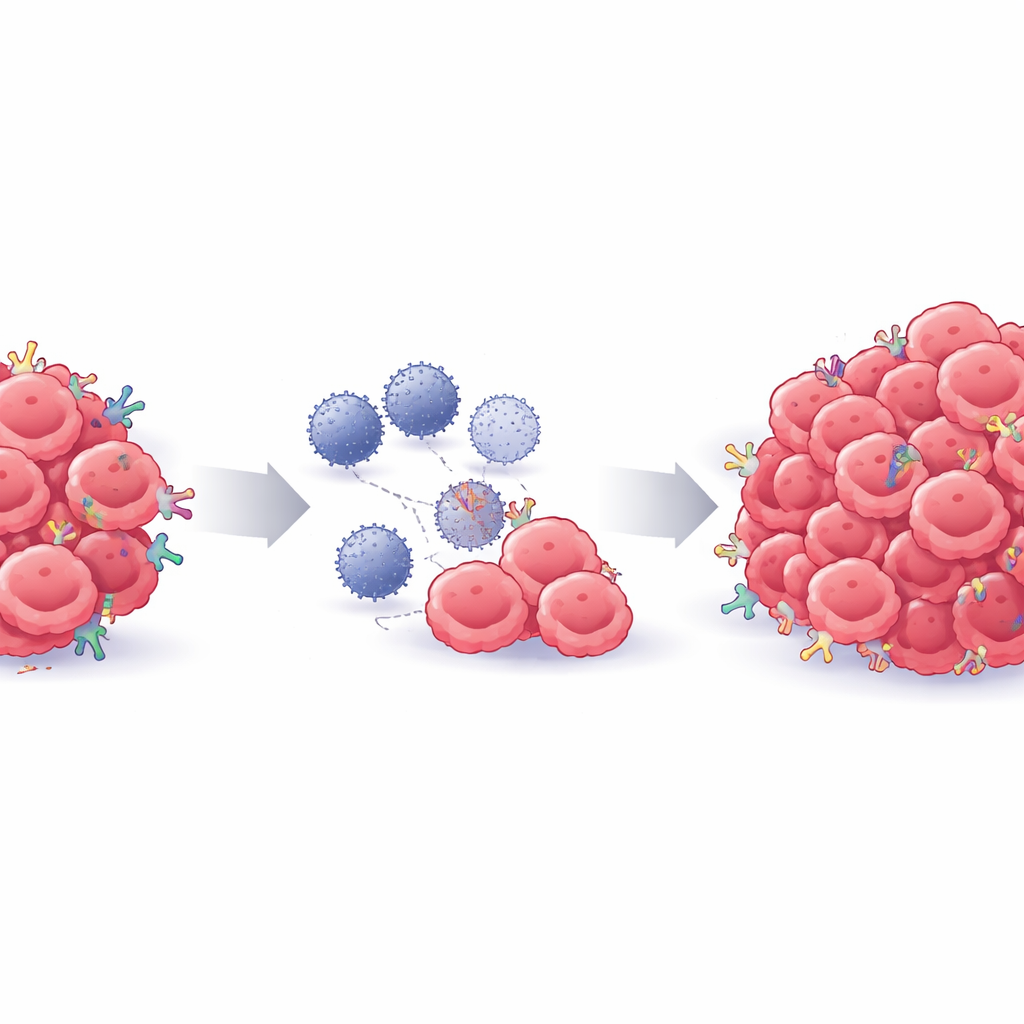
Cancer does not grow in isolation; it lives within a complex neighborhood of immune cells. Using multiple bioinformatics tools, the authors examined how ACE2 levels in colon tumors relate to immune activity. They found that tumors with more ACE2 tended to have fewer helpful immune signals and lower expression of key molecules that normally help immune cells recognize and kill cancer. One of the strongest patterns was a negative link between ACE2 and natural killer (NK) cells, a frontline immune cell type that can directly destroy abnormal cells. Tumors with high ACE2 showed weaker NK cell infiltration and lower levels of NK-associated markers. In a smaller set of patient samples tested by a sensitive gene-expression assay, tumors again showed high ACE2 alongside reduced expression of an NK-cell marker, reinforcing the idea that ACE2-rich cancers may keep NK cells at bay.
Clues for predicting immunotherapy success
Modern immunotherapies, such as drugs that block CTLA-4 or PD-L1, can unleash the immune system against cancer but only work well in a subset of patients. The study linked high ACE2 levels with several features that usually predict poorer responses, including lower tumor mutational burden, less genetic instability, and fewer neoantigens—new protein markers that help immune cells spot cancer. In real-world datasets of patients receiving checkpoint-blocking drugs, those with lower ACE2 expression tended to live longer and respond better. This suggests that ACE2 might help identify who is more or less likely to benefit from these powerful but costly treatments.
What this means for patients and doctors
By tying together big-data analysis, patient tissues, and lab experiments, the study paints a consistent picture: in colorectal cancer, high ACE2 appears to fuel tumor growth while blunting key parts of the immune response, especially natural killer cells. For a layperson, this means that the same molecule known from COVID-19 may also act as a cancer-promoting signal in the gut. Measuring ACE2 in tumors could help doctors better gauge prognosis and refine decisions about immunotherapy. In the longer term, if scientists can safely target ACE2 or the pathways it controls, it may offer a new way to slow colorectal cancer and boost the body’s own defenses against it.
Citation: Liu, G., Yu, X., Jiang, W. et al. Angiotensin‑converting enzyme 2 as an immune and prognostic biomarker in colorectal cancer. Sci Rep 16, 12650 (2026). https://doi.org/10.1038/s41598-026-43588-4
Keywords: colorectal cancer, ACE2, tumor immunity, biomarkers, immunotherapy