Clear Sky Science · en
Association of platelet to HDL-C ratio with short-term mortality in critically ill intracerebral hemorrhage patients: a MIMIC-IV analysis
Why a blood test might matter after a brain bleed
When someone suffers a sudden brain bleed, known as intracerebral hemorrhage, doctors must quickly judge who is most at risk of dying in the coming days. Today they rely mainly on brain scans and bedside exams, but these do not fully capture how a patient’s blood and blood vessels respond to the injury. This study asks a simple question with big practical implications: can a routine blood ratio, combining clotting cells and a "good" blood fat, help predict short‑term survival in people with severe brain bleeds treated in intensive care units? 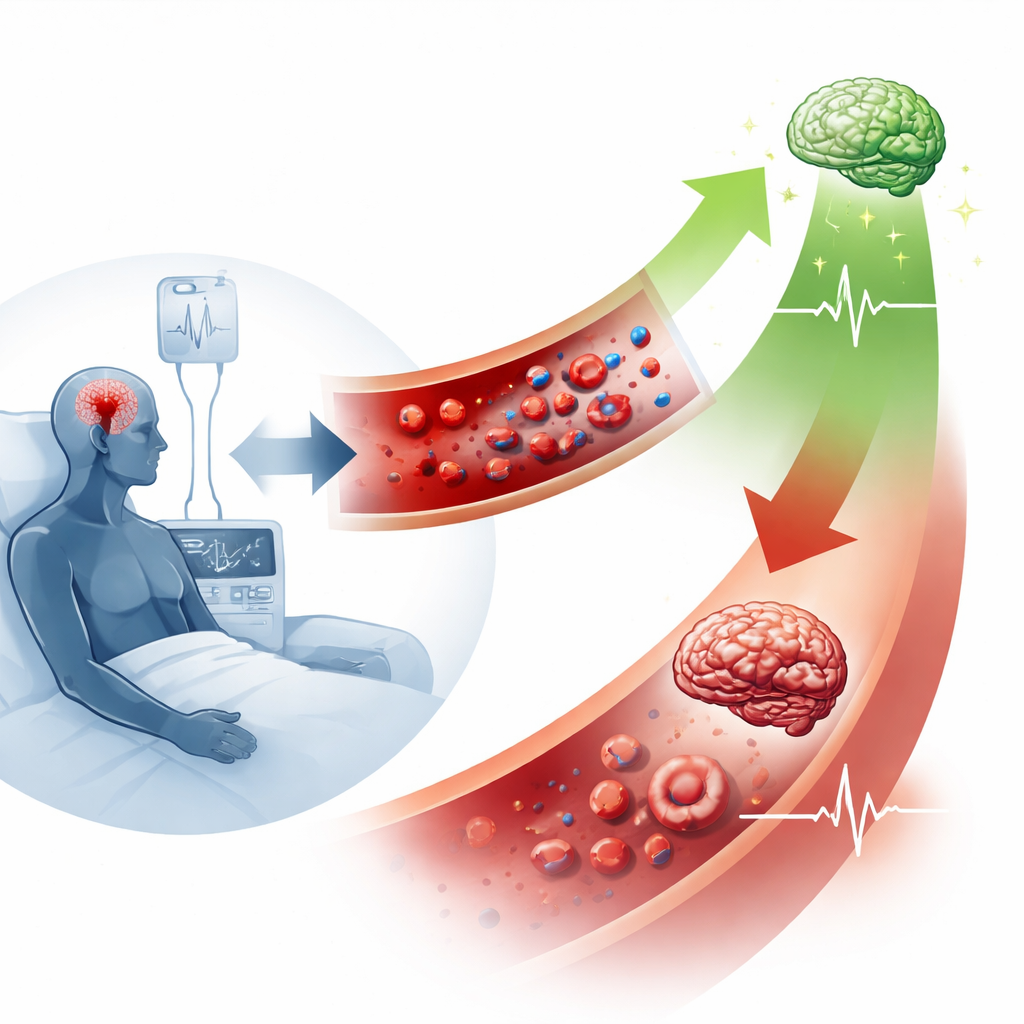
A closer look at brain bleeds in intensive care
Intracerebral hemorrhage is one of the deadliest types of stroke, especially in older adults. When a blood vessel bursts inside the brain, the expanding pool of blood and the swelling around it can quickly damage vital tissue. At the same time, the body mounts complex responses involving clotting, inflammation, and fat particles that help protect blood vessels. The authors focused on a simple measure that knits several of these forces together: the platelet to high‑density lipoprotein cholesterol ratio, or PHR. Platelets are tiny blood cells that help form clots and also fuel inflammation, while high‑density lipoprotein cholesterol—often called “good cholesterol”—can calm inflammation and protect vessel walls.
Turning electronic records into answers
To explore whether this ratio tracks with survival, the researchers turned to MIMIC‑IV, a large open database of intensive care patients from a Boston hospital. They identified 4,633 adults admitted with intracerebral hemorrhage and, after applying strict criteria and removing those with missing key data or very brief stays, analyzed 878 critically ill patients. For each person, they calculated PHR from the first platelet and high‑density lipoprotein measurements taken in the intensive care unit. They then followed patients to see whether they died in the hospital or within 30 days of admission, and used standard statistical models to account for age, vital signs, other illnesses such as diabetes, lab tests, and illness‑severity scores.
Higher balance, lower short‑term risk
The results showed a clear pattern: patients with higher PHR at intensive care admission were less likely to die in the short term. For every typical step up in PHR, the risk of dying in the hospital fell by about one quarter, even after adjusting for many other factors. When the group was divided into four levels, those in the highest quarter of PHR had roughly half the in‑hospital and 30‑day death risk of those in the lowest quarter. Statistical techniques that allow for curved relationships suggested that, across the range seen in this group, higher PHR lined up almost straight‑line with lower mortality. These trends held across men and women, and in people with and without high blood pressure or diabetes, and were similar in several sensitivity checks. 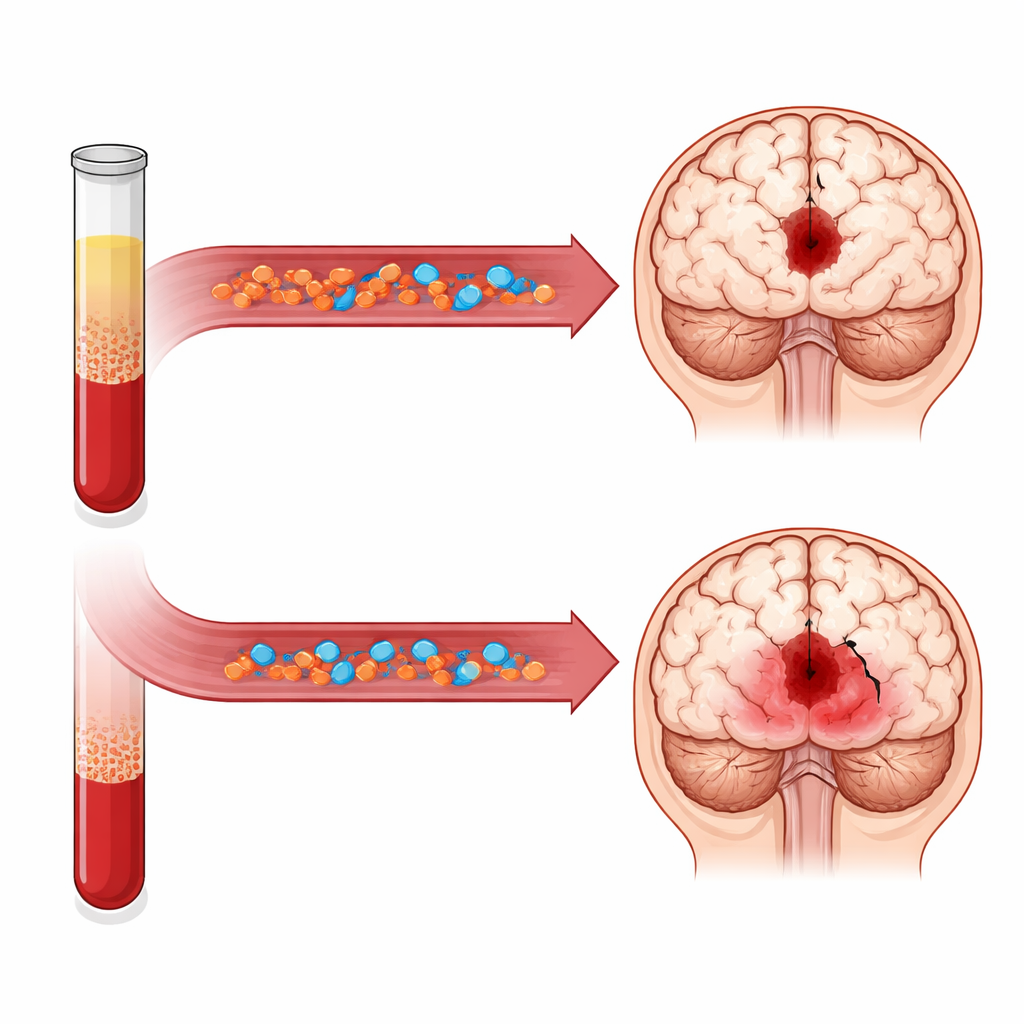
What this ratio might really be telling us
Why would a higher value of a marker often linked to heart disease risk predict better survival after a brain bleed? The authors suggest that in this special setting, PHR may reflect overall “reserve” rather than harm. A relatively high platelet count may signal that the body has more capacity to form a stable clot and limit further bleeding, while sufficient high‑density lipoprotein may help protect fragile small vessels and dampen harmful inflammation around the clot. In other words, a favorable balance of clotting power and vessel protection at the moment of admission could be a sign of a more resilient system, better able to withstand the sudden hemorrhage.
Limits and what comes next
Despite its promise, the ratio is not a magic crystal ball. Important details that strongly influence outcome after a brain bleed—especially the size and location of the clot seen on brain scans—were not available in the database and could not be accounted for. The study also relied on a single hospital, looked back in time rather than following patients prospectively, and only included people who survived long enough to reach intensive care and have blood drawn. As a result, PHR may be acting more as a marker of underlying disease severity than as a direct shield against death. The authors conclude that this simple blood ratio appears independently linked to short‑term survival in critically ill patients with intracerebral hemorrhage and might one day help doctors refine early risk estimates, but it should be tested and understood further before guiding treatment decisions.
Citation: He, Y., Zhao, Q. & Cai, Q. Association of platelet to HDL-C ratio with short-term mortality in critically ill intracerebral hemorrhage patients: a MIMIC-IV analysis. Sci Rep 16, 12829 (2026). https://doi.org/10.1038/s41598-026-43526-4
Keywords: intracerebral hemorrhage, stroke prognosis, platelet to HDL ratio, intensive care, biomarkers