Clear Sky Science · en
Subjective happiness moderates the relationship between implicit and explicit attitudes and excessive digital media use among adolescents
Why teens, phones, and feelings matter
For many families, the glow of a teenager’s phone is a constant backdrop to daily life. Parents worry about “addiction,” teens say they are just staying connected, and researchers debate how much screen time is too much. This study looks beyond simple hours online to ask a deeper question: how do teens’ emotional lives and their gut-level feelings about social media combine to push some toward unhealthy, excessive use while others stay in balance?
Everyday scrolling versus harmful overuse
The authors focus on what they call excessive digital media use: patterns where young people struggle to control time spent online, stay on devices longer than intended, and continue even when school, sleep, or relationships suffer. This sits on a spectrum. At one end is ordinary, heavy use; at the other are serious problems that start to resemble addiction. Instead of labeling teens as “addicted,” the researchers capture this broader range of troubling behavior, which can still interfere with well-being even if it does not meet clinical criteria.
How happiness shapes online habits
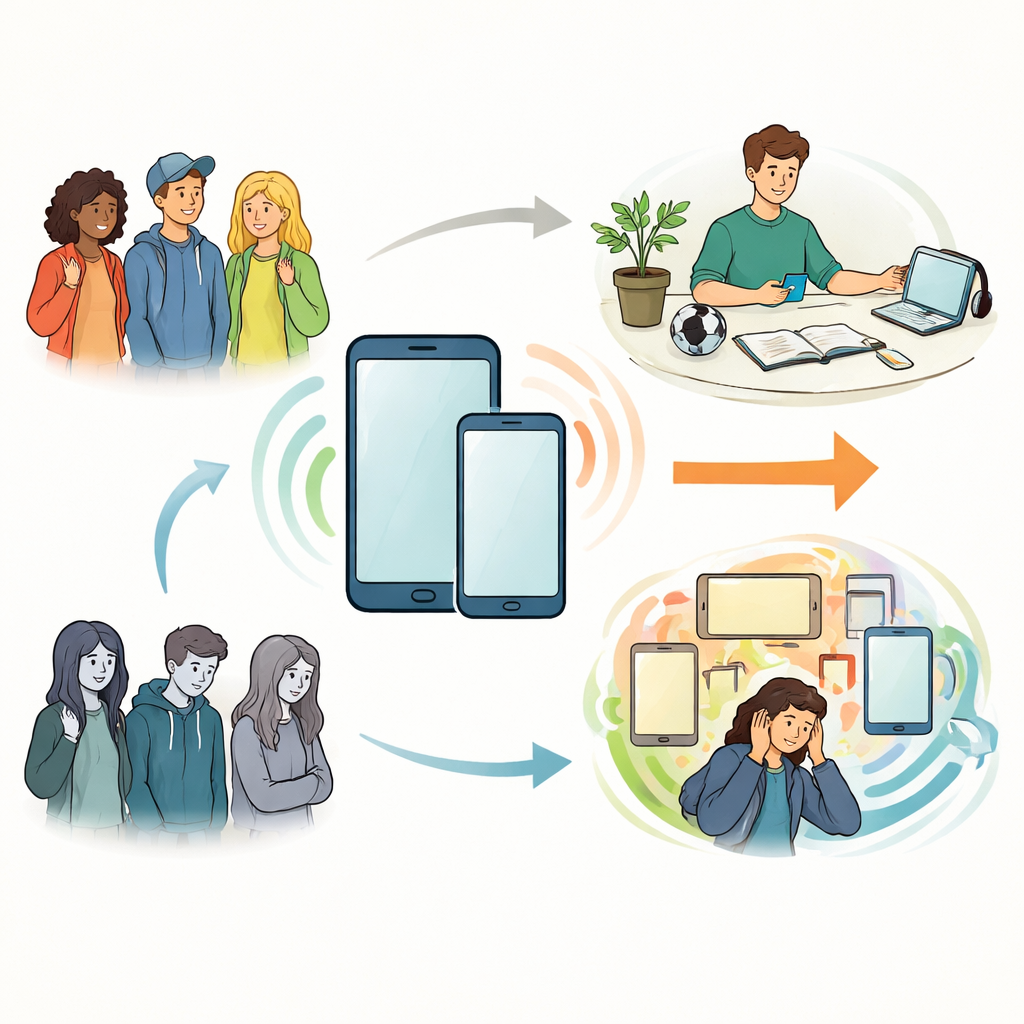
The key idea is that a teen’s general level of happiness changes how their attitudes toward social media translate into behavior. The researchers surveyed 1,425 students aged 11–16 in Czech schools, then pulled out two extreme groups: very happy and very unhappy adolescents based on how they had felt over the past six months. Both groups, on average, associated social media with positive experiences at an automatic, gut level. But unhappy teens reported more impulsive online behavior, less self-control in everyday life, and more excessive digital media use than their happier classmates, despite actually rating social media slightly less positively when answering directly.
Hidden pulls, conscious opinions, and self-control
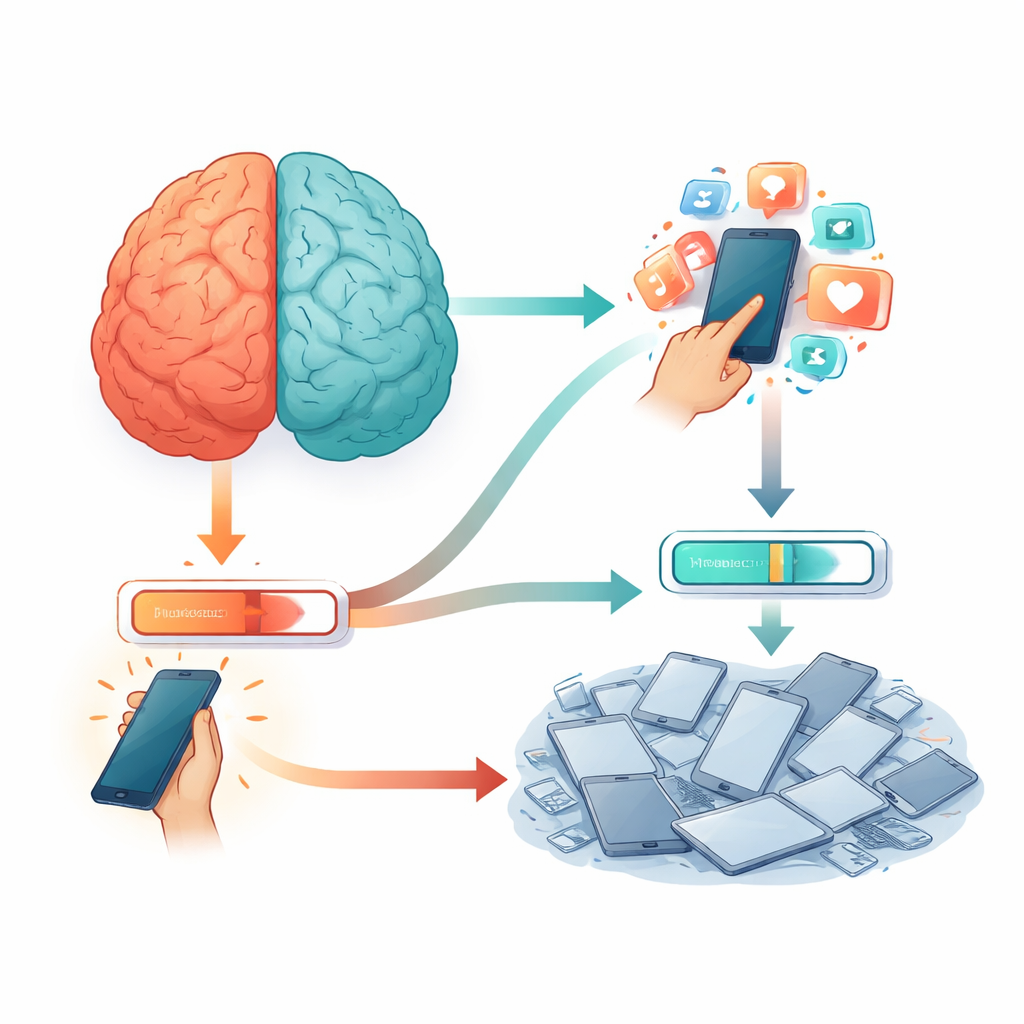
To untangle these patterns, the study distinguishes between two types of attitudes. Implicit attitudes are fast, automatic reactions that show up in split-second tasks on a computer, capturing how strongly social media is tied in memory to pleasant feelings. Explicit attitudes are the conscious opinions teens state when asked if social media is good, relaxing, entertaining, and so on. The team also measured general self-control (how well teens can resist impulses and stick to goals) and specific impulsive media habits, such as staying online longer than planned or rushing through homework to get back to a screen.
Different mind paths for happy and unhappy teens
Among unhappy adolescents, both implicit and explicit attitudes mattered—but in different ways. When their automatic feelings toward social media were more positive, these teens were more likely to use digital media impulsively, showed lower self-control, and ended up with more excessive use. In other words, their gut-level attraction to online spaces helped drive a chain from quick urges to weaker self-regulation and, finally, to problematic engagement. Their stated, explicit opinions about social media also predicted excessive use, but only directly: seeing social media as comforting and pleasant appeared to support heavy, possibly escapist use, without necessarily going through impulsivity or self-control. For happy adolescents, the story was strikingly different. Their implicit and explicit attitudes did not meaningfully predict excessive digital media use. What really set them apart was stronger self-control, which seemed to shield them from slipping into harmful patterns even though they also generally liked social media.
What this means for parents, educators, and teens
The findings suggest that there is no single “screen-time rule” that fits every adolescent. Teens who feel generally unhappy are more vulnerable to the hidden pull of social media and more likely to use it in ways that are impulsive and hard to rein in. For these young people, simply telling them to cut back is unlikely to work. Support that boosts overall well-being, builds self-control skills, and helps them notice when online time is being used to escape difficult feelings may be more effective. Happier teens, by contrast, seem better able to enjoy social media without letting it take over their lives. Overall, the study shows that both the emotional state of the teenager and the balance between fast impulses and deliberate self-control help determine whether digital media remains a helpful tool—or becomes a source of real trouble.
Citation: Hladik, J., Hrbackova, K. & Petr Safrankova, A. Subjective happiness moderates the relationship between implicit and explicit attitudes and excessive digital media use among adolescents. Sci Rep 16, 12826 (2026). https://doi.org/10.1038/s41598-026-43516-6
Keywords: adolescent digital media use, subjective happiness, self-control, social media attitudes, problematic internet use