Clear Sky Science · en
Big data application and firm markups: evidence from China
Why data decisions matter for everyday business
When you shop online or use a ride-hailing app, every click, swipe, and purchase leaves a digital trace. Companies increasingly use these traces—"big data"—to guide decisions about what to sell, how to make it, and what to charge. This study asks a simple but powerful question: when firms in China adopt big data tools in a serious way, does it actually let them charge higher prices over their costs—and why should we care if it does?

Looking beyond simple productivity
Traditional measures of business success, like output per worker or total sales, often miss what is happening inside modern digital firms. In markets shaped by network effects and platforms, a few big players can dominate, and competition may center less on cutting costs and more on using information smartly. The author argues that a better yardstick for a firm’s market power is its “markup,” the gap between what it charges customers and what it costs to produce one more unit. Markups summarize both cost savings and customers’ willingness to pay for better products, making them a natural way to capture whether data-driven strategies truly build lasting advantages.
How big data can boost a firm’s edge
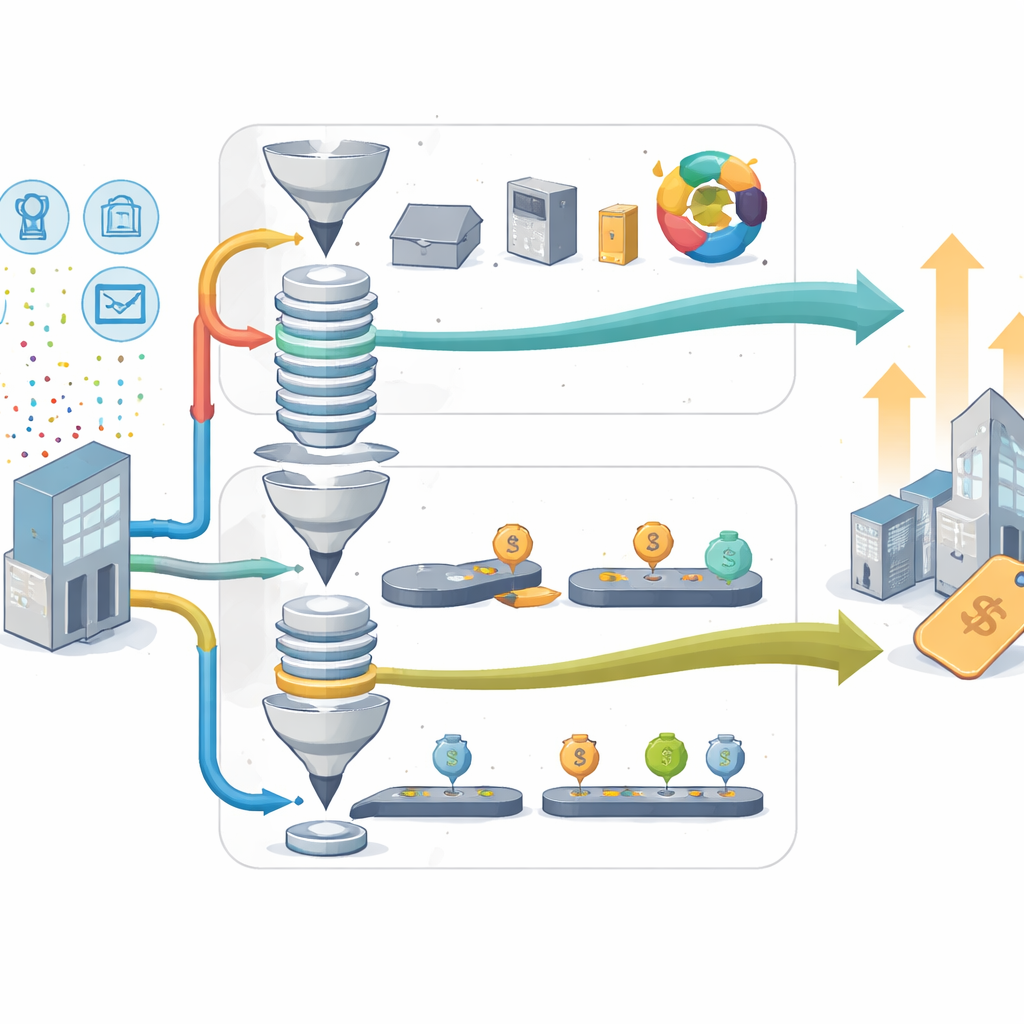
The paper first develops a theoretical model of firms that differ in their costs and in how innovative their products are. In this framework, big data applications—systems for collecting, cleaning, and analyzing massive, fast-moving, and varied data—do two main things. They help companies design more distinctive products that match consumer tastes, and they streamline operations so that each unit is cheaper to produce. Both channels raise markups: unique products face less head‑to‑head price competition, while lower production costs widen the gap between price and cost even if list prices barely move.
Measuring data use with AI
To test these ideas, the study needs a way to measure how deeply each firm has embraced big data. Instead of relying only on a simple headcount of data analysts or on survey responses, the author turns to the text of annual reports from Chinese listed companies between 2002 and 2023. A large language model is used to scan these documents, identify sentences that truly describe concrete big data initiatives, and sort them into layers such as basic infrastructure, technologies, organization, and applications. The frequency of such validated descriptions is turned into a firm-level index of big data application, which is then linked to financial and patent data to estimate each firm’s markups.
What the Chinese data reveal
Using a panel of A‑share listed firms, the study employs fixed‑effects and instrumental‑variable techniques to isolate the impact of big data from other influences like management quality or regional shocks. Across many different checks—alternative instruments, different ways of computing markups, and substitute measures of data investment—the result is consistent: firms that step up their use of big data see statistically and economically meaningful increases in their markups. Further analysis shows that these gains work mainly through two paths. First, data‑rich firms file more product‑oriented patents, invest more in research and development, and convert that spending into new offerings more efficiently. Second, their overall productivity improves, as indicated by higher total factor productivity and labor productivity, suggesting smoother, better‑coordinated operations.
Not all firms benefit equally
The payoff from big data turns out to be highly uneven. Larger companies and those with a higher share of technical staff are better positioned to turn data into market power, likely because they have the complementary skills and infrastructure to make sense of complex information. Firms with deeper technological reserves, or operating in technology‑intensive industries, also gain more. Finally, the broader environment matters: cities with stronger digital business ecosystems and provinces with more market‑oriented institutions amplify the effect of big data on markups. In short, data alone is not enough—its value depends on the surrounding organizational capabilities, technology base, and policy setting.
What this means for consumers and policymakers
For a lay reader, the bottom line is that big data can indeed help firms both work smarter and charge more, by enabling better products and leaner production. This raises profits and can fuel further innovation, but it may also concentrate market power in the hands of firms that already enjoy scale, skills, and favorable environments. The study suggests that if societies want data to boost efficiency without eroding healthy competition, they must pair investments in digital infrastructure with support for smaller and less advanced firms, while paying close attention to how data-driven strategies reshape prices and power in the marketplace.
Citation: Wang, D. Big data application and firm markups: evidence from China. Sci Rep 16, 11670 (2026). https://doi.org/10.1038/s41598-026-43480-1
Keywords: big data, firm markups, digital economy, product innovation, China