Clear Sky Science · en
Media analysis reveals the conservation risk of lost and active fishing gear in freshwater ecosystems of Hungary
Hidden dangers in peaceful waters
To many people, a quiet afternoon of fishing by a river or lake seems harmless. Yet the hooks and lines left behind can quietly injure birds, turtles and other wildlife long after anglers go home. This study looks at how often this happens in Hungary’s freshwater habitats, what kinds of animals are affected, and why these incidents matter for nature conservation.
Looking for clues in online stories
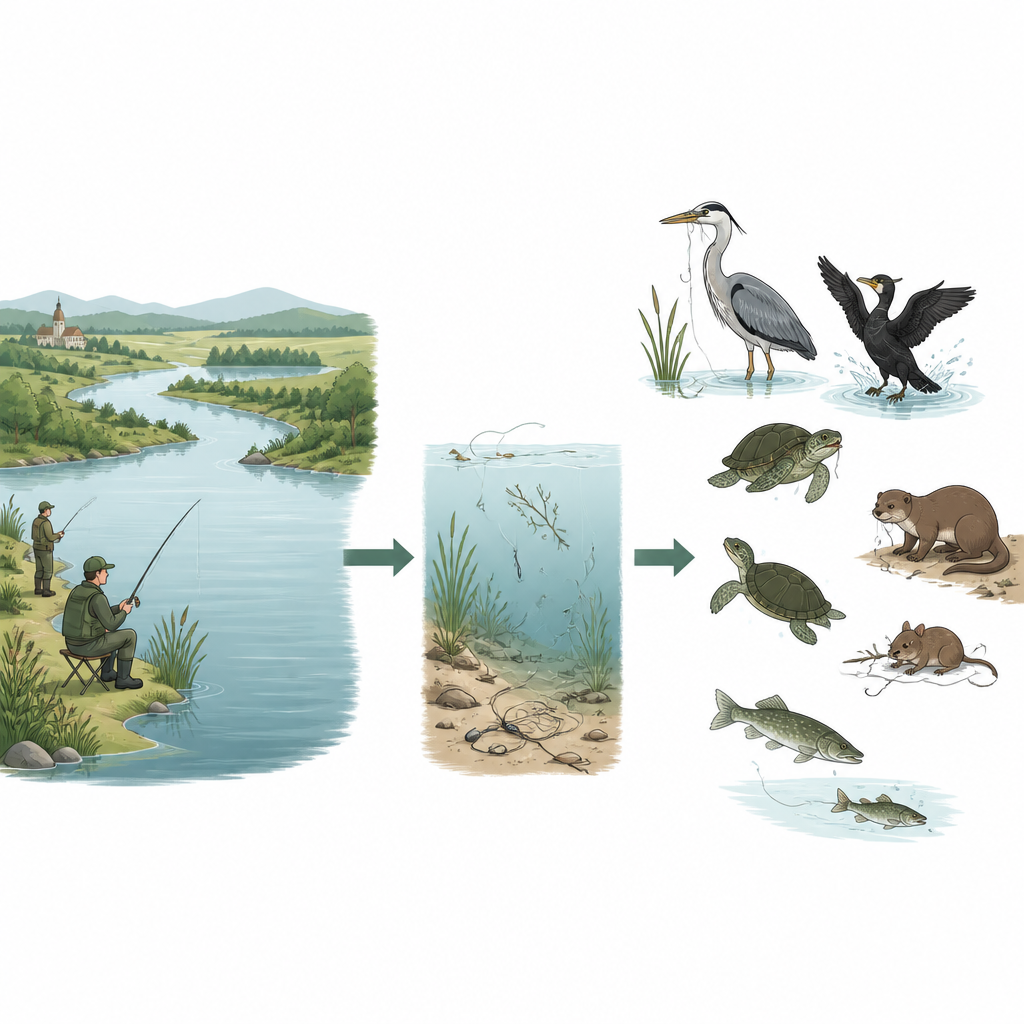
Instead of walking every riverbank, the researchers turned to the internet. They systematically searched Facebook, YouTube, Google and a large Hungarian digital archive for posts showing animals caught in fishing gear. Only records where an animal was clearly hooked or tangled were included, and the species had to be identifiable from the images or description. In total, they collected 200 verified cases between 1984 and 2024, covering 226 individual animals from at least 64 kinds of wildlife other than fish. Whenever possible, they also noted where the event happened, what type of water body it was, what gear was involved, and whether the animal lived or died.
Who gets caught and where
The online trail revealed that birds were the most frequent victims, making up about three fifths of all recorded animals. Reptiles, especially freshwater turtles, came next, while mammals, crabs, amphibians and molluscs appeared less often. Many of the affected species are legally protected in Hungary, and some are listed internationally as near threatened or vulnerable. Most records came from natural waters such as rivers and lakes, with fewer from artificial sites like fishing ponds and canals. A small but notable share of animals were found far from water, suggesting that birds and other creatures can carry lost gear into fields, gardens and even nests.
Lost gear versus active fishing
The study distinguished between gear still in use and gear that had been abandoned, lost or discarded. More than half of all recorded animals were harmed by this lost gear, which can continue to trap wildlife for months or years. Lines and hooks were by far the main culprits, while nets played only a minor role in this inland setting. Birds were particularly likely to be entangled in old lines, while reptiles and some other groups were more often hooked by gear in active use. Most animals seen in online posts were freed and appeared to survive, but the authors note that unseen cases and delayed deaths almost certainly mean the true impact is larger than the numbers suggest.
Limits of online evidence
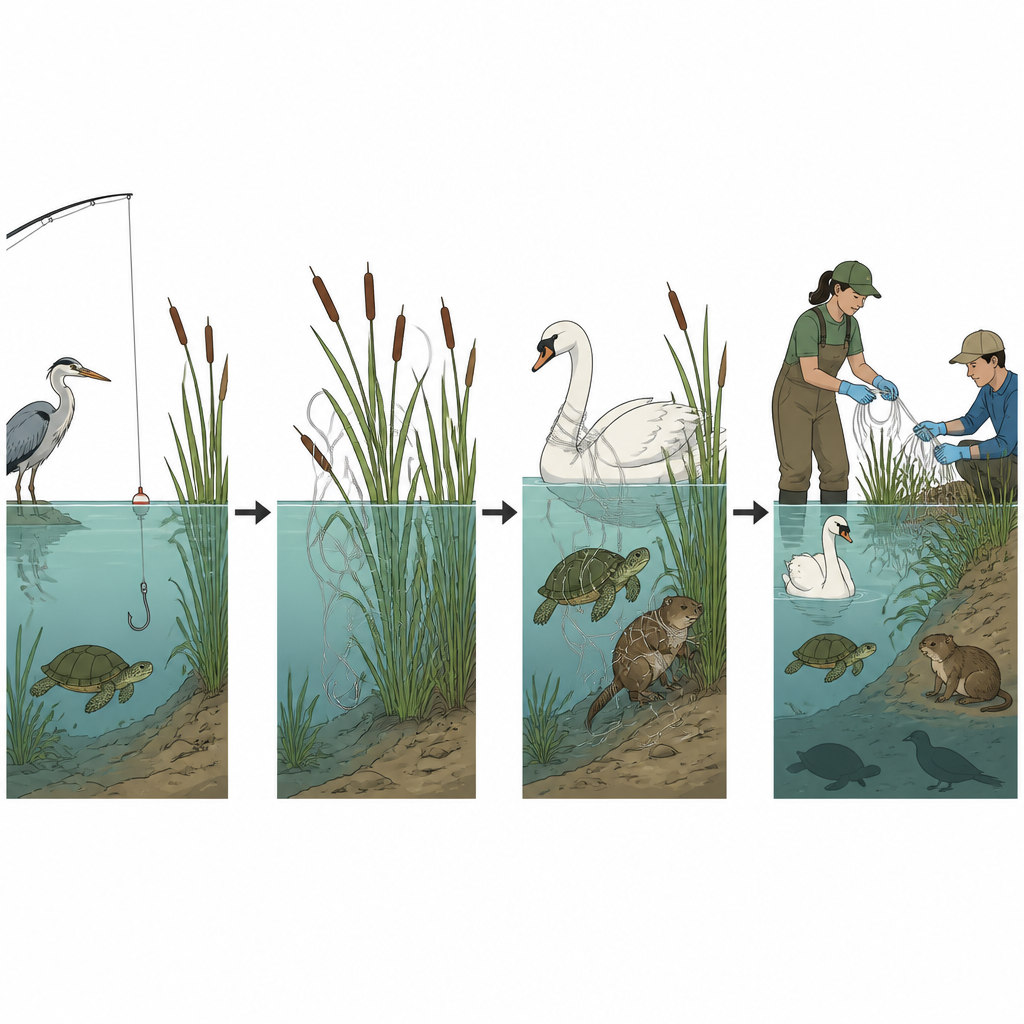
Because the study relied on media posts, it reflects what people choose to photograph and share rather than every incident that occurs. Large, eye catching species such as swans or herons are more likely to be noticed and reported than small, secretive creatures. The rise of smartphones and social media over the past decade also means that recent years show many more records, even if the real number of bycatch events did not change as sharply. For these reasons, the authors see their work as a warning signal rather than a precise count. They argue that social media is a powerful starting point for spotting problems, but it should be paired with systematic field surveys and structured citizen science projects to reveal the full picture.
What this means for freshwater wildlife
Overall, the study shows that both active and lost fishing gear can pose a serious conservation concern for freshwater animals in Hungary. Protected birds, turtles and mammals are regularly harmed by simple hooks and lines that are cheap to lose and hard to find again. The authors recommend regular cleanup of old tackle, wider use of wildlife friendly gear, and education efforts so anglers understand how even a single discarded line can injure non target species. For readers, the message is clear: enjoying fishing and protecting wildlife can go hand in hand when we take responsibility for the gear we use and leave behind.
Citation: Löki, V., Neményi, Z., Hagyó, A. et al. Media analysis reveals the conservation risk of lost and active fishing gear in freshwater ecosystems of Hungary. Sci Rep 16, 15187 (2026). https://doi.org/10.1038/s41598-026-43420-z
Keywords: freshwater bycatch, lost fishing gear, angler impacts, wildlife entanglement, citizen science data