Clear Sky Science · en
Omega-3 fatty acids improve lipid metabolism by regulating miR-34a
Why this research matters for everyday health
Fatty liver disease and high blood fats are becoming increasingly common as diets grow richer in calories and fat. Many people take fish oil or other omega-3 supplements hoping to protect their hearts and livers, but how these fats actually work inside the body is still being uncovered. This study explores how omega-3 fatty acids improve the way the liver handles fat, homing in on a tiny genetic switch called miR-34a that may help explain why omega-3s are helpful in some metabolic diseases.
From rich diets to fatty livers
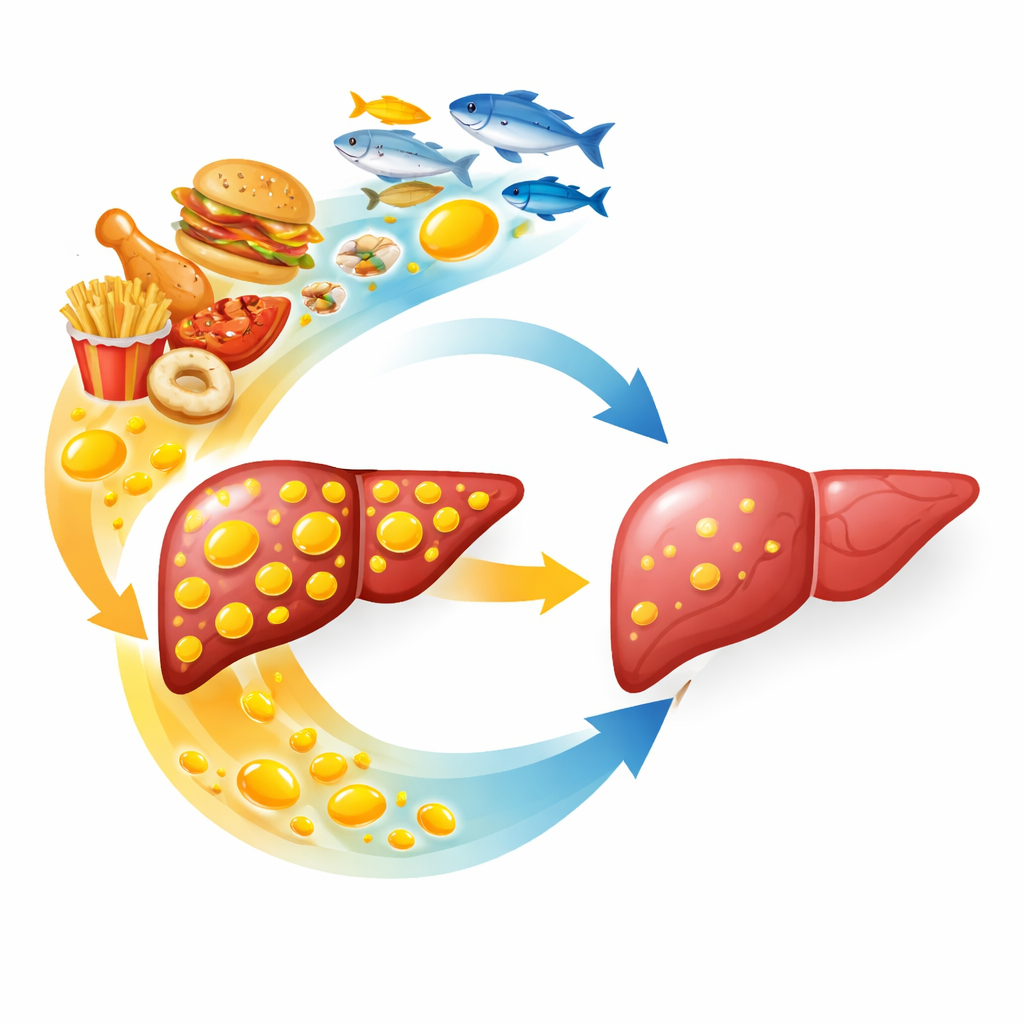
The researchers first created a model of diet-driven metabolic trouble by feeding mice a high-fat diet for 12 weeks. Compared with control animals on normal chow, these mice gained more weight, had higher levels of triglycerides and cholesterol in their blood, and showed signs of insulin resistance: their blood sugar stayed higher for longer after a sugar challenge, and their bodies needed more insulin to cope. When the scientists examined the livers of these animals, they found large buildups of fat, confirming the development of a fatty liver state similar to early non-alcoholic fatty liver disease in humans.
Testing omega-3s as a liver rescue
To see whether omega-3 fatty acids could reverse this damage, the high-fat–fed mice were given different doses of a concentrated omega-3 preparation rich in EPA and DHA. Over eight weeks, omega-3 treatment lowered blood triglycerides, total cholesterol, and the “bad” LDL cholesterol, while leaving “good” HDL cholesterol largely unchanged. Inside the liver, both triglyceride and cholesterol levels dropped, and microscope images showed far fewer and smaller fat droplets in the omega-3–treated animals than in untreated high-fat controls. Interestingly, omega-3s improved how the animals handled sugar and insulin but did not significantly change overall body weight, suggesting a direct effect on metabolism rather than simple weight loss.
Zooming in on microscopic switches
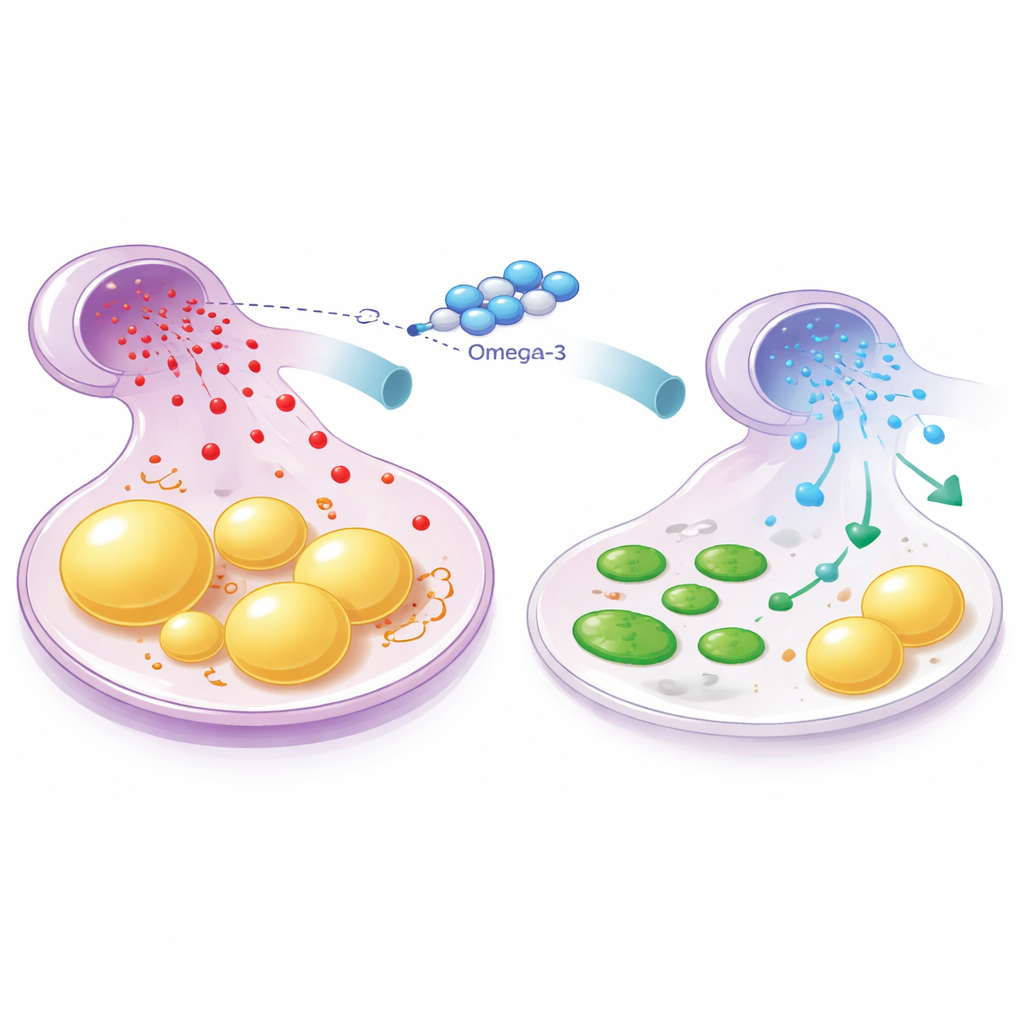
The team then looked at molecular players that control whether the liver stores fat or burns it. In high-fat–fed mice, levels of miR-34a—a short RNA molecule that fine-tunes gene activity—were elevated, while protective proteins that promote fat burning, such as SIRT1, PGC-1α, and CPT-1A, were reduced. At the same time, a protein that encourages fat production, SREBP-1c, was increased. Omega-3 treatment flipped this pattern: miR-34a and SREBP-1c went down, and the fat-burning proteins rose, in a clear dose-dependent fashion. These changes were seen both at the gene and protein level, suggesting a robust remodeling of the liver’s fat-handling machinery.
Confirming the mechanism in human liver cells
To test whether the same story holds in human cells, the researchers used HepG2 liver cells in a dish and stressed them with palmitic acid, a saturated fat that drives fat buildup. As in the mice, this treatment boosted fat storage in the cells and shifted gene activity toward more fat production and less fat breakdown. Adding EPA, a major omega-3, reduced fat accumulation and restored a healthier balance of these key proteins. Crucially, when the scientists artificially boosted miR-34a levels, EPA could no longer deliver its benefits: fat-burning proteins fell again, the fat-building protein rose, and the cells kept accumulating fat. This showed that miR-34a acts as a central switch that omega-3s must silence in order to protect liver cells.
What this means for people and their livers
Taken together, the study suggests that omega-3 fatty acids help clear fat from the liver not just by diluting dietary fats, but by actively rewiring how liver cells handle lipids. By dialing down the tiny regulator miR-34a, omega-3s free up SIRT1 and related pathways that ramp up fat burning and tone down fat production. While more work is needed to see how this mechanism operates in people with advanced liver disease, these findings strengthen the biological basis for using omega-3s to support metabolic health and may guide future therapies that target miR-34a more directly.
Citation: Li, L., Tang, Y., Wang, X. et al. Omega-3 fatty acids improve lipid metabolism by regulating miR-34a. Sci Rep 16, 12390 (2026). https://doi.org/10.1038/s41598-026-43353-7
Keywords: omega-3 fatty acids, fatty liver disease, lipid metabolism, microRNA miR-34a, insulin resistance