Clear Sky Science · en
Synergistic adsorption of NH3 and H2S over layered hydrochar-derived pyrochars: mechanistic divergence and cooperative acid-base activation
Turning Farm Smells into a Resource
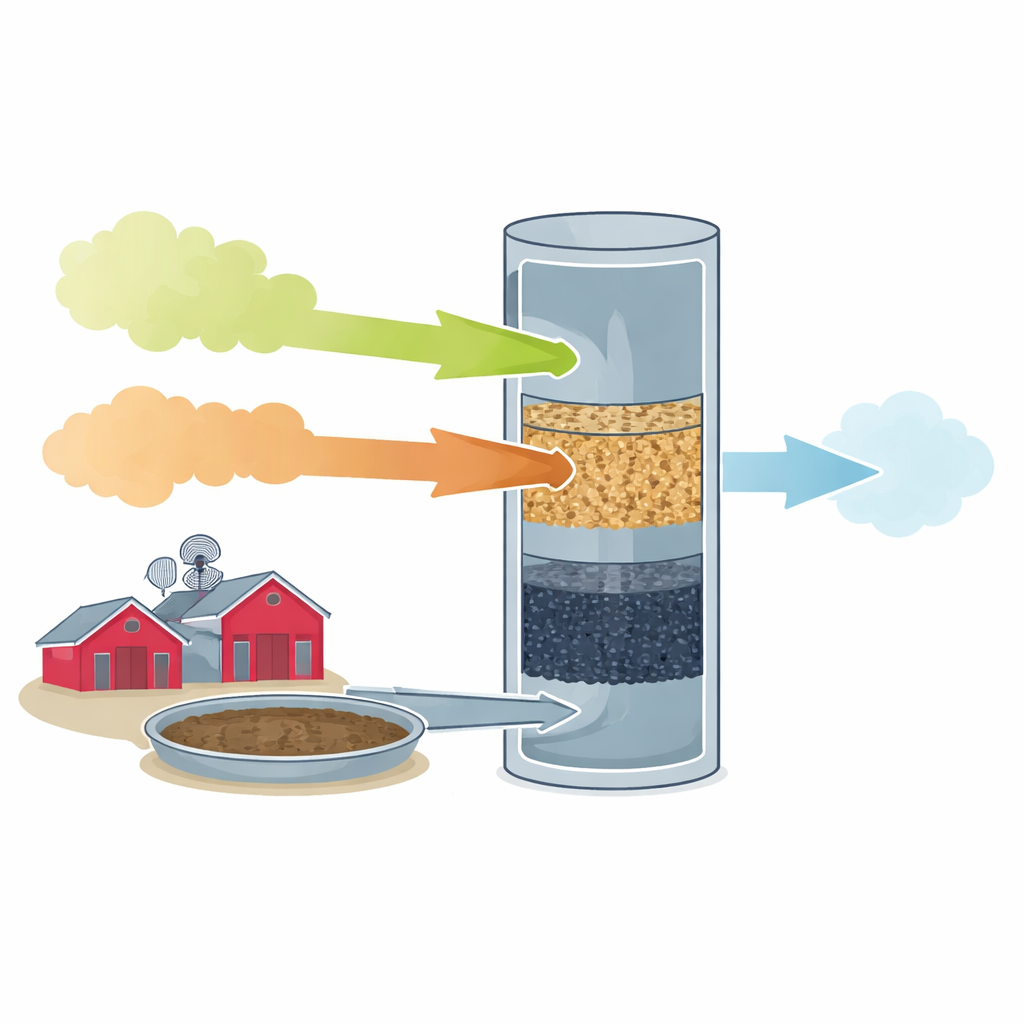
Anyone who has driven past a large pig farm knows how powerful the smell can be. Behind that odor are gases that can harm workers, nearby communities, and the wider environment. This study explores an inventive way to tackle two of the worst offenders—ammonia and hydrogen sulfide—by turning the farms’ own manure into a layered filter material that captures these gases more efficiently than conventional approaches.
Why Barn Air Is So Hard to Clean
Modern livestock operations produce huge volumes of wet manure, which release a cocktail of unpleasant and sometimes toxic gases. Two key culprits are ammonia, which is sharp and irritating, and hydrogen sulfide, which smells like rotten eggs and can be dangerous even at low levels. These gases behave very differently: ammonia is basic, while hydrogen sulfide is acidic. Most common filter materials are good at capturing one type or the other, but not both at the same time, especially when the manure is so wet that drying it before treatment would consume large amounts of energy.
Cooking Manure into a Two-Layer Filter
The researchers first used a process called hydrothermal carbonization to turn wet swine manure into a dry, coal-like solid known as hydrochar without the need for energy-intensive drying. They then heated this hydrochar to two different temperatures, 350 °C and 550 °C, to produce two distinct “pyrochars.” The lower-temperature char (PMB350) kept many oxygen-rich surface groups and remained moderately alkaline, while the higher-temperature char (PMB550) developed a much larger internal surface area, smaller pores, stronger alkalinity, and more exposed mineral sites such as calcium and magnesium. In simple terms, one material offered many chemically active sites for grabbing ammonia, and the other provided abundant basic and mineral spots for binding hydrogen sulfide.
What Happens When Each Gas Arrives Alone
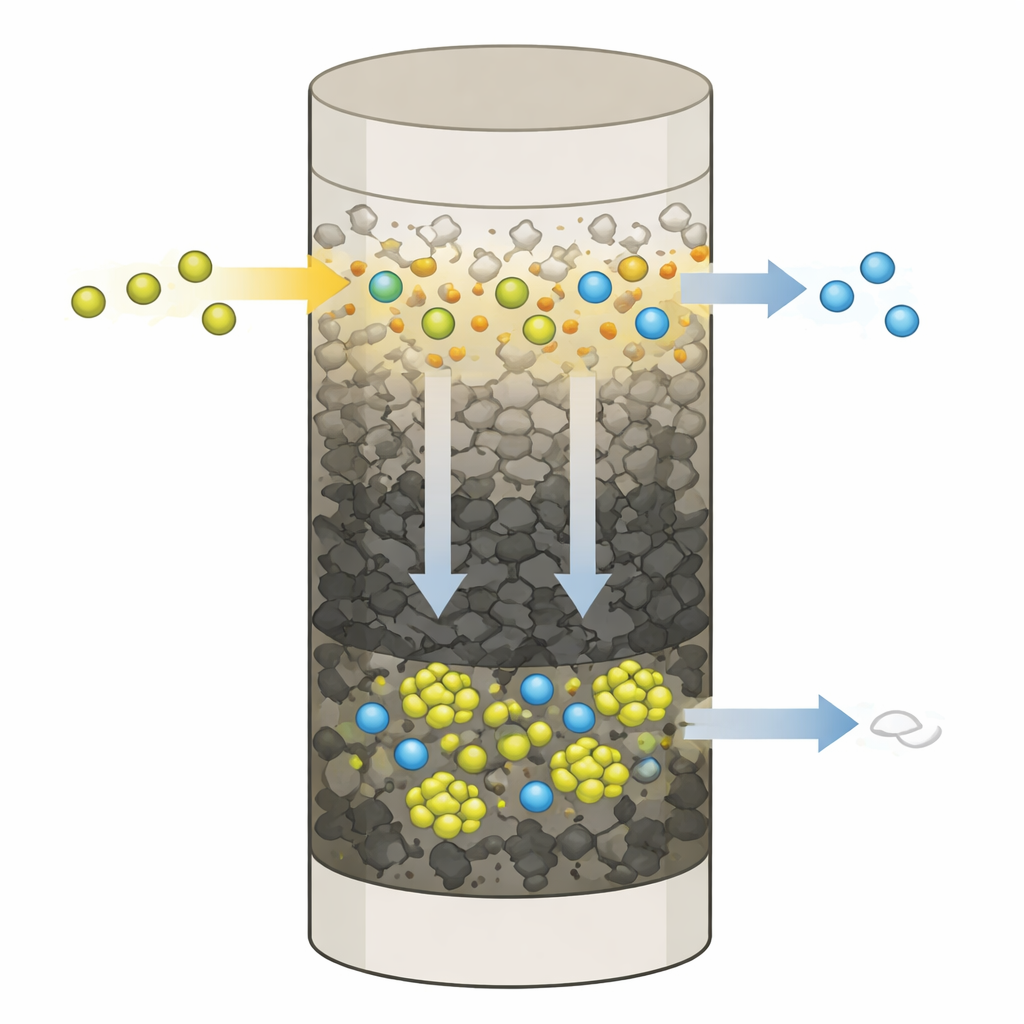
When the team flowed single gases through small packed columns, each char showed a clear specialty. The lower-temperature char captured more ammonia, storing it mainly as ammonium formed by reactions with its acidic surface groups. The higher-temperature char, by contrast, excelled at removing hydrogen sulfide—nearly four times better than the cooler char—thanks to its higher surface area, more developed pores, and mineral-rich, basic surface. Simply stacking the two materials in a column for a single gas, however, did not always help: for ammonia, the front layer (PMB350) soaked up most of the gas, leaving little for the second layer to handle.
Gas Cooperation in a Layered Bed
The real surprise emerged when ammonia and hydrogen sulfide were fed together through a column containing both chars in sequence. Regardless of which material was placed first, hydrogen sulfide removal improved dramatically compared with hydrogen sulfide alone. Detailed surface analyses showed that ammonia did more than just compete for space: once captured in the upstream layer, it effectively made that surface more basic, helping hydrogen sulfide split apart and oxidize into sulfate. These oxidized sulfur species, carried downstream, were then firmly locked onto mineral sites in the hotter char as stable mineral forms such as calcium sulfate. Instead of hindering each other, the two gases triggered a cascade of reactions that spread the work between layers: activation and partial transformation in the first layer, followed by permanent trapping in the second.
What This Means for Cleaner Air Around Farms
In everyday terms, the study shows that arranging two kinds of manure-based charcoal in layers can turn a smelly waste problem into a more effective odor filter. The cooler char is tuned to grab ammonia and in doing so “primes” the surface to help break down hydrogen sulfide, while the hotter, more mineral-rich char acts as a deep reservoir that locks sulfur away in solid form. This layered, waste-derived filter works without added chemicals or catalysts and offers a promising, low-cost way to cut harmful smells and gases from barns and other facilities. With further testing under real barn conditions, such systems could help farms reduce both nuisance odors and health risks while recycling their own waste into a useful cleaning tool.
Citation: Ko, M., Ko, J.H. Synergistic adsorption of NH3 and H2S over layered hydrochar-derived pyrochars: mechanistic divergence and cooperative acid-base activation. Sci Rep 16, 13860 (2026). https://doi.org/10.1038/s41598-026-43340-y
Keywords: livestock odor control, biochar filters, ammonia removal, hydrogen sulfide capture, swine manure recycling