Clear Sky Science · en
Zinc finger protein Y - linked as a potential biomarker for autoimmune hepatitis and multiple sclerosis which overlap with immune infiltration
One Gene, Two Mysterious Diseases
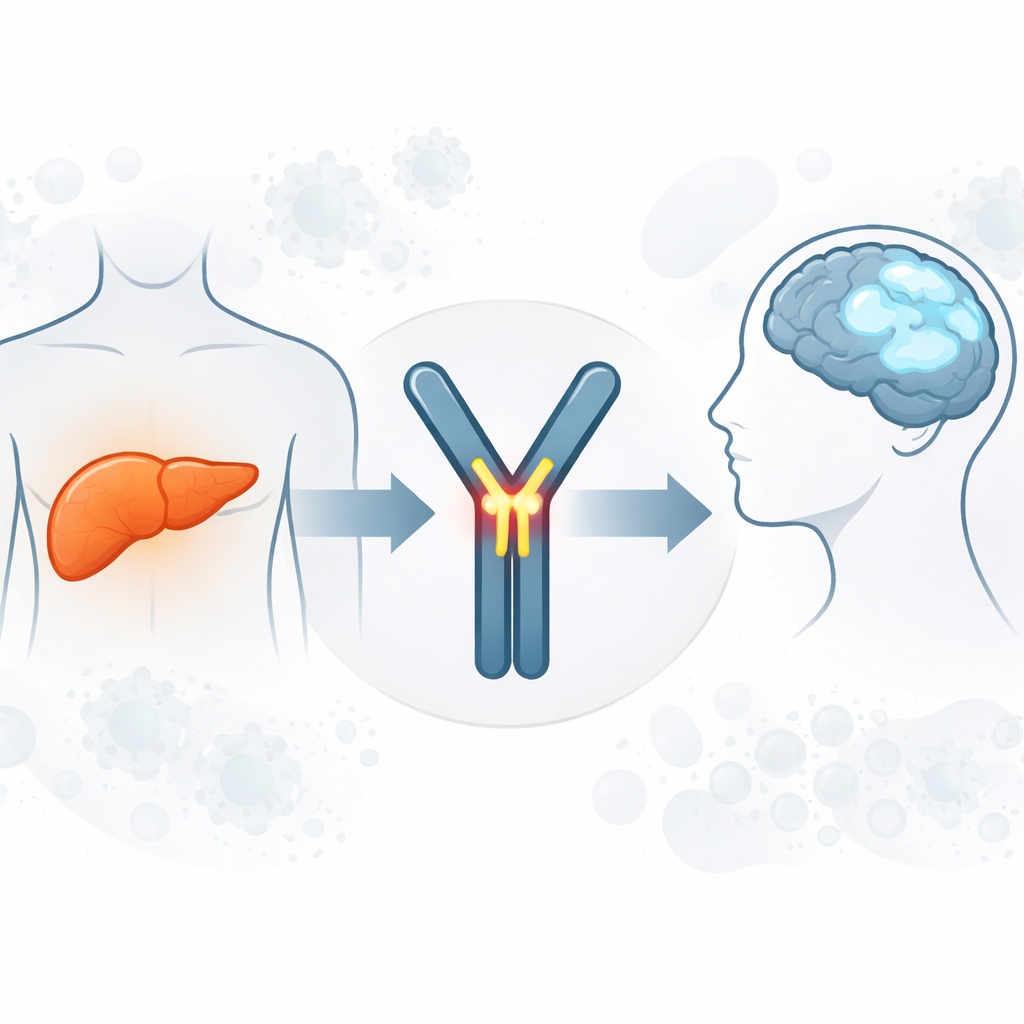
Autoimmune hepatitis and multiple sclerosis seem, at first glance, to strike very different parts of the body—the liver and the brain. Yet doctors have long noticed that some patients develop both, hinting that these conditions may share hidden roots. This study uses large gene databases and mouse experiments to search for a common signal linking these seemingly separate illnesses, and lands on an unexpected suspect: a Y‑chromosome gene called ZFY that may help explain why the immune system turns against both liver and brain.
When the Immune System Misfires
Autoimmune hepatitis is a chronic attack on the liver, while multiple sclerosis is a chronic attack on the brain and spinal cord. In both, the body’s own defense system misidentifies healthy tissue as an enemy. The authors point out that patients with one of these diseases are more likely than expected to develop the other, and that both are tied to similar genetic risk regions and long‑lasting immune overactivity. That overlap suggests there might be shared molecular triggers that push the immune system toward a self‑destructive path affecting different organs.
Mining Big Data for Shared Genetic Clues
The researchers turned to public gene‑expression databases, which record which genes are switched on or off in patient tissues. They analyzed liver samples from people with autoimmune hepatitis and brain samples from people with multiple sclerosis, comparing them to healthy controls. Hundreds of genes were altered in each disease, but only 26 genes changed in both. By mapping how these shared genes interact and where in the body they are usually active, the team found that many of them cluster in the liver, colon, and brain, hinting at a broader “gut–liver–brain” connection in autoimmunity.
Zeroing In on a Y‑Linked Biomarker
To narrow the list further, the team used a machine‑learning method that weighs which genes best distinguish sick from healthy tissue. This analysis highlighted several promising candidates, but one stood out across both diseases: Zinc Finger Protein Y‑linked, or ZFY, a gene found only on the Y chromosome. In both autoimmune hepatitis and multiple sclerosis samples, ZFY activity was consistently lower than in healthy tissues. Statistical tests suggested that measuring this drop could help separate patient and control samples with good accuracy, at least in the datasets studied, making ZFY a potential diagnostic marker—especially relevant for male patients, who carry the Y chromosome.
Immune Cells and a Key Signaling Pathway
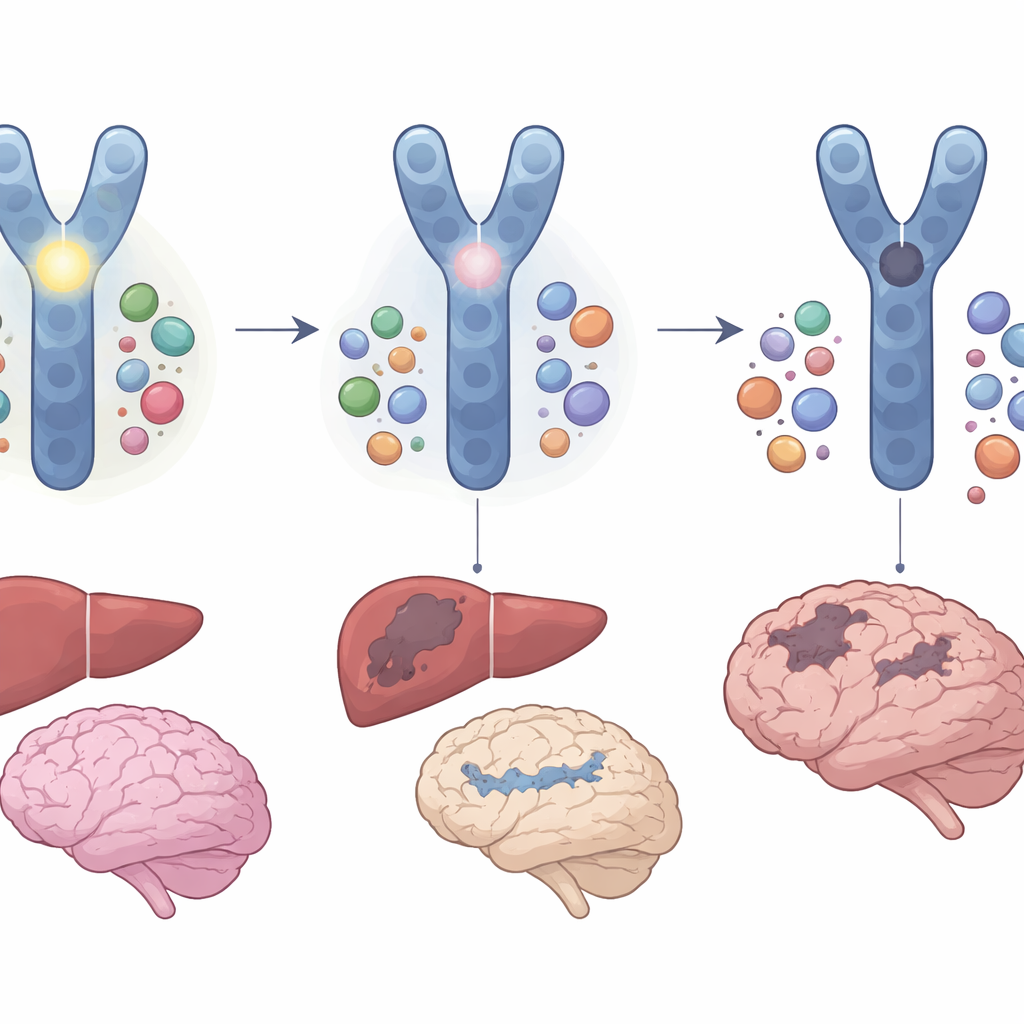
The authors then asked how ZFY might connect to immune misbehavior. They examined patterns of immune‑cell “infiltration,” estimating which immune cells were present in the diseased tissues. Low ZFY levels were tied to reduced numbers of certain natural killer cells and T cells that normally help keep immune responses in balance, and to increases in cells that can fuel inflammation. Pathway analyses also pointed repeatedly to the PI3K/Akt signaling route, a major control hub for cell survival and immune activity, particularly in natural killer cells. This suggests that when ZFY levels fall, key immune circuits and cell types may be thrown off balance, contributing to chronic inflammation in liver and brain.
Putting the Gene to the Test in Mice
To move beyond computer analyses, the researchers modeled each disease in mice. One group received a chemical that provokes liver inflammation resembling autoimmune hepatitis; another was fed a compound that damages myelin, mimicking multiple sclerosis. These animals developed clear signs of liver injury or brain demyelination and behavior changes. When the scientists measured gene activity, ZFY was again reduced in diseased livers and brains, and several of the other candidate genes shifted in the same directions seen in human data. This experimental confirmation supports the idea that ZFY’s drop is not just a statistical quirk, but part of the disease state.
What This Could Mean for Patients
Taken together, the work proposes ZFY as a shared biomarker that flags disease activity in both autoimmune hepatitis and multiple sclerosis, at least in males. The study also links ZFY to disturbed immune cell populations and a central signaling pathway that controls how strongly the immune system reacts. The authors stress that this is an early step: ZFY’s exact role is not yet proven, and larger, carefully designed clinical and genetic studies—along with animals engineered to lack or overproduce ZFY—will be needed. Still, the findings offer a new starting point for understanding why the same misdirected immune system can damage both liver and brain, and may eventually guide more targeted tests and treatments.
Citation: Liu, J., Guo, D., Pu, M. et al. Zinc finger protein Y - linked as a potential biomarker for autoimmune hepatitis and multiple sclerosis which overlap with immune infiltration. Sci Rep 16, 10961 (2026). https://doi.org/10.1038/s41598-026-43283-4
Keywords: autoimmune hepatitis, multiple sclerosis, ZFY gene, immune infiltration, PI3K Akt pathway