Clear Sky Science · en
Screening of kinase inhibitors in the triple negative KRAS G13D-mutated MDA-MB-231 breast cancer cell line
Why this research matters
Triple‑negative breast cancer is one of the most difficult forms of breast cancer to treat. It tends to spread early, comes back often, and lacks the hormone and HER2 markers that many successful drugs rely on. This study explores whether a new generation of medicines that block key growth switches inside tumor cells can be combined to better slow or stop this aggressive disease, using a widely studied model cell line as a testing ground.
A tough-to-treat breast cancer
Triple‑negative breast cancers do not respond to hormone therapies or classic HER2‑targeted drugs, so most patients receive chemotherapy. While some tumors shrink completely, many leave behind resistant cells that later fuel relapse and spread. A fraction of these cancers carry faults in a growth gene called KRAS and show low but meaningful activity of a related surface molecule known as HER2. Together, these changes can drive tumor growth and invasion, suggesting that blocking several connected growth switches at once might be more effective than targeting any single one.
Searching a large drug library
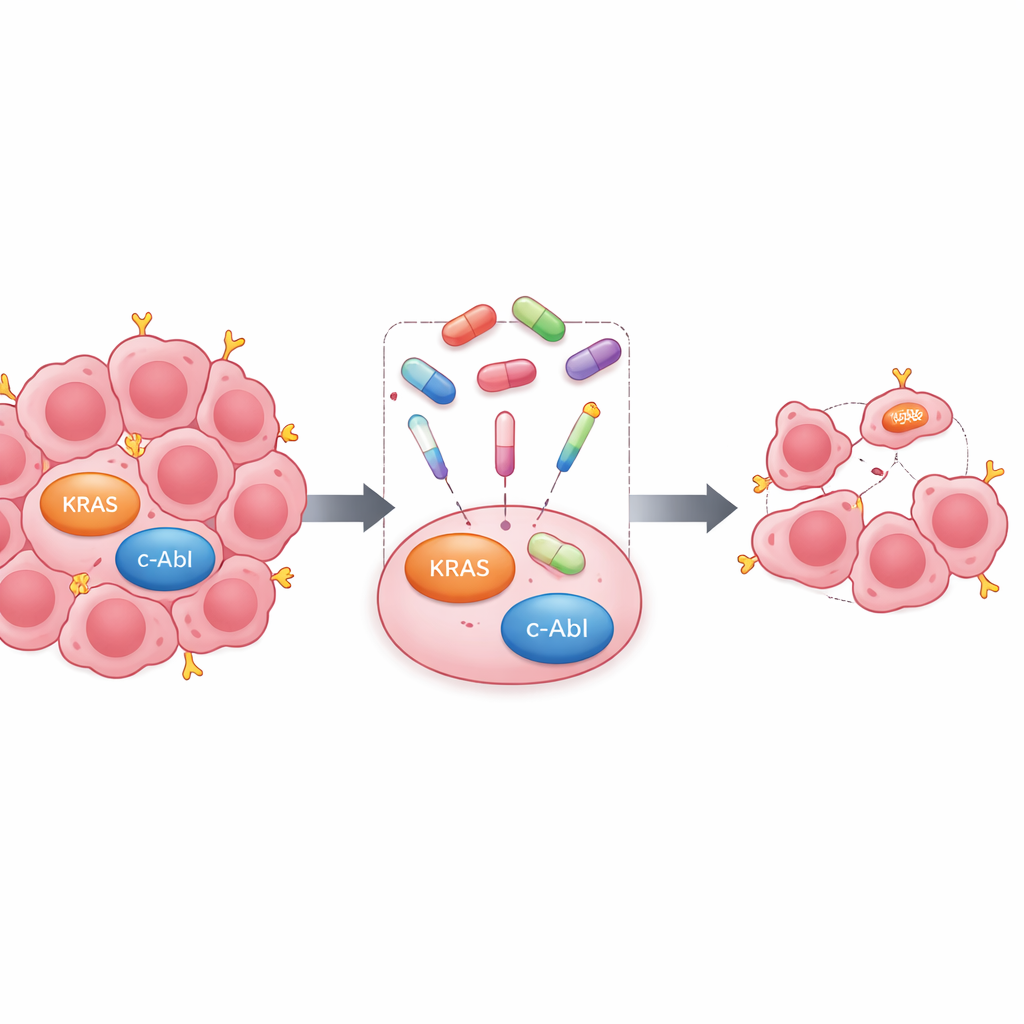
The researchers worked with MDA‑MB‑231 cells, a triple‑negative breast cancer line that carries a specific KRAS mutation (G13D) and low HER2 activity. They exposed these cells to 157 different drugs that target enzymes called kinases—key on/off switches in cancer signaling. Several compounds that hit general stress or survival pathways were extremely toxic but not very selective, so they were set aside. Among the more specific drugs, two medicines originally developed for certain leukemias, Bosutinib and Dasatinib, stood out for their strong ability to curb cell growth. Both block a kinase called c‑Abl (and related SRC kinases). A third drug, Saracatinib, which mainly targets SRC but not c‑Abl, was noticeably weaker in this breast cancer model.
Linking leukemia targets to breast cancer cells
To understand why leukemia drugs were effective, the team compared the breast cancer cells to a leukemia cell line that carries the famous BCR‑ABL fusion. Using protein tests, they confirmed that MDA‑MB‑231 cells do not have this fusion but do produce normal c‑Abl. This pointed to c‑Abl itself—as opposed to BCR‑ABL—as a relevant driver in these breast cancer cells. The group then turned to two modern KRAS‑directed agents: MRTX1133, designed for a related KRAS mutation, and RMC‑7977, a newer drug that forms a three‑part complex with a helper protein and active RAS to shut down multiple KRAS variants. On their own, both drugs reduced cell survival, but RMC‑7977 was more potent and sustained its effect on key signaling pathways longer than MRTX1133.
Combining growth switch blockers
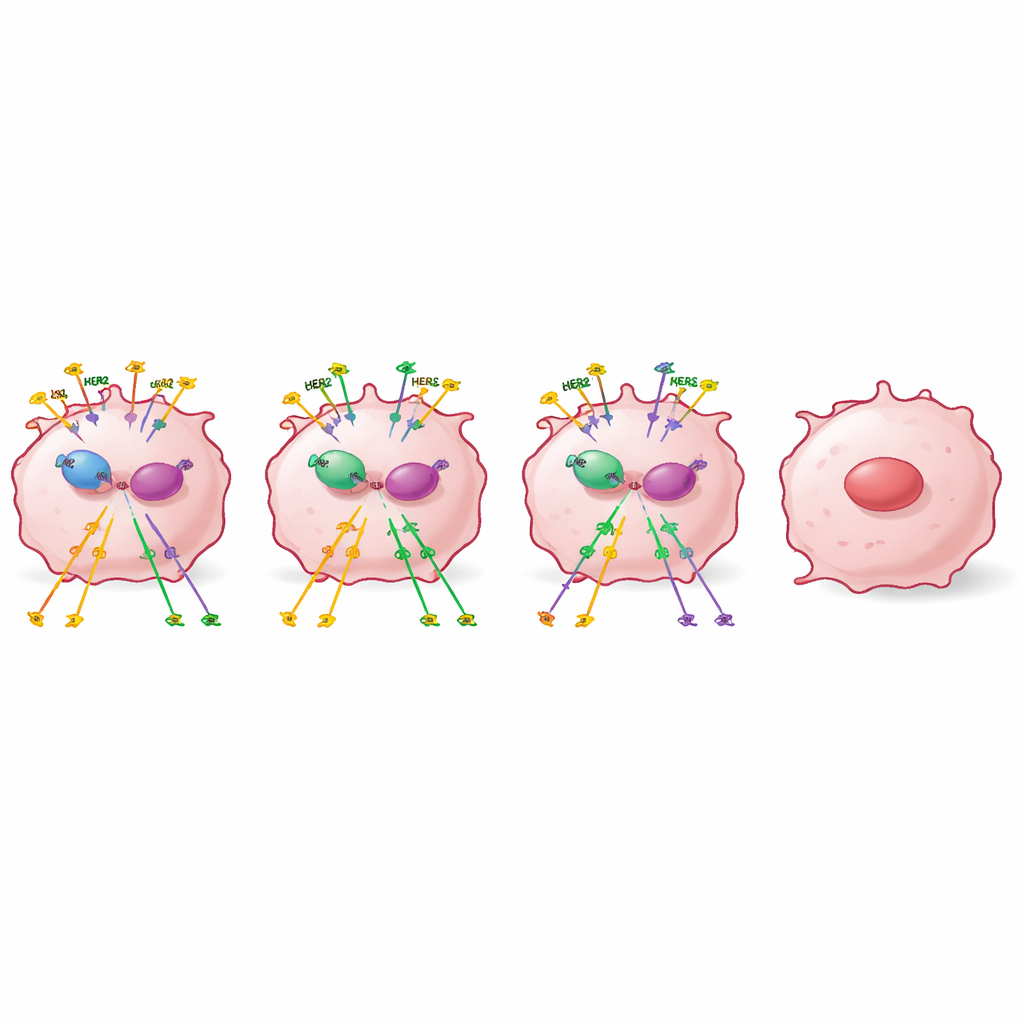
The core of the study tested combinations of these KRAS blockers with selected kinase drugs, including c‑Abl/SRC inhibitors and HER2‑related agents. Using standard methods to measure whether drug pairs act better together than expected, the authors found broad synergy. MRTX1133 worked especially well with Dasatinib and Bosutinib, and also showed cooperative effects with a SOS1 blocker (which affects KRAS activation) and with HER2‑targeted agents Mobocertinib and Neratinib. RMC‑7977 performed even more impressively: all tested combinations with it were synergistic across dose ranges. In migration “scratch” assays, which track how quickly cells move to close a gap, Bosutinib and Dasatinib clearly slowed cell movement, while RMC‑7977 briefly delayed but could not maintain this effect, reflecting its partial impact on overall cell growth.
What this could mean for patients
Although this work was done in cell dishes rather than in patients, it highlights a promising strategy for an especially challenging cancer: jointly targeting KRAS, c‑Abl, and HER2‑linked signaling. The results suggest that c‑Abl is an important growth and migration driver in this KRAS‑mutant triple‑negative model and that leukemia drugs already in clinical use can boost the power of KRAS‑directed and HER2‑related therapies. By hitting several connected growth switches at once, these combinations may help overcome resistance that has limited earlier targeted treatments and could, in time, contribute to more effective options for people with KRAS‑positive triple‑negative breast cancer.
Citation: Stickler, S., Eggerstorfer, MT., Rieche, M. et al. Screening of kinase inhibitors in the triple negative KRAS G13D-mutated MDA-MB-231 breast cancer cell line. Sci Rep 16, 13170 (2026). https://doi.org/10.1038/s41598-026-43207-2
Keywords: triple-negative breast cancer, KRAS inhibitors, c-Abl kinase, drug combinations, targeted therapy