Clear Sky Science · en
Deployment of a machine learning-based predictive system for childhood diarrhea in Sub-Saharan Africa
Why a digital tool can help save young lives
Diarrhea still kills many young children in Sub-Saharan Africa, even though simple treatments and prevention measures exist. Health workers often struggle to spot which children are most at risk in time to act. This study describes how researchers turned a computer program into a working online tool that can flag vulnerable children early, giving clinics and community workers a practical way to focus care where it is needed most.
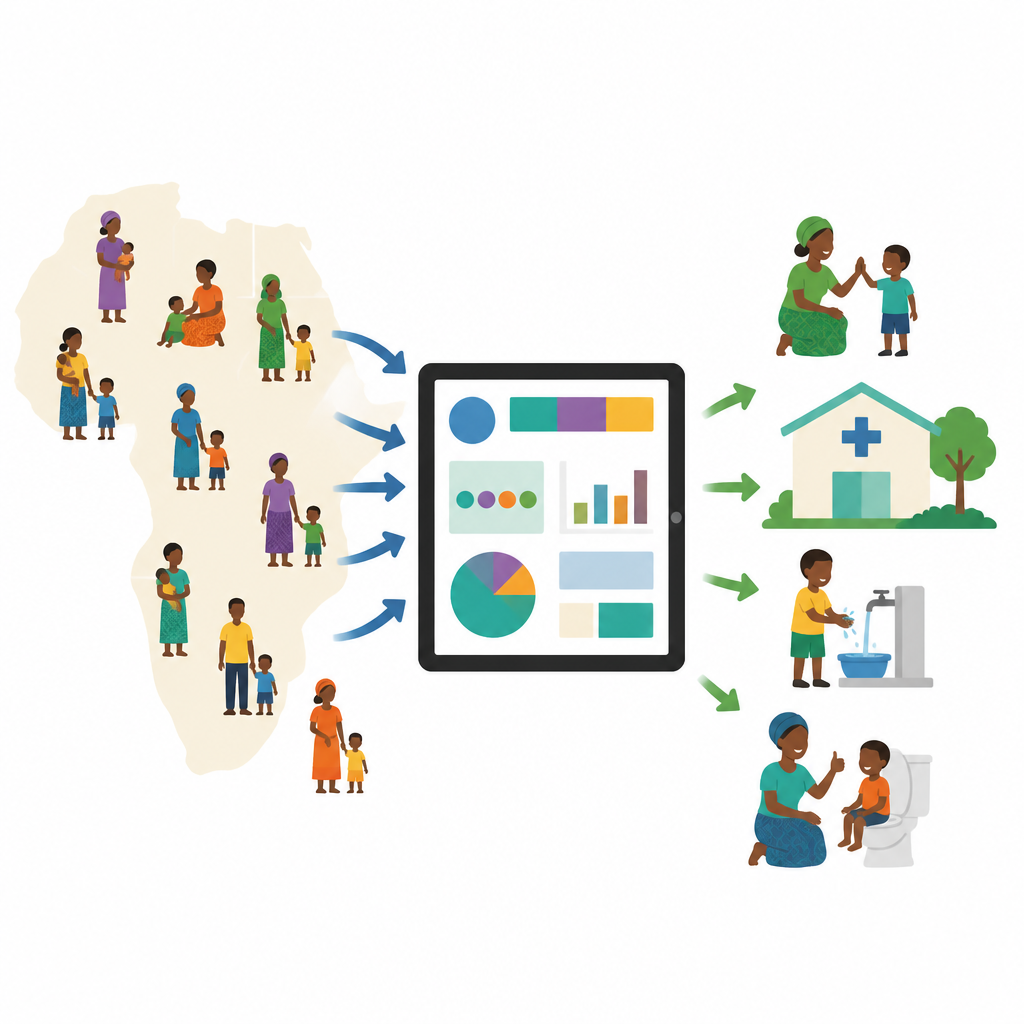
Looking at families across an entire region
The researchers drew on survey data from nearly 290,000 children under five years old in 27 countries across Sub-Saharan Africa. These national surveys capture details about children, their mothers, their homes, and their access to care and clean water. From this information, the team defined diarrhea as any episode reported by the mother in the previous two weeks. They then selected a broad set of possible risk factors, ranging from a mother’s age and schooling to household wealth, source of drinking water, toilet type, clinic visits, and distance to health facilities.
Turning messy records into a risk score
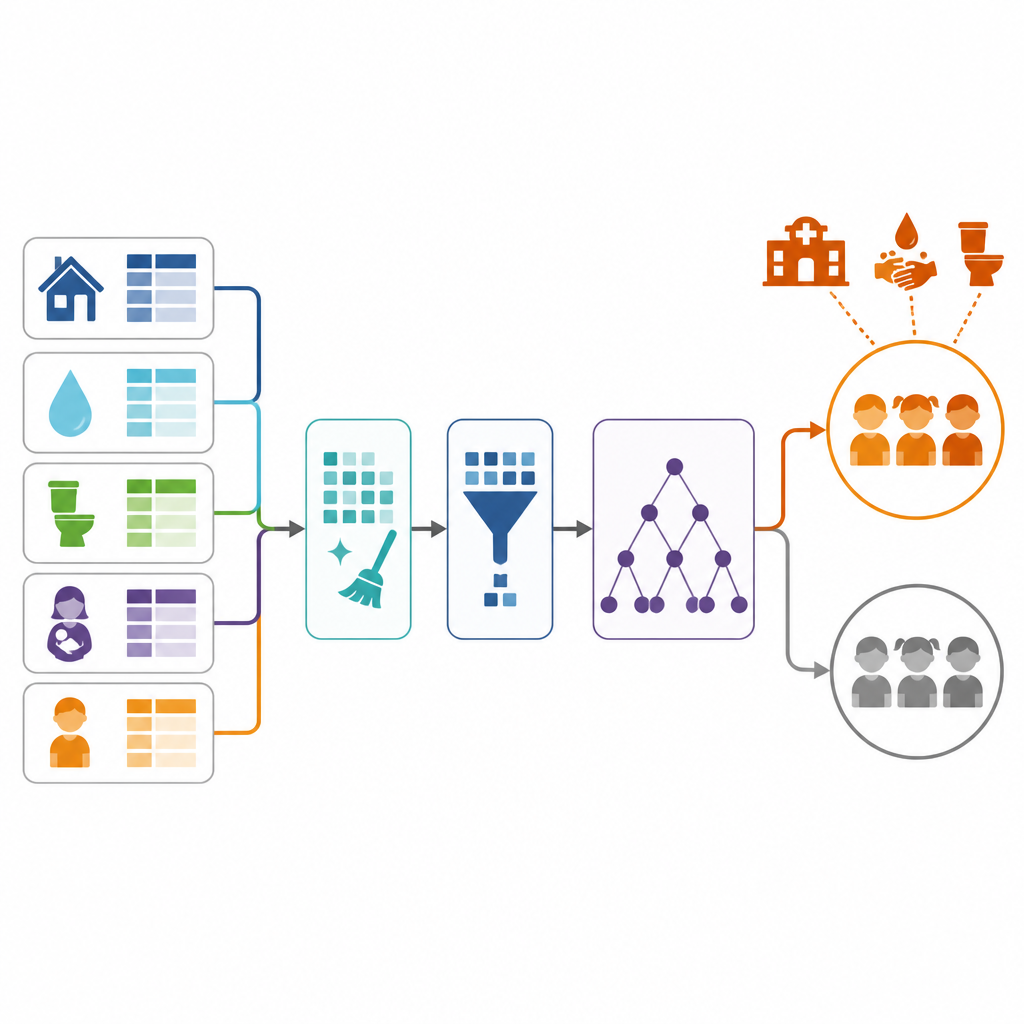
Real-world data are far from tidy: some answers are missing, many responses are stored as text, and far fewer children report diarrhea than not. The team carefully cleaned the data, filled in gaps using standard statistical methods, and converted words into numeric form that computers can understand. Because diarrhea cases were much rarer than non-cases, they used a technique that creates realistic synthetic examples so that the computer would learn equally from sick and healthy children. They also removed weaker or overlapping variables to keep the model focused on the most informative signals.
How the prediction engine works
To predict which children are likely to develop diarrhea, the authors chose a method called a Random Forest, which combines many simple decision trees to make a final judgment. They split the data into training and testing parts, adjusted key settings of the model, and checked how well it performed. The final system correctly classified about four out of five children and, crucially, identified most of the true diarrhea cases. This high sensitivity matters because missing a sick child can have life-threatening consequences, while some false alarms are acceptable if they prompt extra care.
From computer code to a usable tool
What makes this work stand out is not just the accuracy of the model but the fact that it is already running as an online service. Using a lightweight web framework, the team wrapped the model inside an application that can accept new child and household information through a simple web form or a health information system. The application then returns a risk estimate in real time. A separate question-and-answer chatbot, trained on public health guidelines, helps explain what the inputs mean and offers general information on childhood diarrhea, without changing the model’s predictions.
What this means for health workers and families
In plain terms, the study shows that it is possible to turn complex data and algorithms into a practical tool that could help frontline staff act sooner for children most likely to suffer diarrhea. While the system still needs field testing, integration with national health platforms, and training for users, it illustrates a clear path from research to action. If refined and adopted, such tools could support smarter use of limited resources, helping more children in Sub-Saharan Africa grow up healthy.
Citation: Taye, E.A., Alemu, E.A., Kebede, H.A. et al. Deployment of a machine learning-based predictive system for childhood diarrhea in Sub-Saharan Africa. Sci Rep 16, 15199 (2026). https://doi.org/10.1038/s41598-026-43140-4
Keywords: childhood diarrhea, machine learning, Sub-Saharan Africa, public health tool, risk prediction