Clear Sky Science · en
Analysis of epidemiological characteristics and associated factors of congenital hypothyroidism in Henan Province
Why this baby health study matters
Every parent hopes their baby will grow up healthy in both body and mind. This study looks at a hidden threat to early brain development: congenital hypothyroidism, a condition present at birth when a baby’s thyroid gland does not make enough hormone. Using data from more than 2.7 million newborns in Henan Province, China, the researchers asked a practical question that matters to families and health planners alike: which everyday circumstances during pregnancy and early life are linked to a higher chance that a baby will have this disorder?
A closer look at a common but silent condition
The thyroid is a small, butterfly-shaped gland in the neck, but its hormones are powerful drivers of growth and brain development in babies. When thyroid hormone is too low at birth, the baby usually looks normal at first. Without early detection and treatment, however, the child can develop lasting intellectual disability and other health problems. Modern newborn screening can catch the condition early, but preventing cases before they occur could spare families and health systems from lifelong burdens. Henan is one of China’s most populous provinces, yet until now it was unclear which local factors were most strongly tied to congenital hypothyroidism there.
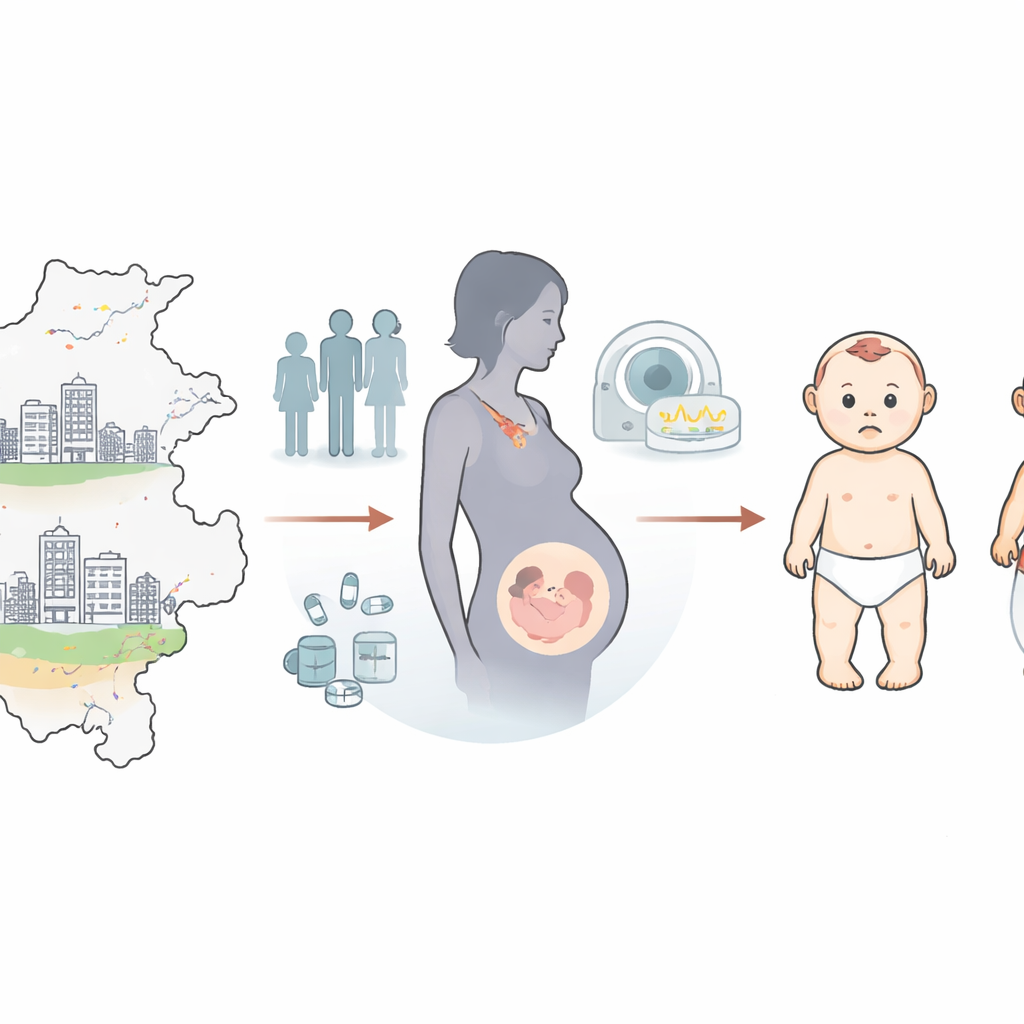
How the researchers compared affected and healthy babies
The team used the province’s newborn screening program, which tests a small blood spot from each baby’s heel a few days after birth. From nearly 2.8 million babies screened between 2016 and 2017, they identified 1,494 with confirmed congenital hypothyroidism. After excluding babies who had died, whose families declined, or who were lost to follow-up, they focused on 843 affected infants. For each one, they selected a healthy baby of the same sex and nearly the same birth date from the same city. By comparing these matched pairs, the researchers could tease out which pregnancy, family, and environmental features were more common in the affected group.
Family background, age, and where parents live
Several patterns emerged. Babies were much more likely to have congenital hypothyroidism if close relatives had thyroid disease, suggesting that inherited differences in thyroid development or hormone production play a major role. The age of both parents also mattered: as mothers and fathers grew older, the odds that their baby would have the condition rose, especially after the mother’s age passed about 25 years and more sharply beyond the late twenties. This was confirmed using a flexible statistical method that traced a curved, rather than straight-line, rise in risk with maternal age. Living in rural areas was another marker of higher risk compared with city life, hinting that differences in healthcare access, nutrition, or environmental exposures may contribute.
Everyday exposures during pregnancy
Some of the strongest links involved what mothers encountered while pregnant. Use of medications such as antibiotics, pain relievers, or hormones was tied to a several-fold higher risk, although the study could not pin down which drugs or doses were most important. Mothers who had diagnostic radiation tests like X-rays or CT scans, or who spent months in newly renovated homes, new cars, or certain workplaces where formaldehyde levels were high, also had babies with higher odds of congenital hypothyroidism. In contrast, mothers who received progesterone treatment during pregnancy appeared less likely to have an affected baby, but the authors warn that this might reflect closer medical monitoring and other unmeasured factors rather than a true protective effect. After birth, babies who were not mainly breastfed showed higher risk than those who were.
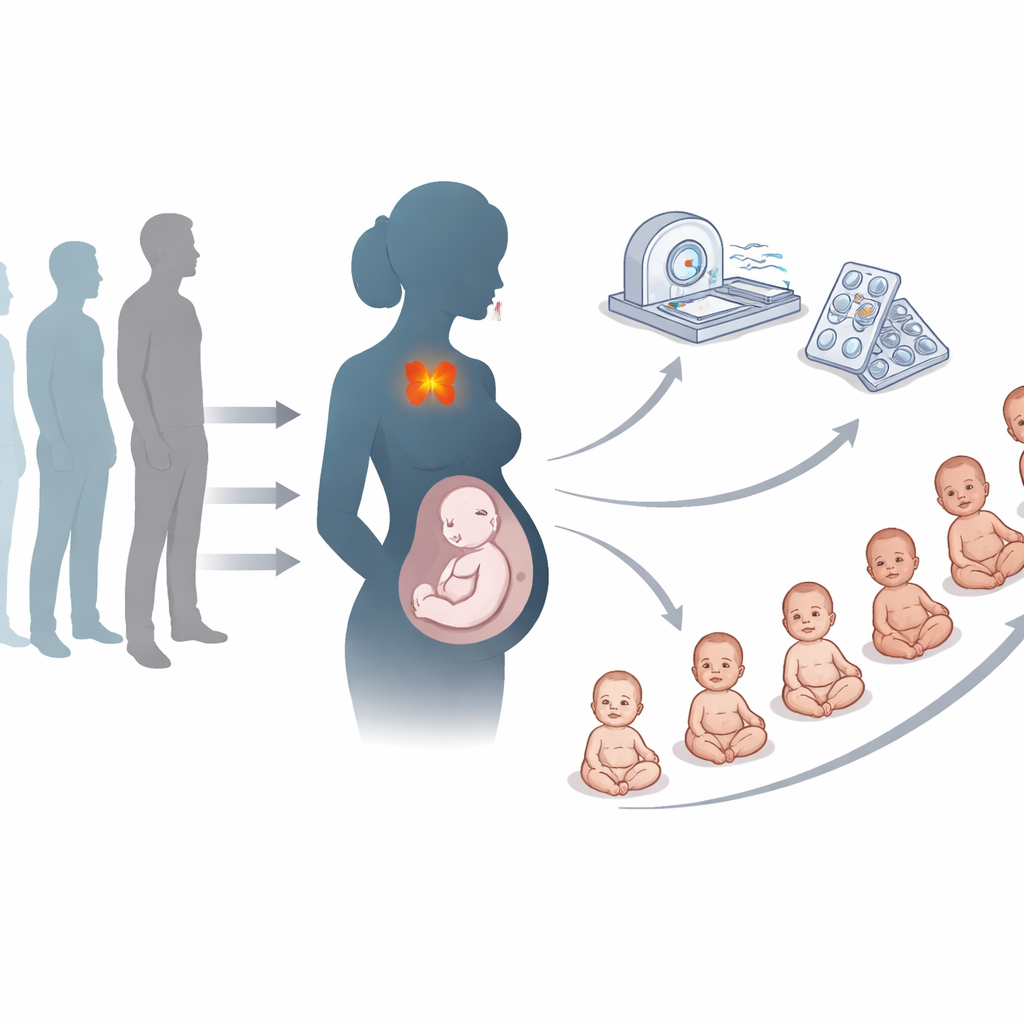
What this means for parents and health officials
The study cannot prove cause and effect, but it paints a consistent picture: in this large Chinese province, older parenthood, rural residence, family history of thyroid problems, certain environmental exposures, pregnancy medication use, and non-breastfeeding are all closely tied to congenital hypothyroidism. Because early treatment can fully protect most children, the authors argue for especially vigilant screening in families with these features and for efforts to limit avoidable exposures such as unnecessary radiation tests or poorly ventilated newly furnished spaces during pregnancy. They call for future long-term studies that follow women from before conception, which could confirm which factors truly cause risk and guide clearer advice for preventing this silent but serious condition.
Citation: Luo, C., Liu, S. & Lv, S. Analysis of epidemiological characteristics and associated factors of congenital hypothyroidism in Henan Province. Sci Rep 16, 11905 (2026). https://doi.org/10.1038/s41598-026-43133-3
Keywords: congenital hypothyroidism, newborn screening, maternal age, environmental exposure, thyroid disease