Clear Sky Science · en
Admission blood pressure and mortality in acute aortic dissection: Southwest China multicenter retrospective cohort study
Why the First Blood Pressure Reading Matters
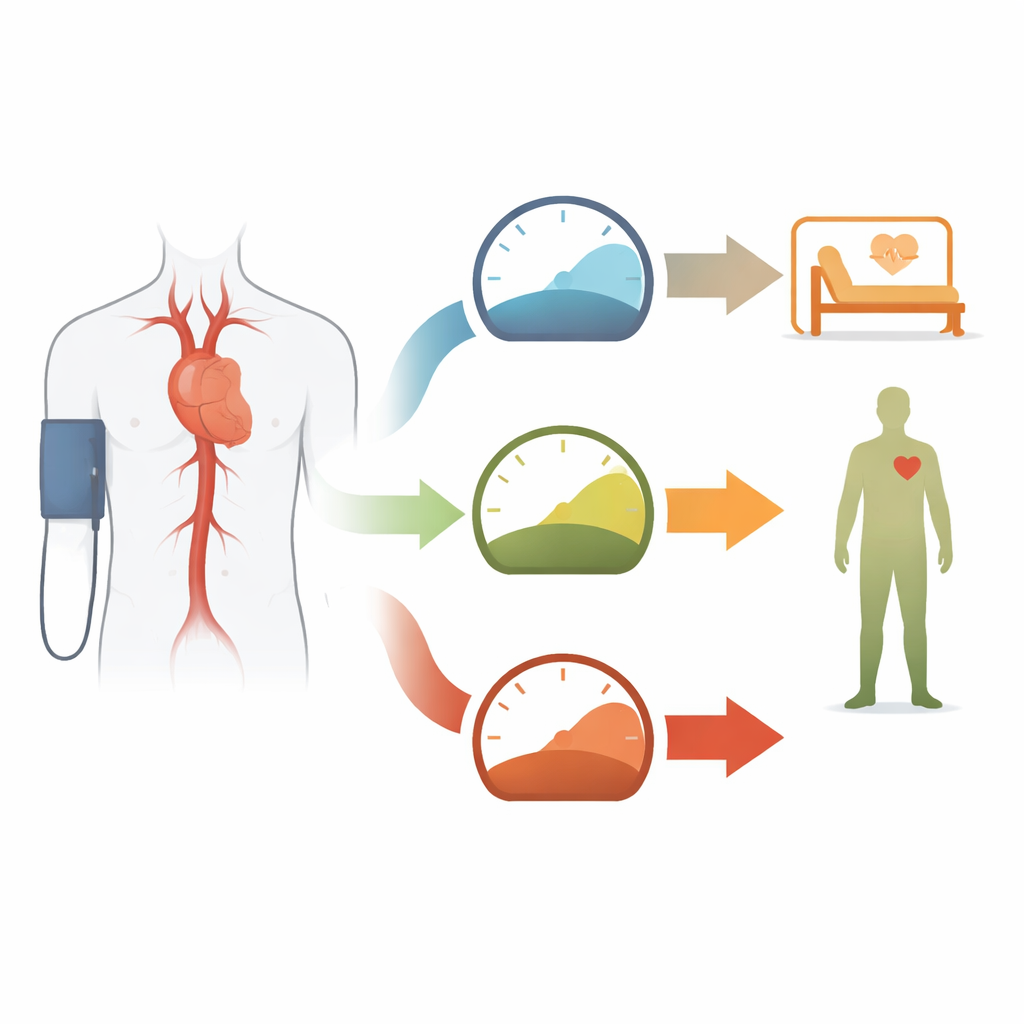
When someone rushes into the hospital with a tear in the body’s main artery—the aorta—every minute counts. One of the first numbers doctors see is blood pressure. But should they be more worried if that number is high, or if it is low? This study from hospitals in Southwest China followed 700 patients with acute aortic dissection, a life‑threatening split in the wall of the aorta, to find out how the very first blood pressure reading on admission relates to survival over the next two years.
A Dangerous Tear in the Body’s Main Highway
Acute aortic dissection is a medical emergency in which the inner layer of the aorta suddenly tears and blood forces its way between the layers of the vessel wall. Without rapid treatment, the death rate climbs hour by hour. Doctors already know that blood pressure must be carefully controlled to reduce strain on the torn vessel, yet the ideal target has been unclear. Past work mainly looked at the top number of blood pressure (systolic pressure) and focused on deaths during the hospital stay. This study instead examined both the top and bottom numbers together and tracked deaths not only within 30 days, but also over two years, aiming to define a safer “window” for blood pressure at the time of admission.
What the Researchers Measured
The team reviewed records from two major hospitals in Guangxi, China, covering patients admitted with acute aortic dissection between 2015 and 2023. They recorded admission systolic and diastolic blood pressure, along with age, medical history, heart rhythm, lab tests, and whether the patient received surgery within 24 hours. Using statistical models that can trace curved rather than straight‑line relationships, they asked how different blood pressure levels were linked to the chance of dying within 30 days and within two years, while accounting for many other risk factors such as heart damage and kidney function.
The Surprising “Sweet Spot” for Blood Pressure
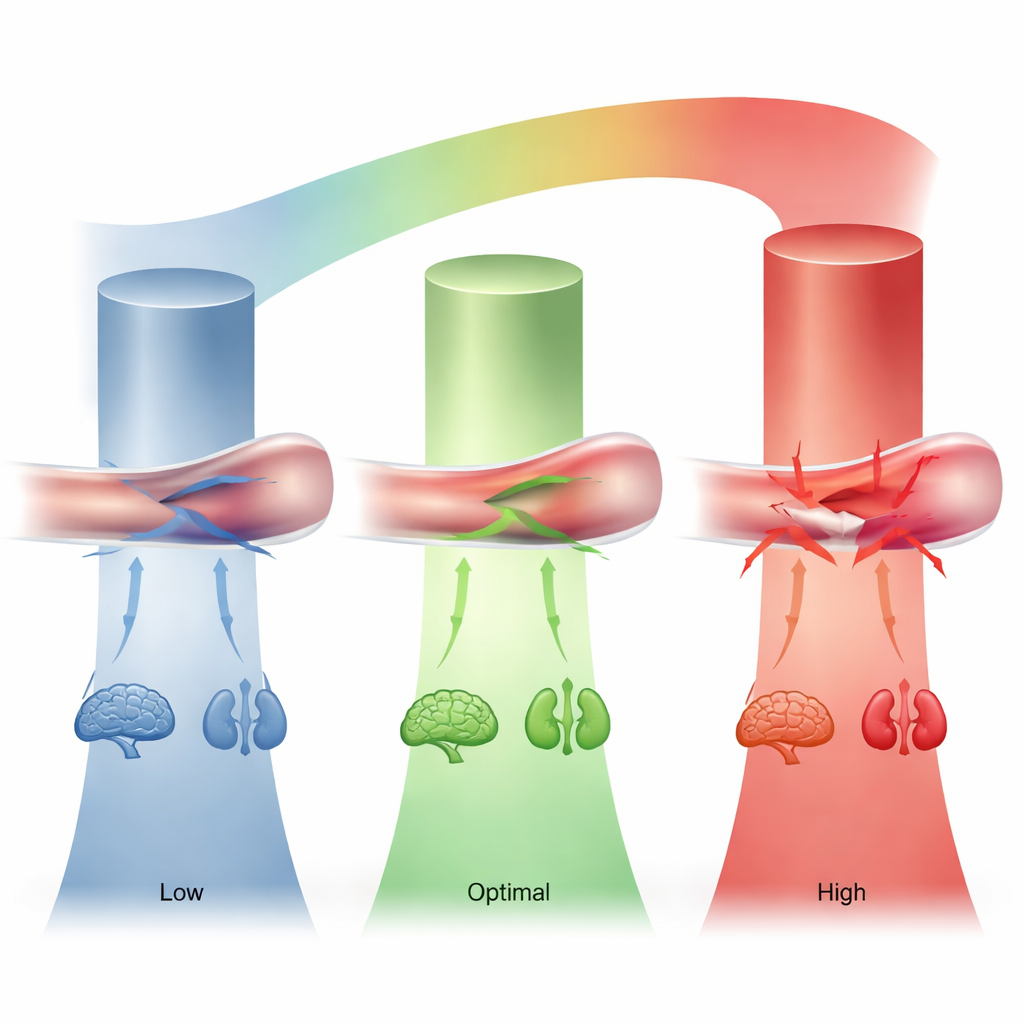
The key finding was a J‑shaped curve: both very low and very high admission blood pressures were linked to higher long‑term death risk, while a middle range was safest. The lowest risk over two years appeared when systolic pressure was roughly 130–160 mmHg and diastolic pressure about 80–88 mmHg. Patients arriving with blood pressure below this range (for example, systolic pressure under 130 and diastolic under 80) or well above it (over 160 systolic with moderately raised diastolic) were more likely to die over the following two years, even after adjusting for other health problems. Extremely high systolic pressure combined with moderately high diastolic pressure carried nearly three times the risk of death compared with the safer middle‑range group.
More Than Just the Numbers
The study also highlighted other warning signs. Older age, a racing heartbeat, and evidence of a heart attack or prior heart bypass surgery all increased the chance of dying. Blood tests showing strain on the heart, such as elevated NT‑proBNP and high‑sensitivity troponin, were strong markers of danger. In contrast, patients with tears in the descending part of the aorta (type B dissection), a normal heart rhythm, and those who underwent surgery within 24 hours tended to fare better. Together, these findings suggest that doctors should judge a patient’s situation by an overall pattern of blood pressure, heart performance, and early treatment decisions, rather than any single number alone.
What This Means for Patients and Doctors
For people with acute aortic dissection, the study suggests that “lower is not always better” when it comes to blood pressure at admission. While dangerously high pressure can further damage the torn vessel, pressure that is pushed too low may leave vital organs under‑supplied with blood or signal that the heart is already failing. The authors propose that a moderate zone—around 130–160 for the top number and 80–88 for the bottom—may best balance protection of the aorta with enough blood flow to the brain, kidneys, and other organs. Because this was a retrospective study from one region and not a randomized trial, these thresholds need to be confirmed elsewhere. Still, the work offers a clearer roadmap for emergency teams facing one of cardiology’s most critical conditions.
Citation: Chen, Y., Peng, X., Ji, Q. et al. Admission blood pressure and mortality in acute aortic dissection: Southwest China multicenter retrospective cohort study. Sci Rep 16, 12798 (2026). https://doi.org/10.1038/s41598-026-43101-x
Keywords: acute aortic dissection, blood pressure, mortality risk, hemodynamic management, cardiovascular emergency