Clear Sky Science · en
Time-course evolution of counterfactual thinking after early pregnancy loss
Why these "what if" thoughts matter
After an early pregnancy loss, many women find their minds circling around "what if" and "if only" thoughts. This study explores those mental replays—known as counterfactual thinking—and follows how they appear and change during the first four months after a loss. Understanding these patterns can help families, friends, and healthcare providers better support women through a deeply personal and often invisible kind of grief.
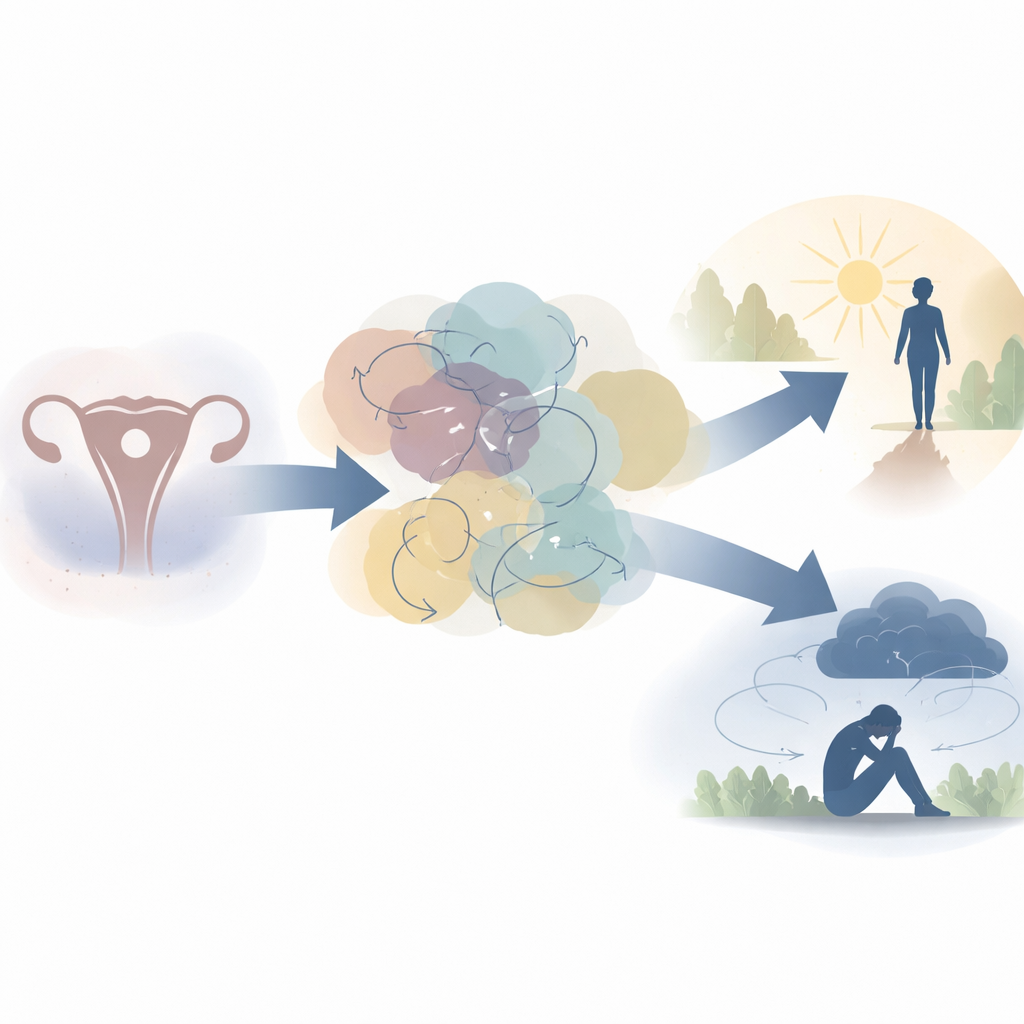
Looking back and imagining different outcomes
The researchers focused on counterfactual thinking, the natural tendency to imagine how events might have turned out differently. These thoughts can picture a better outcome (for example, a healthy pregnancy) or a worse one. In this study, the team followed 119 women who experienced an early pregnancy loss between 5 and 13 weeks. They asked them, one week, one month, and four months after the loss, whether they had "if only I had…" thoughts, how often these appeared, and what they were about. The women also completed questionnaires that measured how traumatic the loss felt and how much they tended to dwell on upsetting events in general.
Many women blame themselves in their minds
The vast majority of women experienced counterfactual thoughts soon after the loss: about 72% reported them just one week later. Almost all of these thoughts imagined a better outcome than real life, such as the pregnancy continuing successfully. Strikingly, over 90% of these thoughts placed the focus on the woman herself. Common examples included wishing they had eaten differently, rested more, worked less, or felt less stressed or upset. Even inner feelings, such as sadness or anger, were often treated as if they were actions that might have harmed the pregnancy. Only a small share of thoughts focused on other people or on neutral health conditions, and even in assisted reproduction cases, many women directed imagined responsibility toward themselves.
How these thoughts rise and fall over time
Although counterfactual thinking was very common, its intensity generally declined over the first four months. Women on average generated about two such thoughts, and both the number of different thoughts and how often they occurred tended to decrease with time. However, this drop was not the same for everyone. Women who experienced the loss as more traumatic, and those who naturally ruminated more—especially those who repeatedly revisited upsetting feelings—were more likely to have frequent and persistent counterfactual thoughts across all three time points. A style of thinking focused on reflecting and trying to understand problems was also linked to more frequent "what if" thoughts, but this style is often more constructive and not always tied to poor mental health.

When thinking back helps—and when it hurts
The findings suggest that, for many women, mentally replaying the loss and wondering what might have been is an understandable and possibly useful part of adjusting to a major life disruption. For some, such thoughts may help them make sense of the loss, revise their goals, and prepare emotionally for a future pregnancy. But when the loss is felt as highly traumatic and a woman is already prone to dwelling on negative experiences, these same thoughts can become repetitive and heavy. In that case, counterfactual thinking may feed a loop of self-blame, regret, and ongoing distress, increasing the risk of prolonged grief or other mental health problems.
What this means for care after loss
To a layperson, the main message is that "what if" thoughts after early pregnancy loss are both common and understandable—and that they often ease with time. Yet for some women, especially those who feel deeply traumatized and tend to ruminate, these thoughts can stay intense and unrelenting. The authors argue that medical care after pregnancy loss should routinely include attention to emotional and cognitive reactions, not just physical recovery. By recognizing when counterfactual thinking is becoming a burden rather than a brief coping tool, healthcare providers can offer timely psychological support and help women navigate their grief with less self-blame and more compassion.
Citation: Mallorquí, A., Pauta, M., Cardona, G. et al. Time-course evolution of counterfactual thinking after early pregnancy loss. Sci Rep 16, 14216 (2026). https://doi.org/10.1038/s41598-026-42934-w
Keywords: early pregnancy loss, counterfactual thinking, rumination, trauma, grief