Clear Sky Science · en
Improving the performance of fluidized bed reactor using rotating distributor and intelligent modeling
Turning Sand and Air into Cleaner Energy
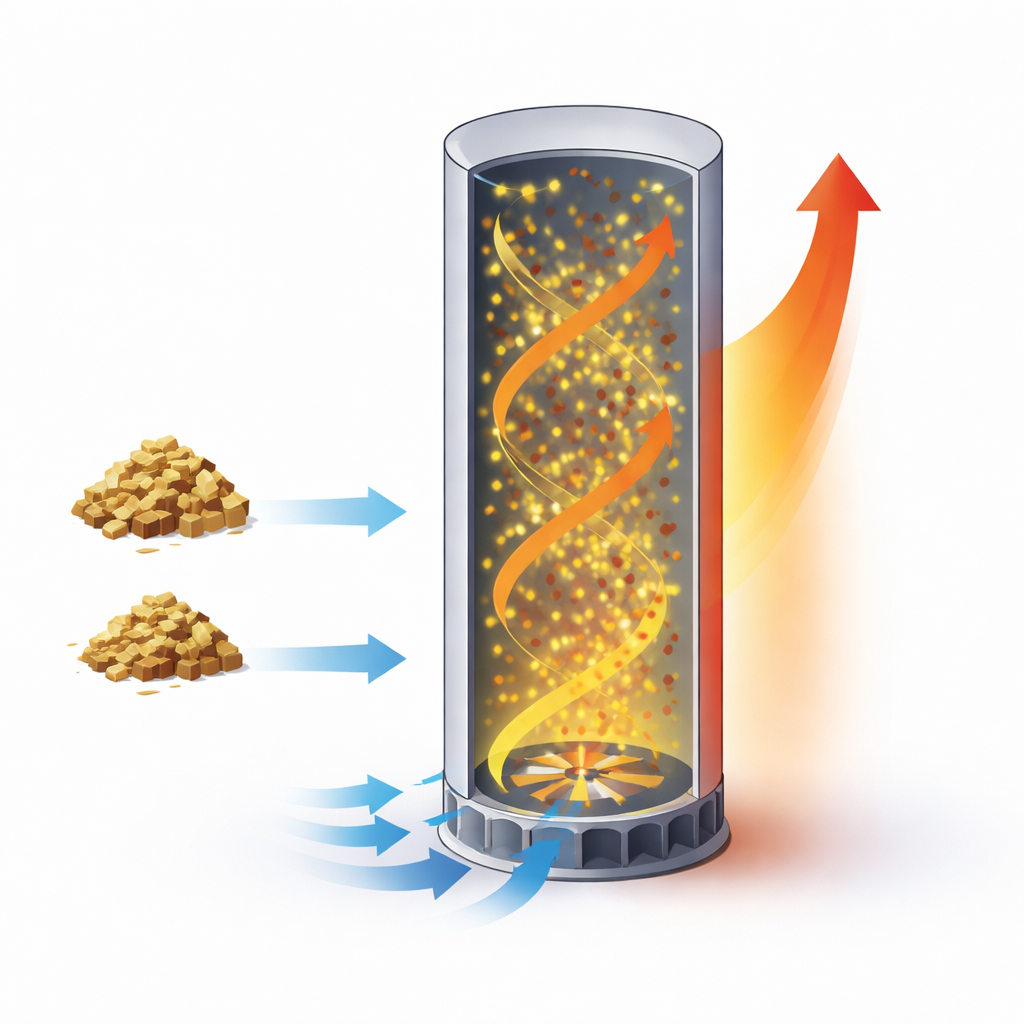
Many modern power plants and waste-to-energy systems burn or convert solid fuels such as biomass in reactors filled with sand and air. These “fluidized bed” reactors are valued because they mix fuel and air well, but they still waste energy and can be difficult to scale up. This paper explores a new way to stir the sand and air using rotating blades, together with an intelligent computer model, to make these reactors more efficient, cheaper to run, and easier to design for future clean energy applications.
A Spinning Solution Inside the Reactor
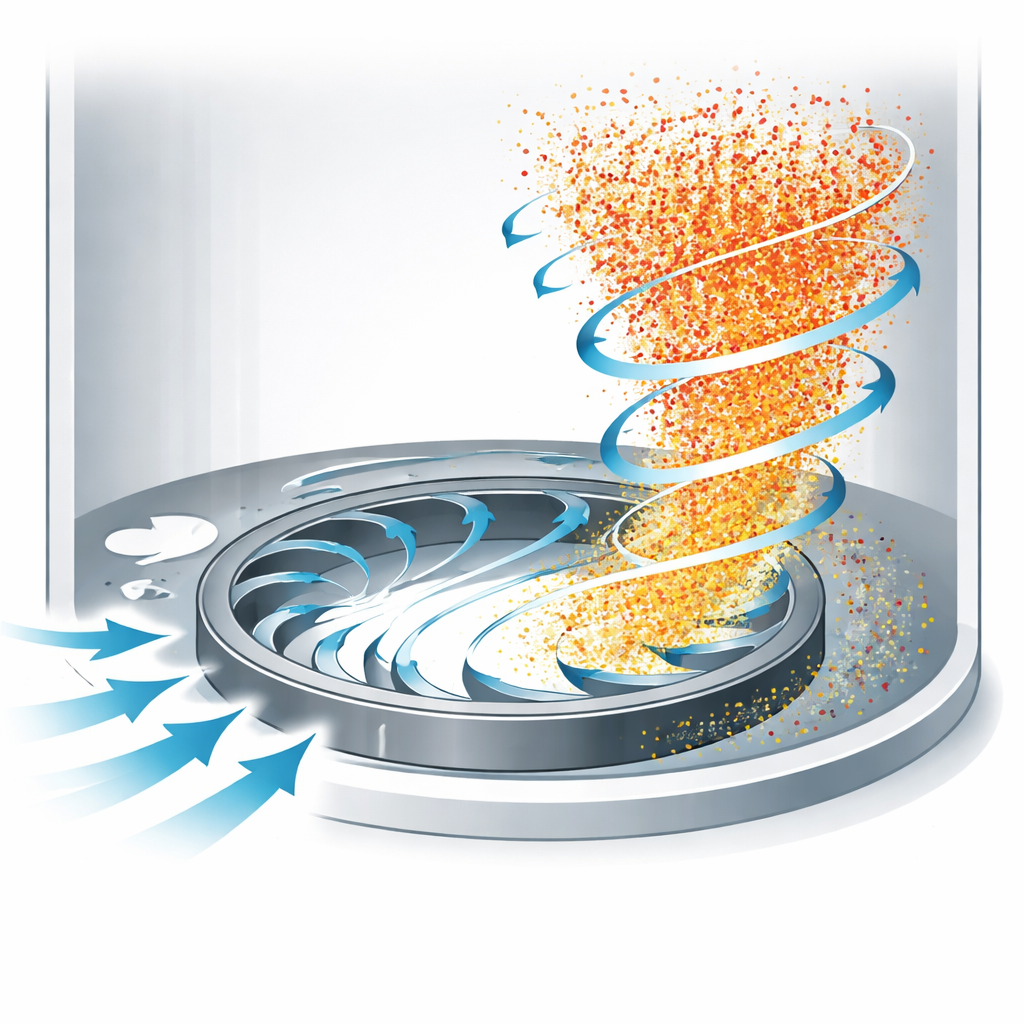
At the heart of the study is a swirling fluidized bed reactor, a tall cylinder partly filled with sand. Air blown from the bottom causes the sand grains to behave like a boiling fluid. The researchers replaced the usual static air plate with a rotating ring of curved blades at the base. As this ring spins, it pushes the incoming air sideways as well as upward, creating a powerful swirling motion in the sand–air mixture. This enhanced swirl aims to cure familiar problems of conventional designs, such as channels of gas that bypass parts of the bed and large slugs of material that rise and fall unevenly.
Testing How Well the Reactor Moves Heat
To find out whether the rotating distributor really improves performance, the team built a steel reactor and filled it with carefully sized sand grains similar to those used in industry. Heated air was blown in at different speeds, while the ring of blades spun at various rotation rates. Sensors measured temperatures along the wall and inside the bed, and pressure gauges tracked how hard the air blower had to work to push gas through the sand. From these readings, the researchers calculated two key indicators: how much pressure was lost across the bed and how effectively heat moved from the hot, swirling sand to the reactor wall.
Less Resistance, More Heat Flow
The experiments showed that adding rotation brought clear benefits. Compared with the same blades held still, the spinning distributor cut the pressure drop across the bed by about one fifth over the range of air speeds tested, meaning the air blower would need less power. At the same time, heat transfer improved markedly: local heat transfer values were always higher with the rotating ring and rose even more at higher air speeds and near the wall, where swirling is strongest. When the blade speed increased from 300 to 1000 revolutions per minute, the average heat transfer level climbed by roughly 56 percent. The spinning motion also allowed the bed to begin fluidizing and swirling at lower air speeds, another source of energy savings.
Teaching an Algorithm to Predict Reactor Behavior
Beyond the hardware, the study developed a hybrid artificial intelligence model to predict how the reactor behaves under different settings. The model combines a neural network, which learns patterns in data, with a swarm-inspired search method that tunes the network’s internal parameters. Trained on 90 experimental cases spanning air speeds, blade rotation rates, and positions inside the reactor, the model could forecast both pressure drop and heat transfer with very small errors. It also ranked which knobs matter most: air speed and blade speed dominated heat transfer, while blade speed had the largest effect on pressure losses. These insights help engineers focus on the most influential controls when they design or operate real systems.
From Laboratory Insight to Real-World Impact
For non-specialists, the main message is that a relatively simple mechanical change—putting the air distributor on a motor and shaping its blades carefully—can make fluidized bed reactors both stronger mixers and lighter energy users. The rotating distributor lowers the effort needed to push air through the reactor while boosting how efficiently heat is moved from the sand to the walls, allowing for smaller equipment and lower fuel and electricity bills. Coupled with the intelligent model, which serves as a fast “digital twin,” this approach offers a promising route to designing cleaner, more economical reactors for burning biomass, turning waste into fuel gases, or driving other high-temperature processes in future energy systems.
Citation: Abdelmotalib, H.M. Improving the performance of fluidized bed reactor using rotating distributor and intelligent modeling. Sci Rep 16, 10481 (2026). https://doi.org/10.1038/s41598-026-42831-2
Keywords: swirling fluidized bed reactor, rotating air distributor, heat transfer enhancement, renewable energy systems, AI reactor modeling