Clear Sky Science · en
Latent profile analysis of kinesiophobia during the out-of-hospital early rehabilitation phase after PCI in patients with CHD
Why fear of movement matters after heart procedures
Surviving a heart problem and undergoing a stent procedure is often described as a second chance at life. Yet many people feel frightened to move or exercise afterward, worried that activity might trigger another attack. This study looks closely at that fear of movement in people recovering at home after a common heart procedure and shows that not all patients are alike—some are quietly terrified, while others are cautiously hopeful. Understanding these differences can help families and health professionals support safer, more confident recovery.
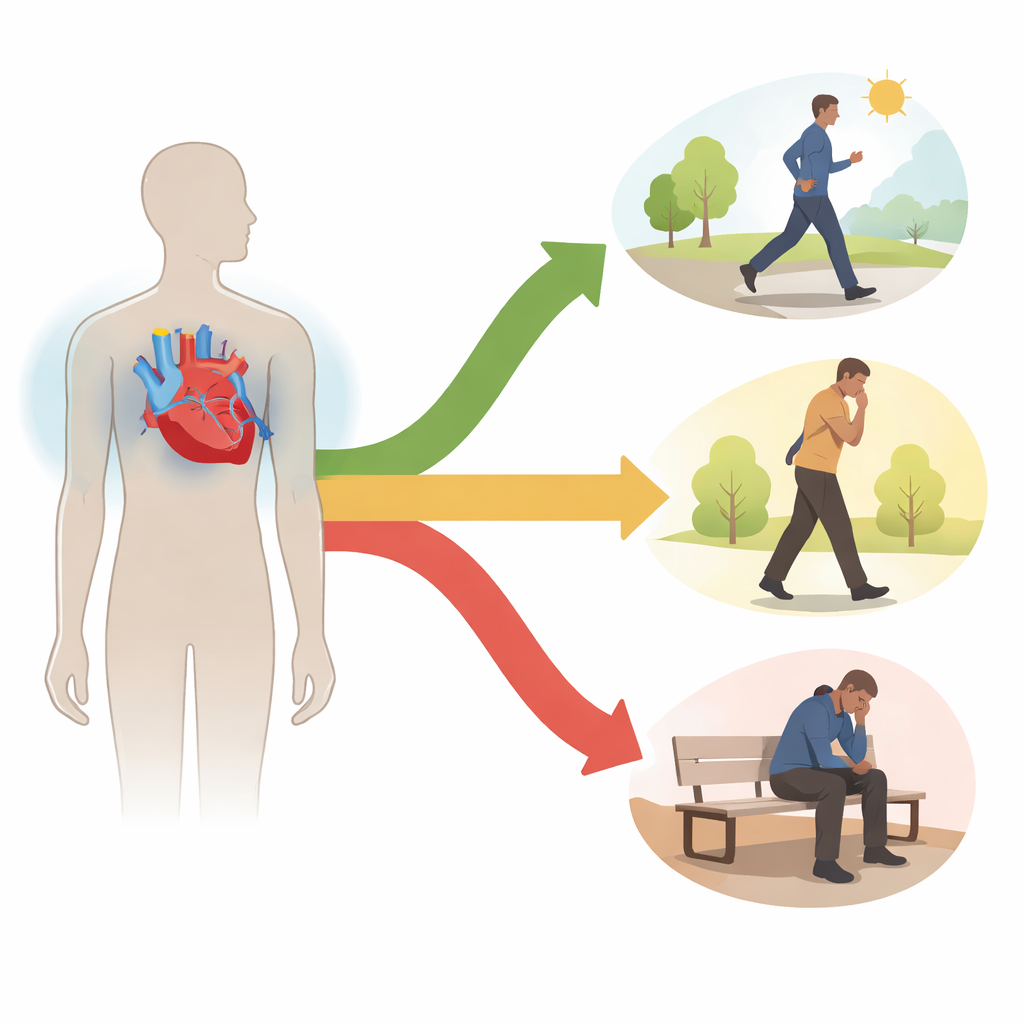
Everyday life after a stent: more than a physical fix
The researchers focused on people with coronary heart disease who had recently undergone percutaneous coronary intervention, a minimally invasive procedure in which a thin tube and tiny scaffold are used to open clogged heart arteries. Medically, many of these patients are stable when they leave the hospital, but the early months at home are a crucial time for rebuilding strength through cardiac rehabilitation. During this period, however, worries about chest pain, device failure, or another emergency can make people reluctant to walk, climb stairs, or follow exercise plans. This reluctance—known as kinesiophobia—is not just a passing worry; it can seriously limit recovery if left unrecognized.
Three hidden patterns of fear
To uncover how this fear shows up in real life, the team surveyed 293 patients in the first six months after their procedure. They used established questionnaires to measure fear of movement and overall frailty, including physical weakness, emotional strain, and social support. Rather than simply ranking people from low to high fear, they applied a statistical technique that searches for natural clusters in the data. This approach revealed three distinct profiles: a low-fear group that still tended to dodge exercise, a medium-fear group that mainly perceived activity as dangerous, and a smaller high-fear group whose daily functioning was noticeably limited. Remarkably, nearly nine out of ten patients showed at least some level of kinesiophobia.
Who is most at risk of strong fear?
The three groups differed in more than just attitude. Patients in the high-fear, high-difficulty group were more likely to live alone or only with a spouse, have multiple chronic illnesses such as diabetes or high blood pressure, take many daily medications, and score higher on frailty. Their fear often intertwined with previous frightening symptoms like severe chest pain or dizziness, making them misinterpret normal exertion as a sign of relapse. In contrast, people without additional chronic diseases and those taking fewer medications were more likely to fall into the low-fear group. Younger and middle-aged adults, though physically stronger, tended to land in the medium-fear profile: they recovered faster but were highly sensitive to risk, worried about work, family responsibilities, and the possibility that exercise might jeopardize their future.
How fear feeds weakness—and weakness feeds fear
The study highlights a feedback loop between fear and frailty. Patients with higher frailty scores—meaning they were physically weaker, more emotionally strained, or more socially isolated—were much more likely to belong to the high-fear profile. Fear of activity can lead people to move less, which in turn weakens muscles, reduces endurance, and deepens feelings of vulnerability. This cycle can be especially strong in those juggling several illnesses and many medications, who may already feel overwhelmed by side effects, complex treatment plans, and financial pressure. The authors suggest that carefully reviewing medication lists and better managing chronic conditions may ease both the physical and psychological burden, making movement feel safer.
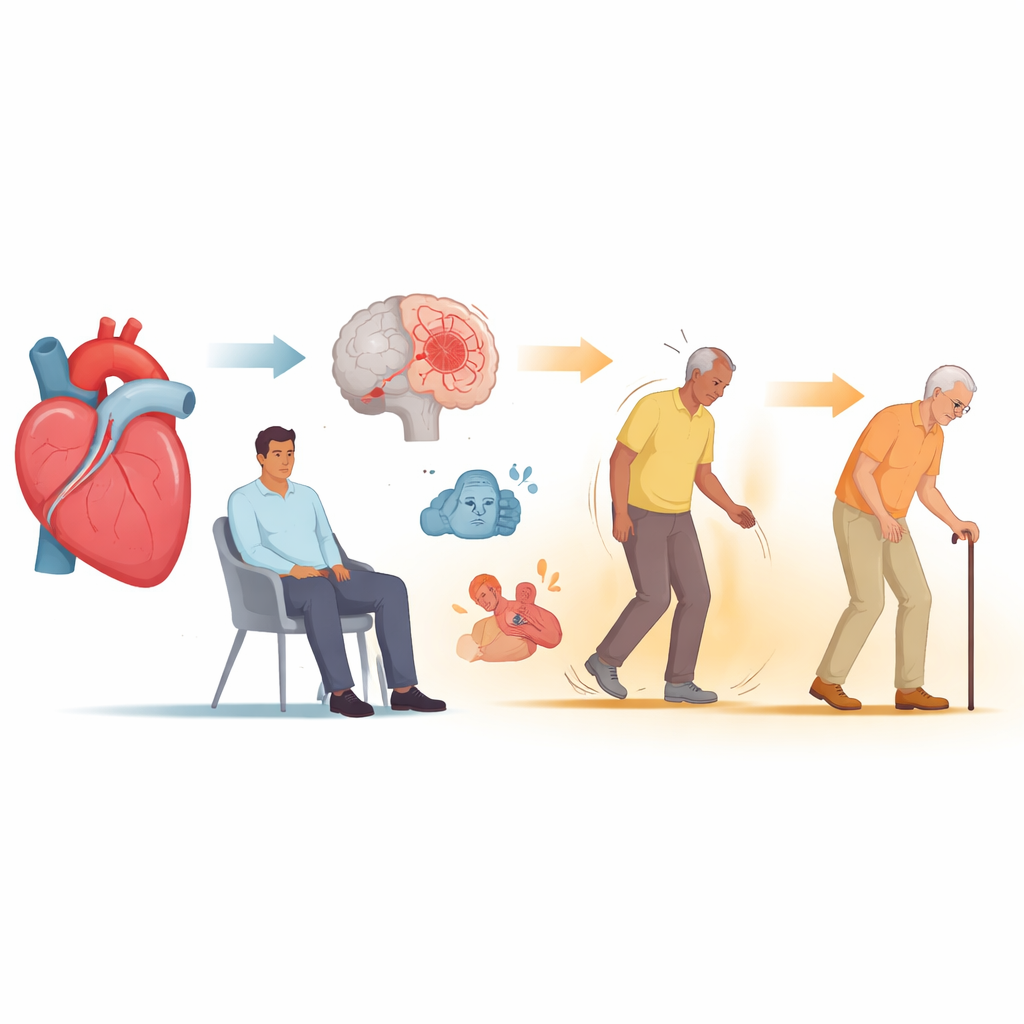
Turning fear into confidence
From a layperson’s perspective, the message is clear: after a heart procedure, fear of movement is common but not the same for everyone. This study shows that people fall into three broad patterns of fear, shaped by age, living situation, other illnesses, drug load, and overall robustness. Recognizing which pattern a patient fits can help nurses and doctors tailor their advice—offering graded, step-by-step activity plans for those who avoid exercise, extra reassurance and education for those who see danger everywhere, and early screening and support for those who are frail and heavily burdened by disease. With targeted guidance, many patients can learn to trust their bodies again, turning anxiety into informed caution and making rehabilitation a safer, more hopeful path back to everyday life.
Citation: Wen, Q., Mao, XR., Wu, HY. et al. Latent profile analysis of kinesiophobia during the out-of-hospital early rehabilitation phase after PCI in patients with CHD. Sci Rep 16, 13096 (2026). https://doi.org/10.1038/s41598-026-42755-x
Keywords: cardiac rehabilitation, fear of movement, coronary heart disease, frailty, stent recovery