Clear Sky Science · en
Sleep is associated with posttraumatic stress symptom severity in patients with an implantable cardioverter-defibrillator depending on age
Why Sleep Matters When Your Heart Needs Help
For people living with an implantable cardioverter‑defibrillator, or ICD—a small device that can shock the heart back into rhythm—survival is only part of the story. Many patients carry a lingering sense of threat, worrying about their heart, possible shocks and what the future holds. This study explores how something as everyday as sleep ties into posttraumatic stress symptoms in ICD patients, and how this link changes with age. Understanding that connection could open up simple, practical ways to protect both mental health and heart health.
Living With a Lifesaving but Worrying Device
ICDs are widely used to prevent sudden cardiac death in people at high risk of dangerous heart rhythms. While these devices save lives, they can also cast a psychological shadow. Some patients develop symptoms similar to those seen after other traumas: intrusive memories of cardiac events or shocks, constant worry, jumpiness and emotional numbness. Earlier work suggested that about one in eight ICD recipients has clinically significant posttraumatic stress symptoms, and that these symptoms can worsen quality of life, strain relationships, and even predict poorer long‑term heart outcomes.
Taking a Closer Look at Sleep and Stress
Sleep problems are common both in people with ICDs and in those with posttraumatic stress. Nightmares, fragmented sleep and trouble staying asleep can fuel emotional distress and make daytime functioning harder. To understand how these factors come together, the researchers studied 422 adults with an ICD or a related device who were attending routine check‑ups at a Swiss university hospital. Participants filled out standard questionnaires about their sleep over the past month and about stress symptoms specifically linked to their ICD experience. The team also collected information on age, sex, smoking, prior heart attacks and number of ICD shocks.
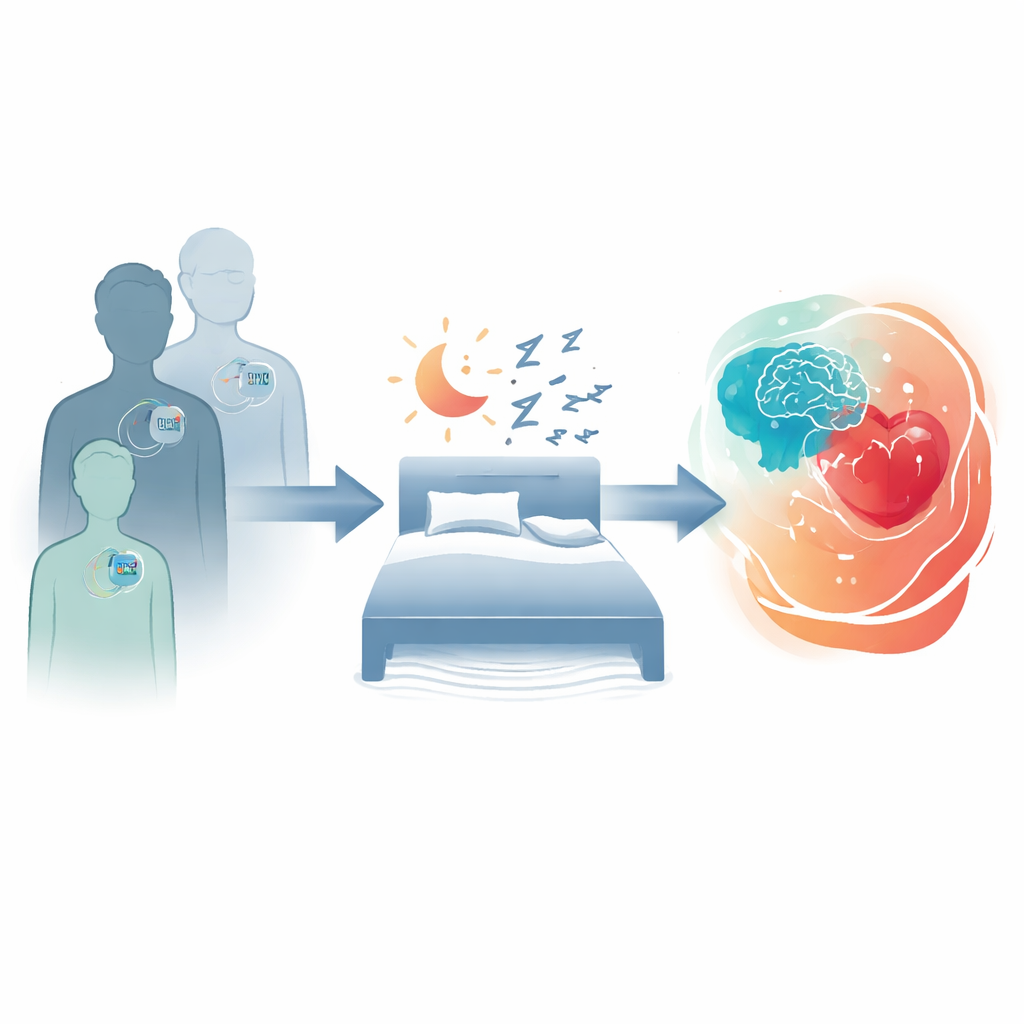
How Poor Sleep and Age Work Together
Almost half of the patients showed clear signs of disturbed sleep, and about one in eight screened positive for probable posttraumatic stress disorder. When the researchers used statistical models to account for other factors, they found that worse overall sleep was strongly tied to more severe stress symptoms. However, this connection was not the same for everyone: it was noticeably stronger in younger patients. In a person in their mid‑forties, a modest worsening in sleep quality was linked to roughly a 16 percent jump in stress symptoms. For someone in their early seventies, the same change in sleep was still meaningful, but the increase in symptoms was smaller, around 9 percent.
What Kind of Sleep Problems Matter Most
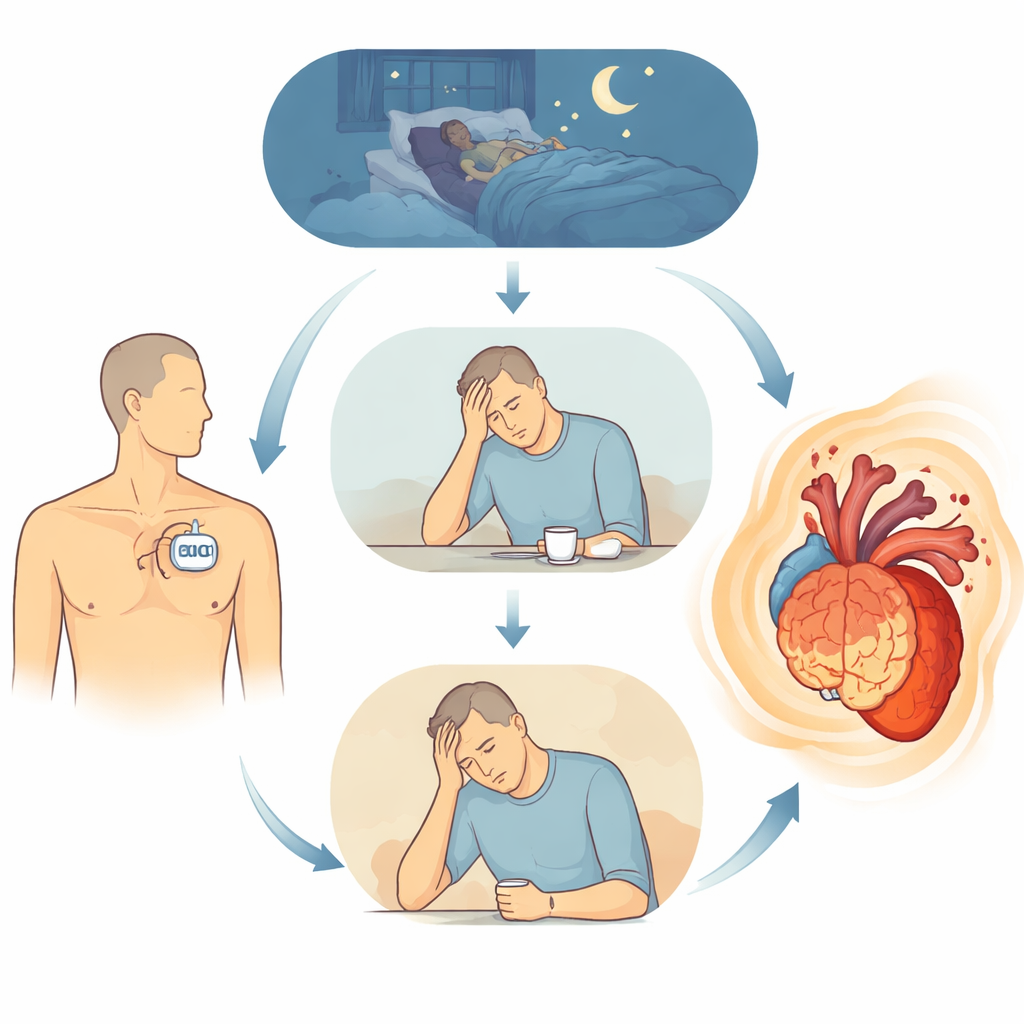
The study went beyond a single sleep score to ask which parts of sleep were most closely related to distress. Two stood out. First, frequent disruptions at night—waking up often, feeling uncomfortable, experiencing pain or nightmares—were strongly linked with higher stress symptoms. Second, how patients felt and functioned during the day, including tiredness, sleepiness and difficulty staying engaged in daily tasks, showed an equally strong connection. Other aspects such as how long people slept, how quickly they fell asleep or whether they took sleep medications did not show independent links once these two factors were considered. Younger age and a higher number of ICD shocks were also associated with more severe symptoms, underscoring the emotional weight of living with a device that can deliver sudden, painful therapy.
What This Means for Care and Recovery
For people with ICDs, this work highlights sleep as more than just a comfort issue. Disturbed nights and exhausted days appear to go hand in hand with heavier emotional burden, especially in younger patients who may struggle more with the life changes an ICD brings. Because sleep is relatively easy to measure and treat, the authors argue that regular sleep screening should become a standard part of ICD follow‑up. Brief questionnaires can flag patients who might benefit from targeted help, such as cognitive‑behavioral therapy for insomnia or trauma‑focused counseling. While the study cannot prove that poor sleep causes posttraumatic stress, it reinforces the idea that improving sleep could be a practical, modifiable lever to ease psychological strain and, in the long run, support better heart health.
Citation: Nager, L., Princip, M., Attanasio, V. et al. Sleep is associated with posttraumatic stress symptom severity in patients with an implantable cardioverter-defibrillator depending on age. Sci Rep 16, 11869 (2026). https://doi.org/10.1038/s41598-026-42430-1
Keywords: implantable cardioverter-defibrillator, sleep disturbance, posttraumatic stress, cardiac psychology, age differences