Clear Sky Science · en
Glycan-binding properties of SARS-CoV-2 spike proteins: interactions with aminoglycoside antibiotics
Why old antibiotics might matter for new viruses
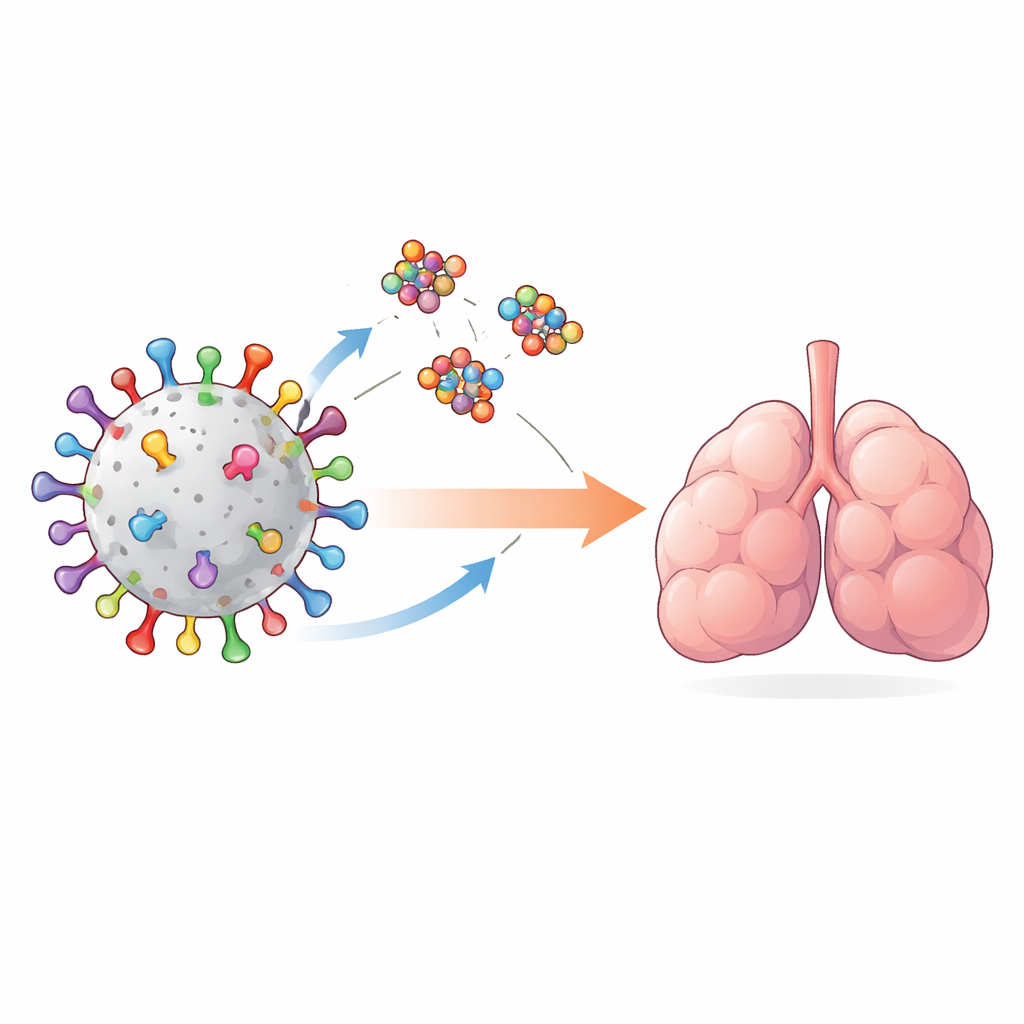
The coronavirus that causes COVID-19 grabs onto our cells using crown-like spike proteins on its surface. Vaccines and many treatments target these spikes, but the virus keeps evolving new versions. This study asks a surprising question: can certain sugar-loving antibiotics, already used against bacteria, physically latch onto the coronavirus spike itself and serve as starting points for future antiviral drugs?
Looking for sticky partners on a sugar chip
The researchers began by testing how the spike proteins from two major variants, Delta and Omicron, interact with a wide panel of sugar-like molecules. They used a “glycan array,” essentially a microchip coated with 300 different carbohydrates, to see which ones the purified spike proteins would stick to most strongly. Delta and Omicron showed clearly different binding patterns, reflecting their distinct spike structures. For Delta, several aminoglycoside antibiotics—especially tobramycin and sisomicin—stood out as strong binders, while Omicron showed a stronger taste for certain sialic-acid–related sugars that humans do not naturally make, and only weaker binding to tobramycin. These differences highlight how changing a few amino acids in the spike can reshape the surfaces that recognize sugars and sugar-like compounds.
Measuring how tightly the antibiotics grab the spike
Finding a hit on the array was just the first step; the team then asked how firmly these antibiotics bind. Using surface plasmon resonance, a technique that tracks molecules as they attach to a sensor, they showed that both tobramycin and sisomicin bind directly to the almost full-length spike proteins from Delta and Omicron. Delta’s spike consistently bound these drugs more strongly than Omicron’s, and tobramycin was the tighter binder in both cases. Circular dichroism spectroscopy, which senses changes in protein shape in solution, confirmed that adding the antibiotics altered the spike’s structure, again with stronger effects for tobramycin and for the Delta spike. Together, these measurements paint a consistent picture: the antibiotics interact directly with the spike and slightly reshape it, but in a way that depends on the variant.
Zooming in on the spike’s key gripping region
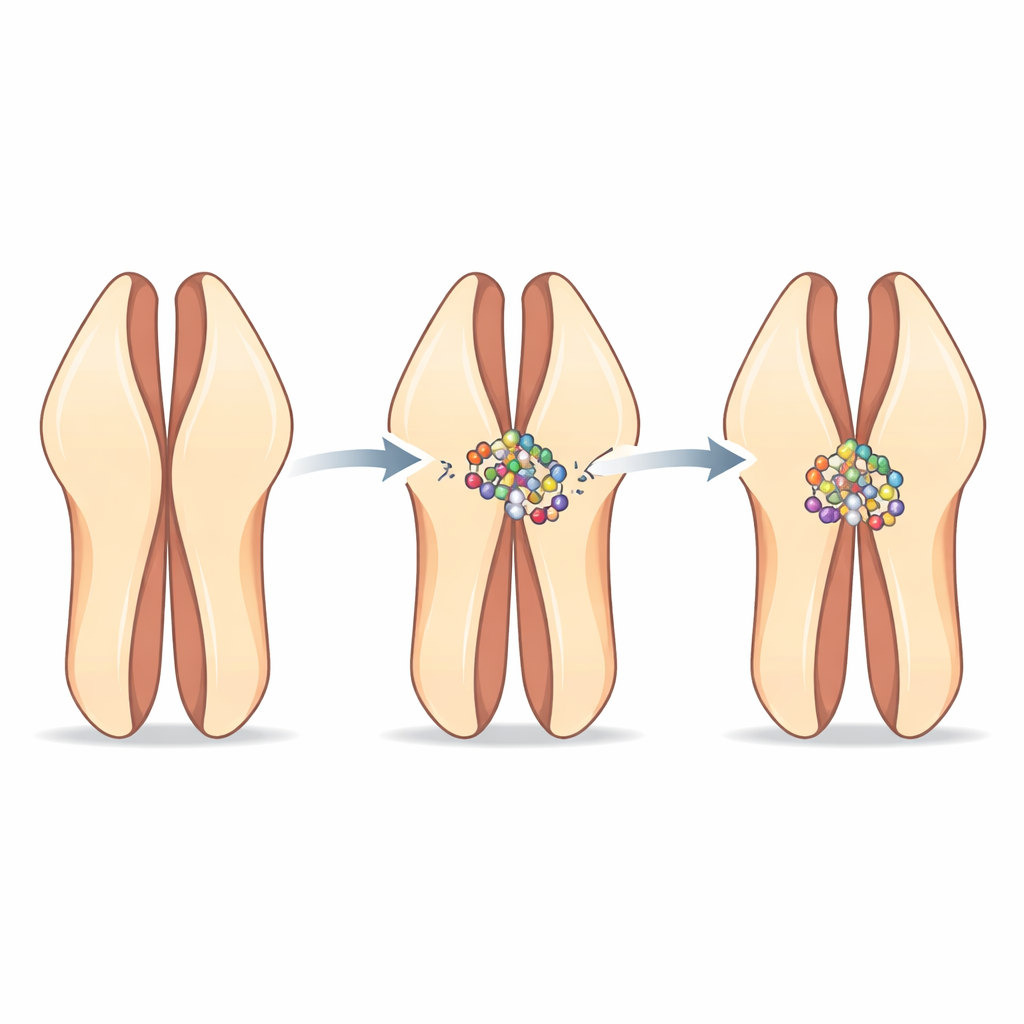
Because the virus uses a specific portion of the spike—the receptor-binding domain—to latch onto the ACE2 protein on human cells, the authors next tested whether the antibiotics touch this critical area. Using nuclear magnetic resonance, they examined a purified receptor-binding domain and watched how its atomic-level signals changed as tobramycin or sisomicin were added. Sisomicin showed no clear effect, suggesting weak or absent binding to this fragment. Tobramycin, however, caused the signals from certain loop regions of the receptor-binding domain to fade, indicating direct contact at multiple spots, including parts of the surface that face ACE2 in the intact virus. Computer-based docking simulations using the full trimeric spike then suggested where these molecules might sit in the complete structure: nestled in a cleft between neighboring spike subunits, away from the main ACE2 contact site, and forming numerous hydrogen bonds that help explain the stronger binding of tobramycin.
Testing whether binding translates into real-world protection
Binding alone does not guarantee that a compound can stop infection, so the team turned to miniature, lab-grown human lungs called organoids. These tiny, three-dimensional tissues were infected with live Delta or Omicron virus in the presence of tobramycin or sisomicin at high concentrations, and compared with a known antiviral drug, remdesivir. Encouragingly, neither antibiotic harmed the organoids. Both showed a trend toward lowering the amount of virus released—sometimes by more than half—but the results varied and did not reach the statistical strength researchers need to claim a clear antiviral effect. The authors suggest that on real virus particles, the spike is densely coated with natural sugars, forming a “glycan shield” that may block the antibiotics from reaching the inter-subunit clefts that look accessible on the simplified spike proteins used in their binding tests.
What this work means for future treatments
This research shows that some long-known aminoglycoside antibiotics can directly dock onto the SARS-CoV-2 spike protein, particularly in grooves formed where spike subunits meet. Although these unmodified drugs are not, by themselves, reliable antivirals against COVID-19, their ability to bind conserved parts of the spike suggests they could serve as chemical scaffolds—starting shapes that chemists can modify to design new, more potent molecules. Such next-generation compounds might better wedge into the spike, disrupt its motions, or overcome the protective sugar coating on the virus. In that sense, the work does not deliver an off-the-shelf COVID-19 medicine, but it opens an unexpected pathway for developing future drugs that act directly on the virus, independent of changes in the human host.
Citation: Hatakeyama, D., Shoji, M., Miki, Y. et al. Glycan-binding properties of SARS-CoV-2 spike proteins: interactions with aminoglycoside antibiotics. Sci Rep 16, 12769 (2026). https://doi.org/10.1038/s41598-026-42404-3
Keywords: SARS-CoV-2 spike, aminoglycoside antibiotics, tobramycin, Delta and Omicron variants, antiviral drug design