Clear Sky Science · en
Comparative performance evaluation of chemical coagulants in dairy wastewater treatment: a multi-criteria decision-making approach
Why Milk Factories and Rivers Are Connected
Behind every glass of milk or slice of cheese lies a hidden stream of dirty water. Dairy factories use large amounts of water to rinse, clean, and process products, and this wastewater is rich in milk residue, fats, and cleaning agents. If it is not treated properly, nearby rivers and lakes can quickly lose oxygen and struggle to support fish and other life. This study looks at how a major dairy plant in Bangladesh cleans its wastewater, and how simple, affordable chemicals can make that cleaning both more effective and easier to manage.
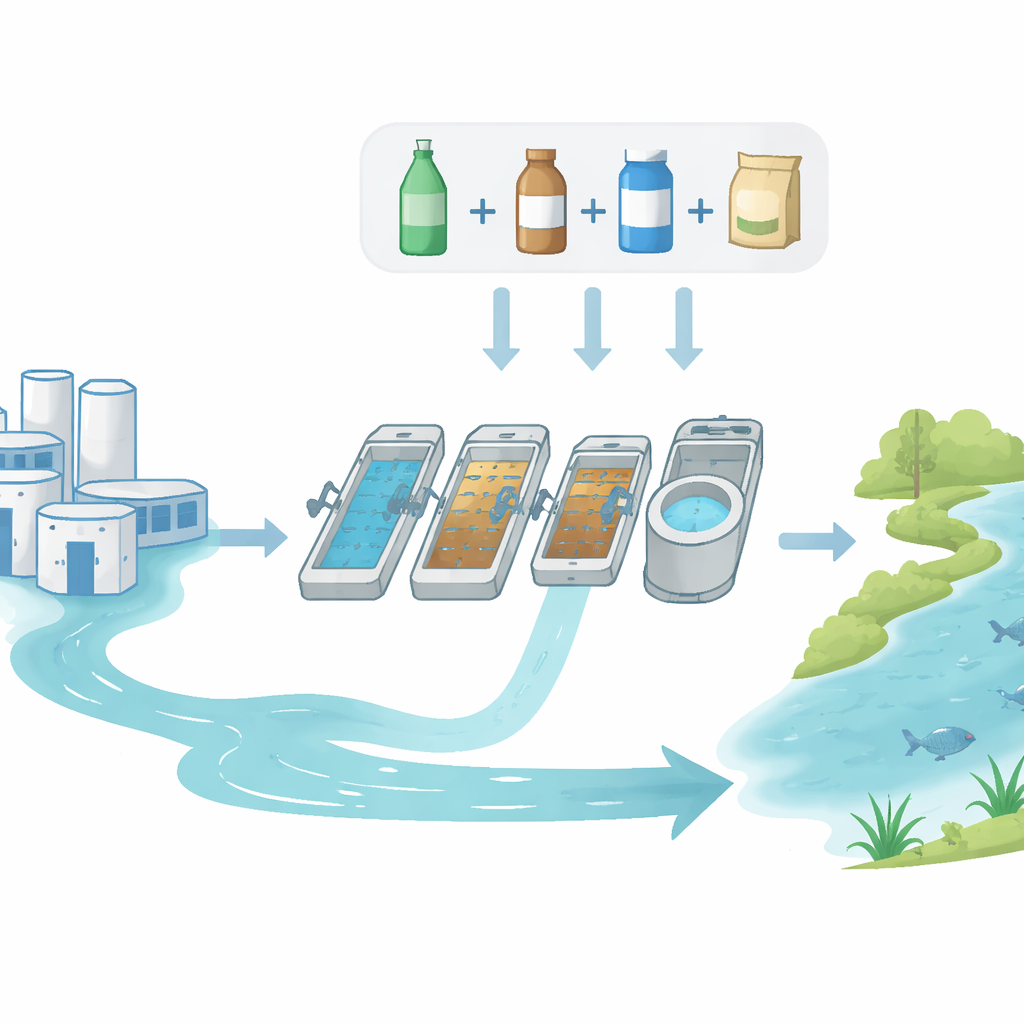
How a Dairy Plant Cleans Its Water
The researchers focused on an effluent treatment plant attached to a large dairy factory near Dhaka, Bangladesh. This plant combines two common biological processes: one that uses microbes in the presence of oxygen and one that works without it. Together, they break down the organic matter left over from milk processing. The team collected water samples at the inlet and outlet of the treatment plant during three different seasons—monsoon, winter, and summer—to see whether the plant could keep working well under changing weather and production conditions.
Checking If the Water Meets the Rules
To judge performance, the scientists tracked several standard indicators of water quality. These included measures of how much oxygen the wastewater would consume as it breaks down (BOD and COD), how many dissolved minerals it contains (TDS), and how many fine particles it carries (TSS), along with acidity level (pH). They compared the plant’s treated water to new national discharge limits in Bangladesh. Across all three seasons, the plant consistently reduced BOD and COD by about 97–98%, and cut dissolved and suspended solids by over 90%. The pH of the water shifted from mildly acidic at the inlet to a safe, neutral range at the outlet. In simple terms, the existing treatment system already turned very dirty milk wastewater into water clean enough to meet the country’s latest environmental standards.
Why Add a Chemical Helping Hand
Even with good biological treatment, factories often benefit from a “primary” treatment step that happens first. In this study, the team explored such a step based on chemical coagulation, where added chemicals cause tiny particles and some dissolved substances to clump together and settle out. They tested three widely used, low-cost coagulants—ferric chloride, ferrous sulfate, and polyaluminum chloride—together with lime, which helps adjust acidity and strengthen clump formation. Using jar tests that mimic real tanks, they tried different dose combinations and then measured how much extra pollution was removed. No single chemical mix was best for every pollutant, creating a real-world dilemma: which option should a plant choose if it wants to control several water quality problems at once?
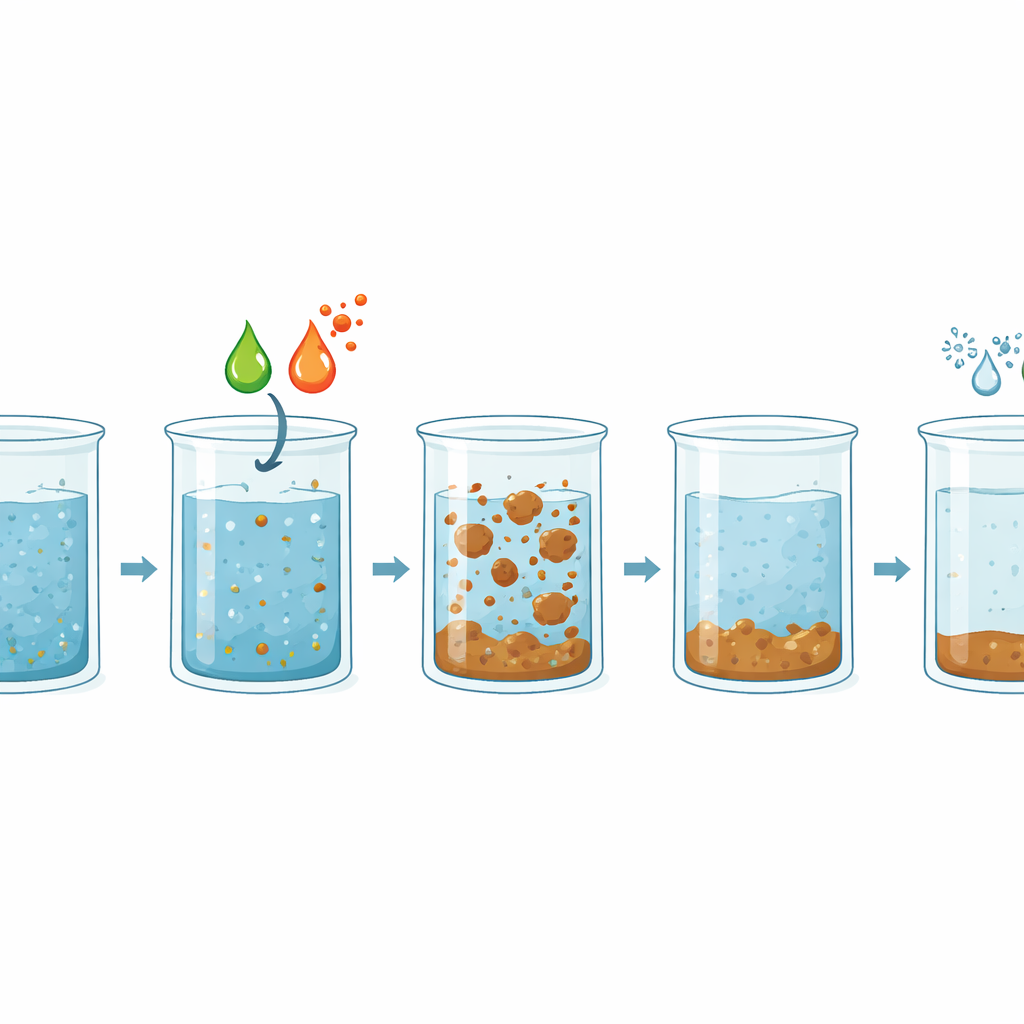
Letting Decision Tools Pick the Front-Runner
To resolve that dilemma, the researchers borrowed tools from decision science known as multi-criteria decision-making methods. Instead of judging each chemical combination by a single number, these methods weigh performance across several goals at the same time—in this case, improving BOD, COD, TDS, and TSS. The team applied three separate ranking techniques, each using a different mathematical approach but giving equal importance to all four pollution measures. Remarkably, all three methods pointed to the same winner: a mix of lime and ferrous sulfate, both at 100 milligrams per liter. This combination removed about 94% of BOD, 86% of COD, 52% of dissolved solids, and 94% of suspended solids, offering strong, well-balanced performance rather than excelling at just one measure.
What This Means for Cleaner Water and Affordable Treatment
For non-specialists, the key message is that relatively simple chemistry, guided by careful comparison tools, can make dairy wastewater treatment both cleaner and more reliable. The Bangladeshi plant already meets strict national rules, but adding an optimized chemical pretreatment step—especially lime plus ferrous sulfate at the identified dose—can lighten the load on the biological units and provide a safety margin as production grows. The study shows that, instead of guessing or focusing on a single pollution number, plant operators can use structured ranking methods to choose the chemical recipe that best protects rivers and communities while remaining affordable and practical to run.
Citation: Al Jobair, A., Kwoshik, M.M.K., Ahmed, T. et al. Comparative performance evaluation of chemical coagulants in dairy wastewater treatment: a multi-criteria decision-making approach. Sci Rep 16, 13097 (2026). https://doi.org/10.1038/s41598-026-42339-9
Keywords: dairy wastewater, coagulation treatment, Bangladesh industry, effluent standards, decision-making methods