Clear Sky Science · en
Population history and subsistence of farming communities in an agro-pastoral transition zone of northern China: ancient DNA and isotopic evidence from the Erdaojingzi site
Life on an Ancient Frontier
More than three thousand years ago, communities living on the northern fringe of China’s farming heartland faced a dilemma that still resonates today: how do people used to settled agriculture adapt when they move into a harsher grassland world shaped by herding? This study focuses on the Bronze Age settlement of Erdaojingzi in the West Liao River Basin of northern China, a remarkably well preserved site often called the “Pompeii of the East.” By combining ancient DNA, chemical traces of diet, animal bones and charred seeds, the researchers reconstruct how these farmers adjusted their way of life in an agro‑pastoral transition zone where fields met steppe.
A Town Frozen in Time
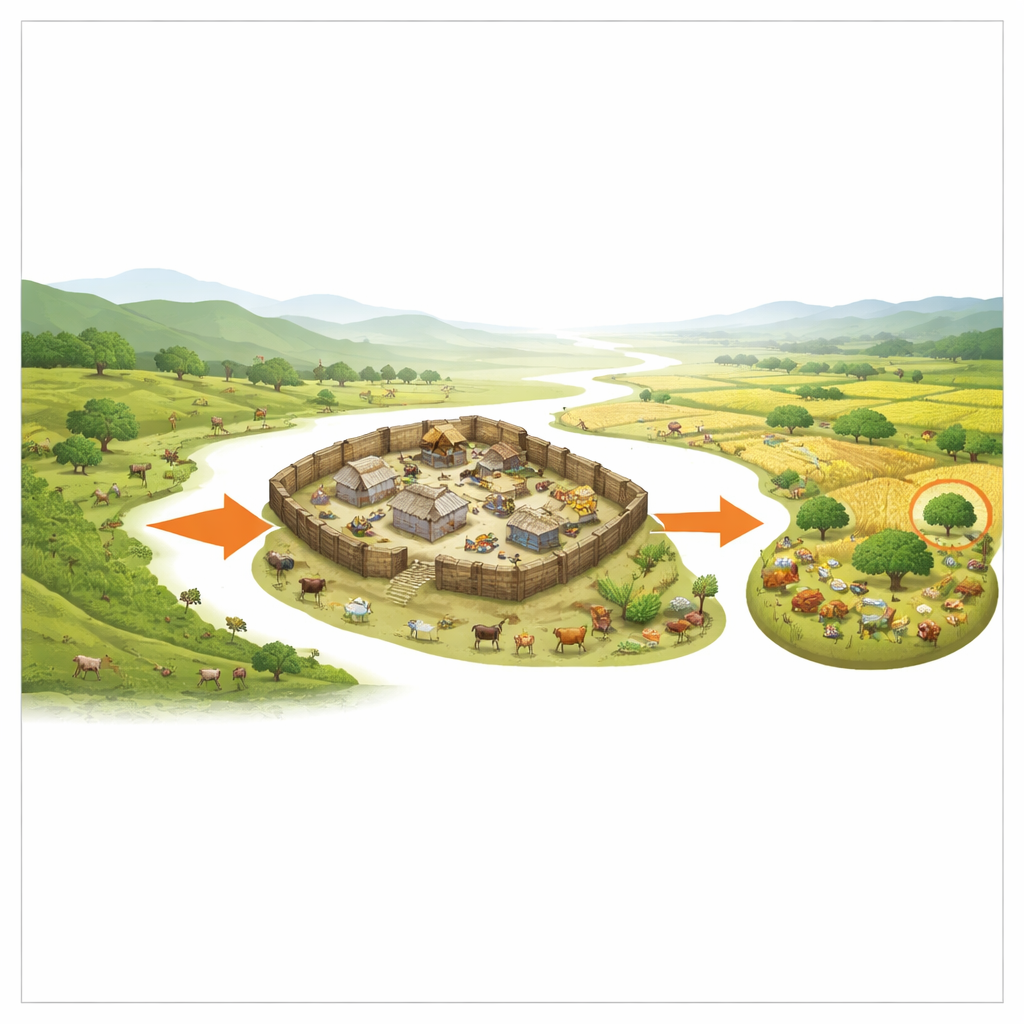
Erdaojingzi sat on gentle hills near today’s Chifeng City in Inner Mongolia and flourished roughly 3700–3330 years ago. Excavations uncovered city walls, moats, houses, roads, storage pits and graves across a large area, along with more than a thousand artifacts of pottery, stone, bone and bronze. Charred grains of broomcorn and foxtail millet packed into storage pits show that these people relied heavily on dry‑farmed crops well suited to a relatively arid climate. The architecture and fine ritual objects closely resemble those of communities farther south in the Yellow River Basin, hinting at strong cultural ties between this northern frontier town and the political centers of early China.
Farmers from the South, Not Just Local Foragers
Ancient DNA from two well preserved male skeletons reveals who these inhabitants were most closely related to. Their genetic profiles align with farming populations from the Yellow River Basin rather than with earlier Neolithic groups from the West Liao region that carried more hunter‑gatherer ancestry. In other words, Erdaojingzi was not simply a continuation of long‑standing local lineages. Instead, it appears to have been populated or strongly influenced by migrants whose roots lay in China’s central farming core. These results fit with the pottery styles, bronze ritual items and divination bones at the site, all of which echo practices in the Central Plains while standing apart from neighboring steppe cultures.
What People, Pigs and Sheep Were Eating
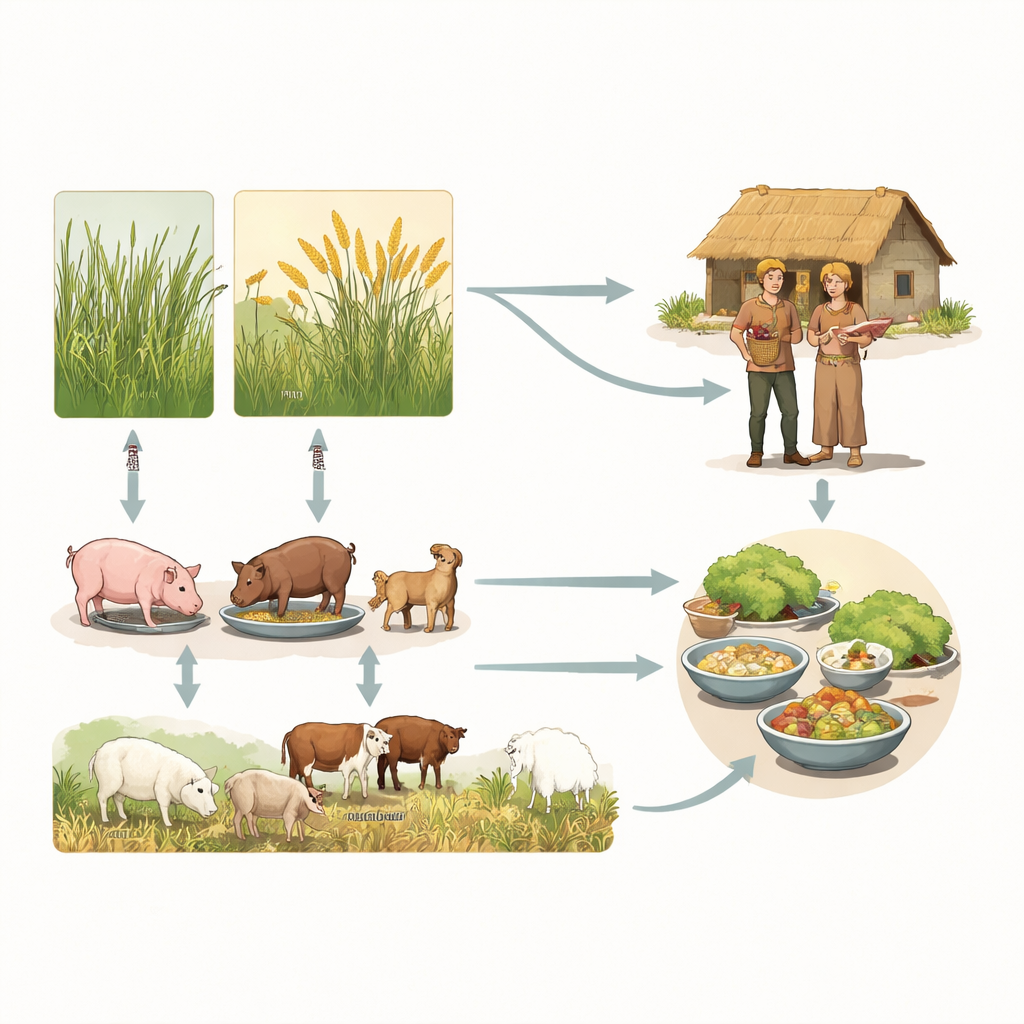
To understand how these migrants made a living in their new surroundings, the team analyzed carbon and nitrogen isotopes preserved in the collagen of human and animal bones. These chemical signatures act like long‑term dietary fingerprints. Wild hares and deer around the site show values typical of a landscape dominated by so‑called C3 plants—cool‑season grasses and shrubs. In contrast, humans, pigs and dogs have much higher carbon values that point to heavy reliance on C4 plants, especially millet, either eaten directly or through fodder. Sheep and the single cattle sample fall in between, indicating mixed diets of wild vegetation and millet‑based feed. Elevated nitrogen values in humans, and in many pigs and sheep, suggest that meat and other animal products contributed substantially to people’s protein intake, not just grain porridge.
Managing Herds and Fields Together
The thousands of animal bones from Erdaojingzi make the economic picture even clearer. Pigs are by far the most common species, followed by cattle and sheep, with wild game contributing only a small share. The ages at which pigs were slaughtered show that many died as relatively young animals, including suckling or recently weaned piglets, implying that pork from young animals was an important food source. Variation in the chemical signatures of sheep suggests they grazed in different places and may sometimes have fed on crops grown in manured fields, where soil enriched with animal dung naturally boosts nitrogen values. Together, these lines of evidence depict a community that maintained familiar farming practices—millet cultivation and pig keeping—while also investing more heavily in grazing cattle and sheep than many contemporary sites farther south.
A Flexible Way of Living on the Grasslands
By comparing Erdaojingzi with similar‑age sites across northern China, the authors show that communities sharing Yellow River ancestry adopted different blends of crops and livestock depending on local conditions. Everywhere, millets and domestic animals like pigs, cattle and sheep formed the backbone of subsistence. But on the open grasslands of the West Liao region, people leaned more on herd animals and animal protein than many communities in the Central Plains, without abandoning their farming roots. For a general reader, the message is that ancient migrants were not passive victims of climate or terrain. They carried ideas, crops and animals with them, then creatively reshaped their economies to fit new environments—an enduring lesson in human adaptability on a changing planet.
Citation: Lv, X., Yu, Y., Ban, L. et al. Population history and subsistence of farming communities in an agro-pastoral transition zone of northern China: ancient DNA and isotopic evidence from the Erdaojingzi site. Sci Rep 16, 13870 (2026). https://doi.org/10.1038/s41598-026-42242-3
Keywords: ancient DNA, millet farming, Bronze Age China, agro-pastoralism, human migration