Clear Sky Science · en
The effect of medication use on chronic pruritus in patients with type 2 diabetes mellitus: a multicenter cross-sectional study
Why this matters for everyday life
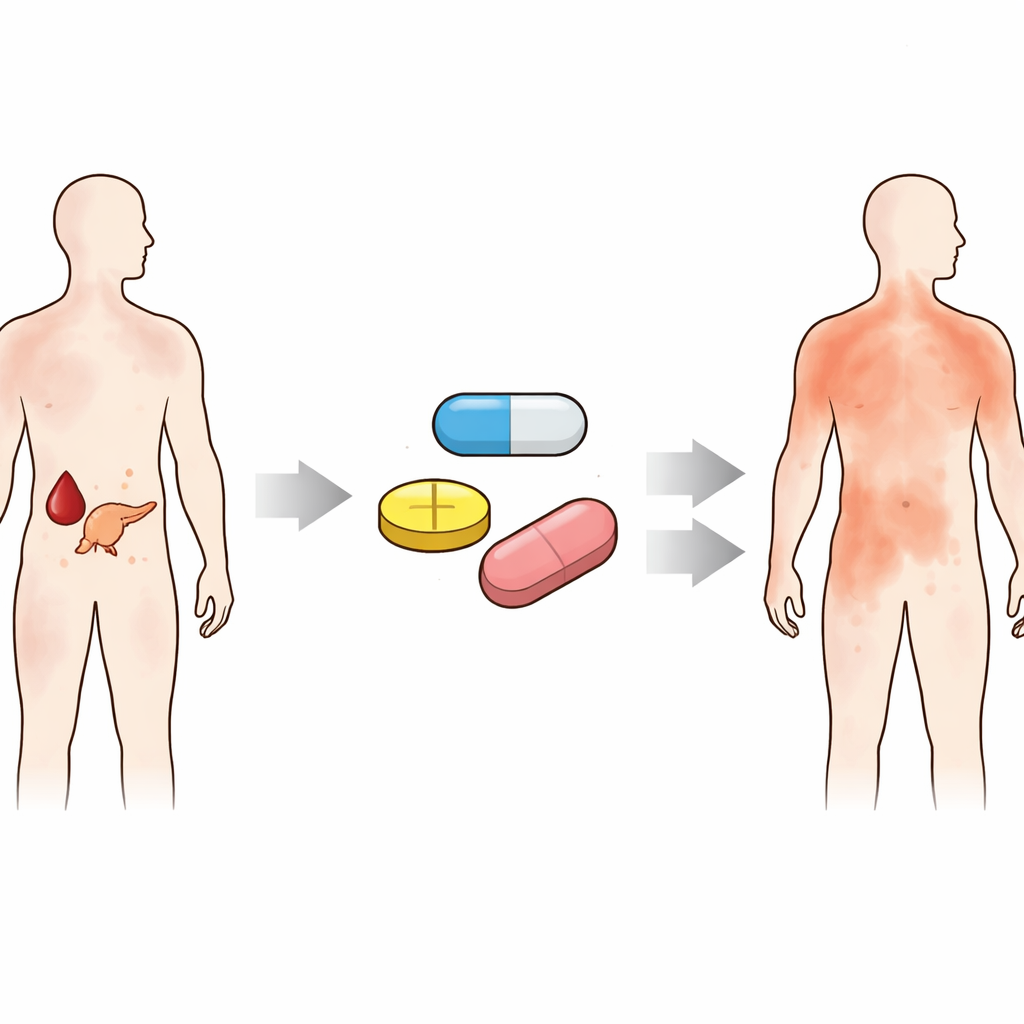
Many people with type 2 diabetes live with an unexpected and often overlooked problem: persistent itching that lasts for weeks or months. This chronic itch can disturb sleep, strain mood, and chip away at quality of life. The study summarized here asks a practical question with direct relevance for patients and doctors alike: could some of the common drugs used to treat diabetes and high cholesterol be quietly making this itching more likely or more severe?
A closer look at itch in diabetes
Type 2 diabetes has long been known for its effects on the heart, blood vessels, eyes, kidneys, and nerves. Less widely recognized are its effects on the skin. Previous research shows that about one‑third of people with diabetes suffer from chronic itch, a much higher rate than in the general population. This study, conducted in several community clinics in Tianjin, China, set out to measure how common long‑lasting itch really is in everyday diabetes care and to explore whether particular medicines might be linked with these symptoms.
Who was studied and how
The researchers used data from more than two thousand adults with type 2 diabetes enrolled in a community screening program. Everyone completed detailed questionnaires about itching over the previous three months and rated its severity on a numerical scale. A score high enough to indicate bothersome, ongoing itch was counted as chronic pruritus. The team also recorded what drugs participants had been taking in the prior three months for blood sugar, blood pressure, cholesterol, and blood‑thinning, along with blood test results reflecting liver and kidney function and cholesterol and sugar control.
What the numbers revealed
Overall, 41 percent of the patients reported chronic itch—an even higher proportion than earlier estimates. People with itch tended to have lived with diabetes for longer and were more likely to be using glucose‑lowering and cholesterol‑lowering drugs. When the researchers dug deeper using statistical models that accounted for age, sex, smoking, diabetes duration, blood sugar, kidney and liver function, and other treatments, three medication groups stood out. Use of alpha‑glucosidase inhibitors (a type of diabetes pill), DPP‑4 inhibitors (another modern diabetes drug), and statins (widely used cholesterol‑lowering drugs) were each independently linked to higher odds of chronic itch. Insulin shots were initially associated with itch, but this connection disappeared after adjusting for how advanced a person’s diabetes was.
When medicines add up
Because many people with diabetes take several drugs at once, the team next examined the combined use of these three key medication types. They compared people taking none of them with those taking any one, any two, or all three together. A clear pattern emerged: the more of these medicines a person used, the higher the odds of chronic itch. Dual use was associated with roughly three‑quarters higher odds, and taking all three was linked to about double the odds of itch, even after careful adjustment for health differences. Subgroup analyses suggested that most patterns held across sex and age, but one signal was particularly striking: in people whose kidney function was moderately reduced, taking alpha‑glucosidase inhibitors was tied to a sharply higher likelihood of itching, hinting that reduced drug clearance by the kidneys might intensify skin side‑effects.
What might be happening inside the body
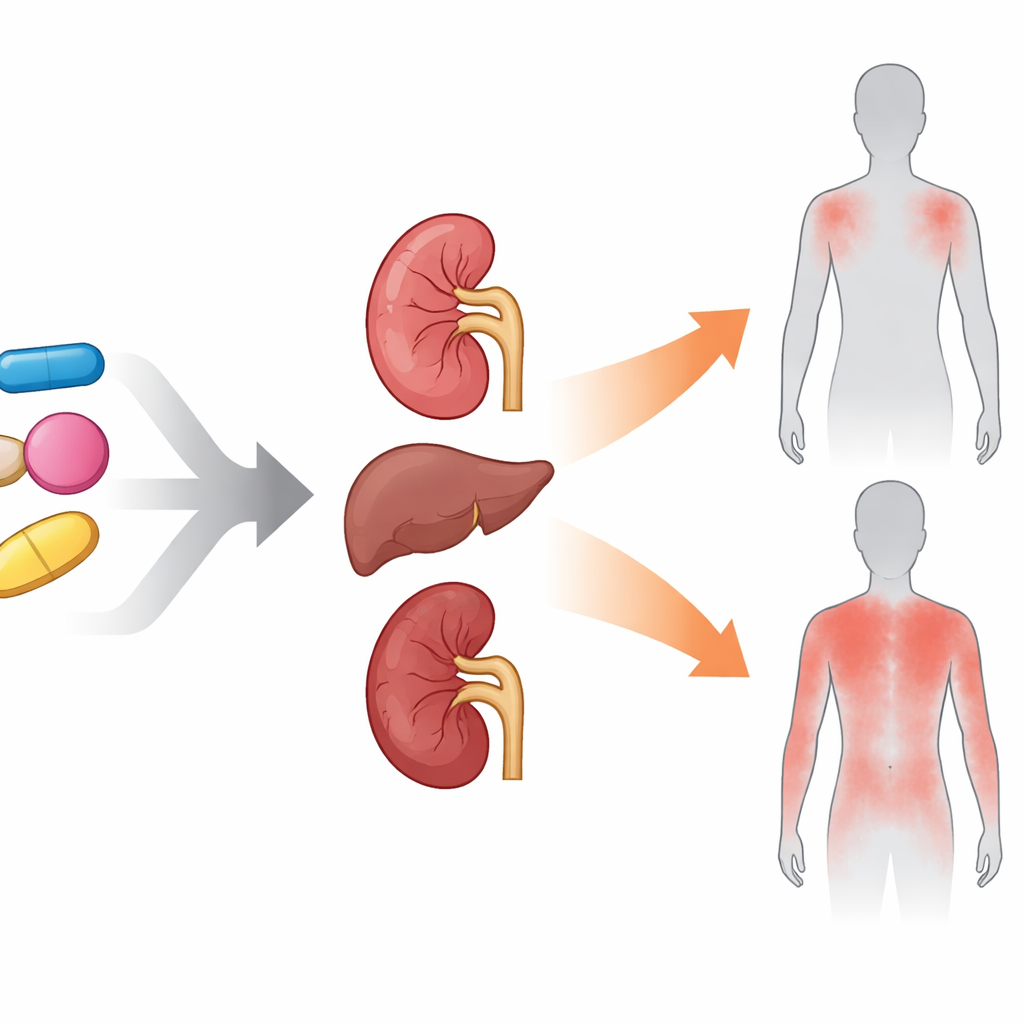
The authors discuss several possible biological explanations. Diabetes itself can dry out the skin, damage small nerve fibers, and fuel low‑grade inflammation, all of which may prime the body for itch. On top of this, specific drugs may influence immune reactions or how the skin and nerves respond. DPP‑4 inhibitors have been linked to certain blistering skin diseases, suggesting an immune component, while statins can subtly shift the balance of immune cells and may trigger allergic‑type responses in some people. Alpha‑glucosidase inhibitors are cleared largely through the kidneys, so when kidney function drops, more of the drug and its breakdown products may accumulate and interact with nerve endings in the skin.
What this means for patients and clinicians
This study cannot prove that these medications directly cause chronic itch, because it captured only a single moment in time and did not track when symptoms started relative to when drugs were prescribed. It also lacked detailed information on drug doses and some potentially important biological markers. Nonetheless, the work highlights a strong and consistent association between several commonly used diabetes and cholesterol drugs and bothersome chronic itch, particularly when these medicines are combined or when kidney function is impaired. For people with type 2 diabetes who are struggling with persistent itch, the findings suggest that a careful review of their medication list—rather than just their blood sugar—may provide clues and options. For clinicians, the message is to remain alert to skin symptoms, especially in patients on multi‑drug regimens, and to consider adjusting treatment plans or monitoring more closely while future studies work to untangle the exact mechanisms involved.
Citation: Xu, M., Gao, X., Liu, Z. et al. The effect of medication use on chronic pruritus in patients with type 2 diabetes mellitus: a multicenter cross-sectional study. Sci Rep 16, 11512 (2026). https://doi.org/10.1038/s41598-026-42229-0
Keywords: type 2 diabetes, chronic itch, medication side effects, statins, DPP-4 inhibitors