Clear Sky Science · en
Association between the blood urea nitrogen to albumin ratio and 30-day mortality in critically ill children with acute kidney injury
Why this matters for sick children
When children become critically ill, their kidneys are often pushed to the limit, and doctors must quickly judge which young patients are in the most danger. This study asks a simple question with life-or-death implications: can a basic blood test, already done in almost every intensive care unit, help predict which children with sudden kidney problems are most at risk of dying within a month?
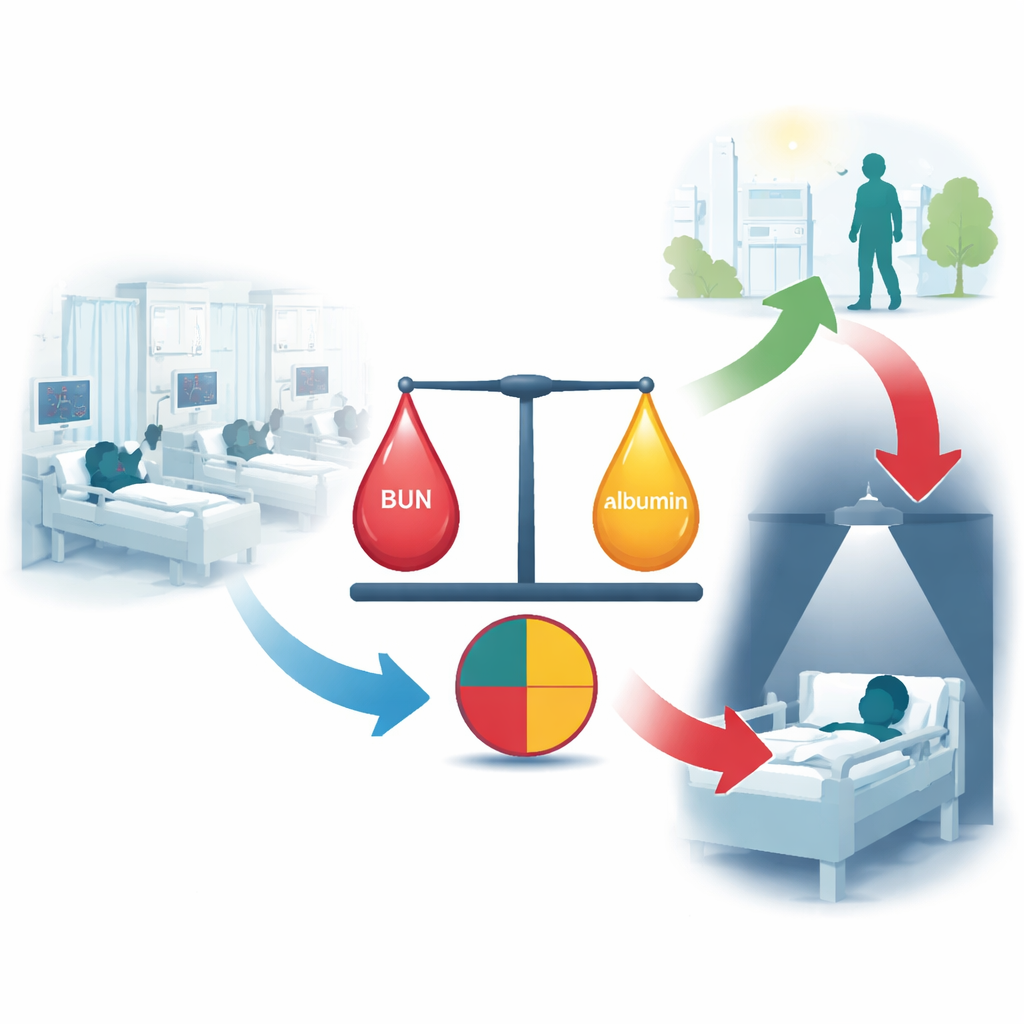
A simple number from routine blood tests
The researchers focused on a measure called the blood urea nitrogen to albumin ratio, or BAR. Urea nitrogen is a waste product that builds up when kidneys are not working well or when the body is breaking down a lot of protein. Albumin is a major blood protein that reflects nutrition, inflammation, and the body’s reserves. By looking at the balance between these two, BAR captures both how strained the kidneys are and how strong or depleted the rest of the body is. Because both values come from standard blood tests, BAR can be calculated quickly and at low cost for almost any hospitalized child.
Who was studied in the intensive care unit
The team analyzed records from a large Chinese pediatric intensive care database, covering children admitted between 2010 and 2018. They included 1,778 patients older than 28 days and younger than 18 years who had acute kidney injury, a sudden drop in kidney function. All had BAR measured around the time they entered the intensive care unit. Children who had surgery, stayed less than 24 hours, or lacked key data were excluded. The main outcome the team tracked was whether each child was alive 30 days after admission.
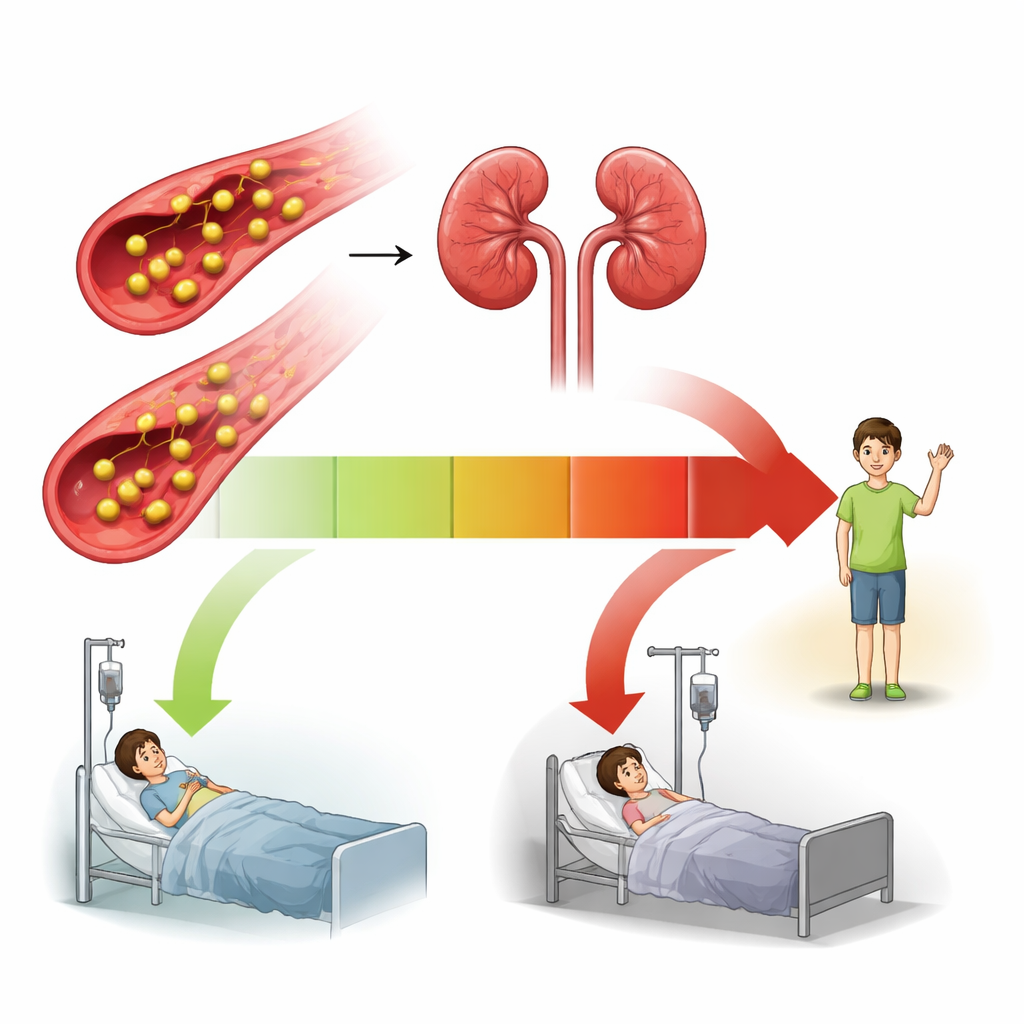
Higher BAR linked to higher short-term death risk
Using statistical models that accounted for age, sex, other illnesses, vital signs, and many lab results, the researchers found a clear pattern: as BAR rose, so did the chance of dying within 30 days. Children in the high-BAR group had almost twice the risk of death compared with those in the low-BAR group, even after adjusting for how sick they were in other ways. When the researchers examined the data more closely, the relationship was not simply a straight line. At very low BAR values, risk did not rise, but beyond a certain threshold the danger climbed steeply with each additional increase in the ratio.
A turning point and how well BAR predicts risk
By fitting flexible curves to the data, the team identified a “turning point” BAR value of about 2.5, above which death risk increased sharply. They also tested how well BAR alone could distinguish between children who survived and those who did not, and compared it with its two components—urea nitrogen and albumin—as well as another common blood measure. BAR performed better than albumin and better than the comparison marker, and was at least as informative as urea nitrogen alone. Importantly, the link between higher BAR and higher mortality held steady across boys and girls, different ages, kidney injury stages, and major accompanying conditions such as sepsis or cancer.
What this could mean for care at the bedside
The authors argue that BAR may act as a quick, bedside “red flag” in pediatric intensive care units. A high BAR on admission seems to identify children whose kidneys are overwhelmed and whose overall reserves are depleted, signaling a greater need for close monitoring and aggressive support. At the same time, the study has limits: it comes from a single hospital, uses past records, and cannot prove that BAR itself causes worse outcomes. The authors stress that larger, forward-looking studies in multiple centers are needed. Still, their work suggests that a simple ratio from routine blood tests could help doctors spot the most vulnerable children with acute kidney injury and potentially intervene earlier to save more lives.
Citation: Gao, Y., Wu, F., Zhang, Y. et al. Association between the blood urea nitrogen to albumin ratio and 30-day mortality in critically ill children with acute kidney injury. Sci Rep 16, 11923 (2026). https://doi.org/10.1038/s41598-026-42203-w
Keywords: pediatric intensive care, acute kidney injury, kidney biomarkers, critical illness risk, child mortality