Clear Sky Science · en
Synthesis, spectroscopic investigation, theoretical insights via DFT and biological assessment of some isatin-based metal complexes
Why new metal-based medicines matter
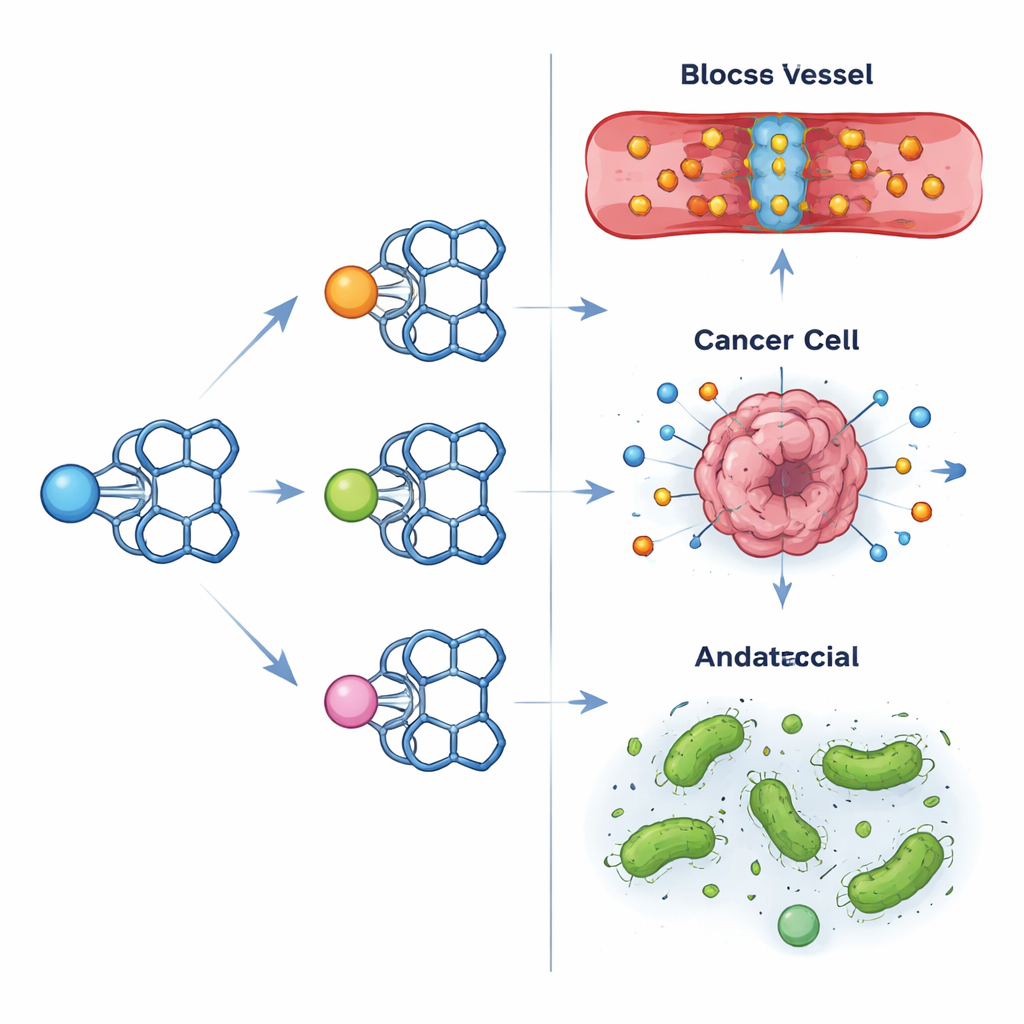
Many drugs used today are built from carbon-based molecules, but a powerful new class of treatments is emerging from an unexpected source: metals. In this study, researchers designed and tested three metal-containing molecules based on a small ring-shaped compound called isatin. They asked a simple but far-reaching question: can carefully chosen metals, attached to the right organic scaffold, produce agents that fight diabetes, liver cancer, and bacterial infections more effectively than the starting molecule alone?
Building a flexible chemical scaffold
The team first created a new isatin-based "scaffold" by chemically linking two isatin units through a flexible ether bridge. This structure, known as a Schiff base ligand, can grab onto metal ions at specific positions, much like a claw. They then attached three different metals—vanadium, nickel, and copper—to this ligand, forming three separate complexes. Using a suite of analytical tools, including infrared and ultraviolet–visible spectroscopy, magnetic measurements, and thermal analysis, they determined how each metal sat within the molecule. The vanadium complex adopted a square-pyramidal arrangement, while nickel formed a tetrahedral structure and copper took on a distorted square-planar shape. These subtle differences in shape and bonding would turn out to be crucial for their biological behavior.
Peering into the molecules with theory
Because the complexes could not easily be crystallized for X-ray studies, the researchers turned to quantum chemistry, using density functional theory (DFT) to model the structures in detail. The calculations showed that the ligand prefers a particular "keto" form in which two carbon–oxygen double bonds are intact, and that the oxygen atoms are especially attractive to metal ions. By examining the distribution of electrons in the highest occupied and lowest unoccupied molecular orbitals, the team found that coordinating metals narrows the energy gap between these orbitals. This makes the complexes electronically softer and more reactive than the free ligand, a feature often associated with stronger interactions in biological systems. In other words, adding metals did not just change the shape of the molecules; it also tuned how easily they could engage with enzymes, cell membranes, and other targets.
Testing effects on blood sugar, cancer cells, and bacteria
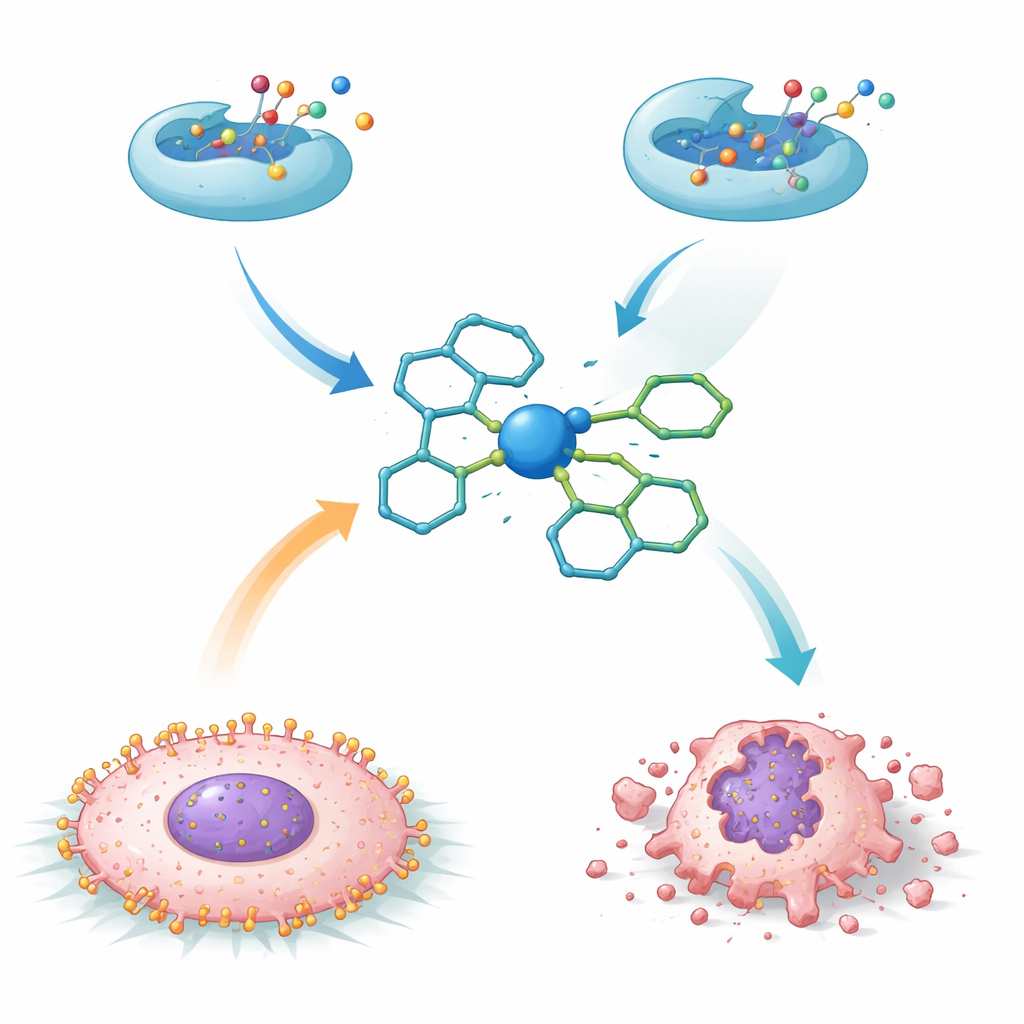
To explore real-world potential, the researchers tested the ligand and its metal complexes in three biological settings. For antidiabetic activity, they examined how well each compound blocked α-amylase, a digestive enzyme that breaks down starch into sugar and contributes to spikes in blood glucose. The vanadium complex was the clear standout, inhibiting the enzyme much more strongly than the ligand and approaching the performance of a standard drug, while the copper complex showed moderate activity and the nickel complex was largely inactive. In parallel tests against liver cancer cells (HepG-2), the vanadium complex again emerged as the most potent, followed by the copper complex, with nickel and the free ligand showing weaker or negligible effects. Importantly, the ligand and nickel complex were far less toxic toward normal lung cells, hinting at a degree of selectivity.
Fighting harmful microbes
The team also measured antibacterial activity against both Gram-positive and Gram-negative bacteria. The unmodified ligand did not significantly slow bacterial growth, but metal coordination changed that picture dramatically. All three complexes showed improved action, with the copper complex giving the largest zones of inhibition against several clinically relevant species, including Staphylococcus aureus, Escherichia coli, and Klebsiella pneumoniae. The authors suggest that chelation to metals makes the molecules more fat-loving, helping them slip through the fatty layers of bacterial membranes and disrupt vital processes inside. Differences in metal size, charge, and geometry further modulate how well each complex penetrates and acts on various microbes.
What these findings mean for future therapies
Taken together, the work shows that carefully engineered isatin-based metal complexes can outperform the original organic scaffold in multiple biological roles. Vanadium bound to the ligand stands out as a promising dual-action candidate, combining strong inhibition of a key diabetes-related enzyme with powerful activity against liver cancer cells, while copper coordination excels against bacteria. Although these results are still at an early, lab-based stage and far from clinical use, they highlight how swapping and arranging metal ions on a single molecular framework can tune properties for different medical targets. This strategy points toward a versatile platform for designing next-generation metal-containing drugs aimed at metabolic disease, cancer, and infection.
Citation: EL-Gammal, O.A., El-Boraey, H.A. & Tolan, D.A. Synthesis, spectroscopic investigation, theoretical insights via DFT and biological assessment of some isatin-based metal complexes. Sci Rep 16, 13151 (2026). https://doi.org/10.1038/s41598-026-41979-1
Keywords: isatin metal complexes, vanadium-based therapeutics, metal-based anticancer agents, antidiabetic enzyme inhibitors, antibacterial coordination compounds