Clear Sky Science · en
Association of serum uric acid to high density lipoprotein cholesterol ratio with stroke
Why blood fats and crystals matter for your brain
Stroke is one of the world’s top killers, yet many people who seem only mildly unhealthy still suffer one without warning. This study asks a simple but important question: can a routine blood test that captures both “harmful” and “protective” elements in the bloodstream help flag who is more likely to have a stroke years down the line, especially among middle-aged and older adults?
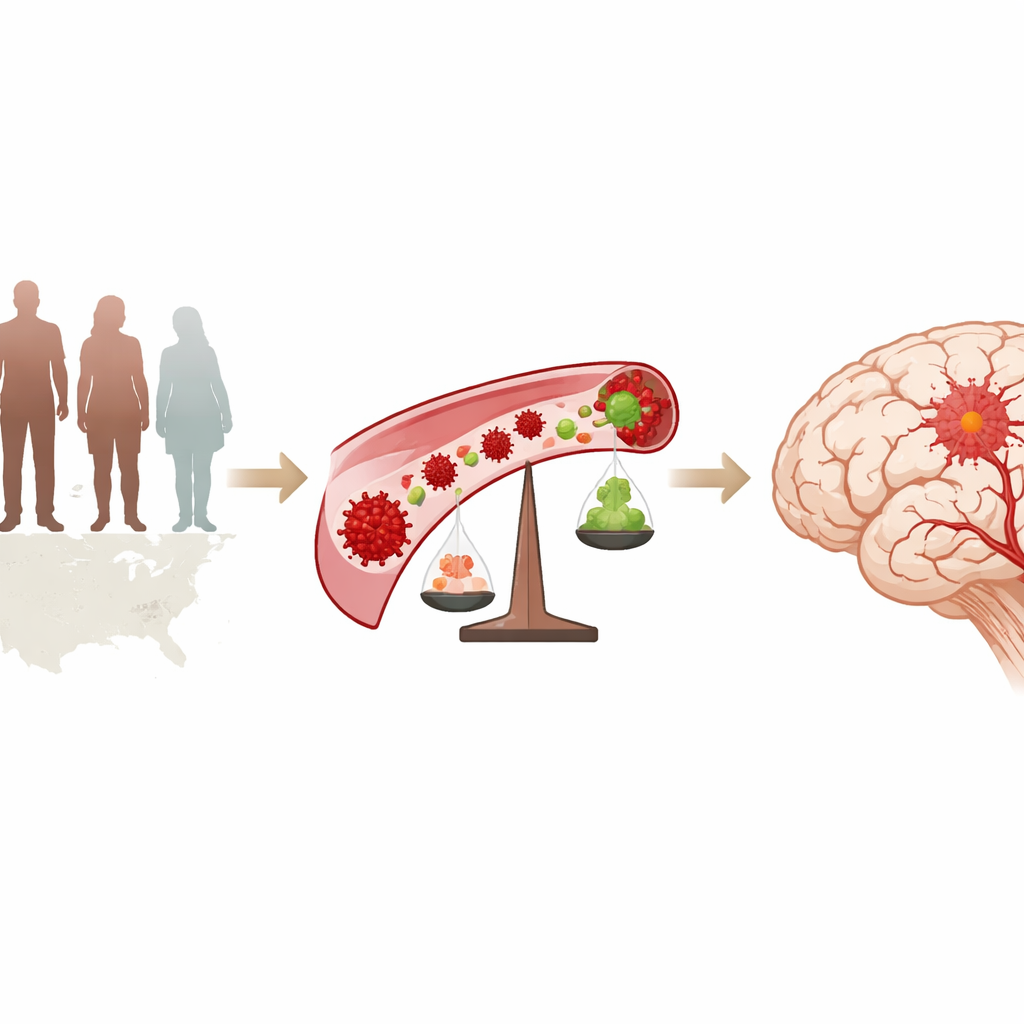
A simple ratio with a double meaning
The researchers focused on a measure called the uric acid to HDL cholesterol ratio, or UHR. Uric acid is a breakdown product of metabolism that, in excess, can promote oxidative damage to blood vessels. HDL cholesterol is often called the “good” cholesterol because it helps clear fats from arteries and has anti-inflammatory effects. By looking at their ratio, UHR combines, in one number, the push toward damage (more uric acid) and the pull toward protection (more HDL). A higher UHR means that, relative to protective HDL, there is more potentially harmful uric acid circulating in the blood.
Following thousands of adults over time
The team used data from the China Health and Retirement Longitudinal Study, which has followed tens of thousands of adults aged 45 and older across many regions of China. From this large national survey, they selected 3,756 people who had never had a stroke at the start and who had detailed blood tests, medical histories, and follow-up information from 2011 to 2020. Participants reported new strokes over the years, and the researchers linked those events to their earlier UHR levels and body mass index (BMI), a common measure of obesity.
Higher imbalance, higher stroke risk
After accounting for age, sex, smoking, alcohol use, place of residence, blood pressure, diabetes, and other blood fats, people with higher UHR values were more likely to experience a stroke. Each modest step up in UHR was associated with a small but steady rise in long-term stroke risk, and those in the highest quarter of UHR values had about 60 percent higher risk than those in the lowest quarter. This relationship looked roughly linear: the higher the UHR, the higher the risk, without a clear safe plateau. Importantly, this pattern was strongest in people without diabetes; in those with diabetes, the link between UHR and stroke was weaker and not statistically clear, possibly because diabetes itself alters HDL’s protective behavior and is accompanied by many other strong risk factors.
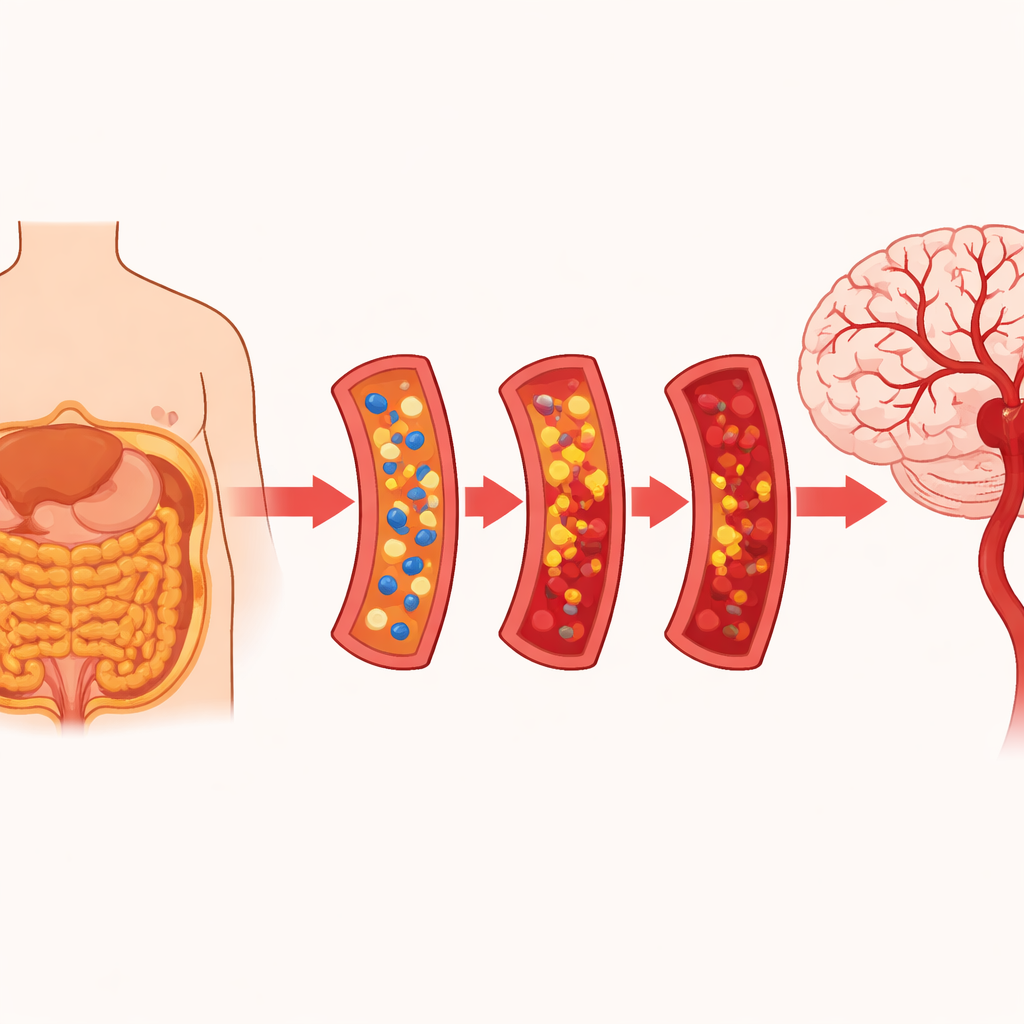
How body weight fits into the picture
Obesity is already known to raise stroke risk, and BMI rose alongside UHR in this study. Heavier participants tended to have more uric acid and less HDL, which pushed their ratio upward. When the researchers examined both BMI and UHR together, they found that each added its own information: people with both high BMI and high UHR had the greatest stroke risk. Yet the combination did not multiply risk beyond what would be expected from adding their individual effects. A closer statistical look suggested that about one-fifth of the extra stroke risk linked to higher BMI could be explained by its impact on UHR—hinting at a pathway from excess body fat to disturbed blood chemistry to damaged brain vessels.
What this could mean for prevention
In everyday terms, the study suggests that a simple ratio derived from common blood tests may help doctors refine stroke risk estimates, especially for middle-aged and older adults without diabetes. UHR seems to capture how much the body’s internal chemistry tilts toward vessel damage rather than protection, and it partly explains why extra body weight can be harmful to the brain over time. While the work cannot prove cause and effect and was done in one national cohort, it highlights UHR—especially when combined with BMI—as a promising, easy-to-measure signal to identify people who might benefit most from lifestyle changes and closer monitoring to prevent future strokes.
Citation: Li, S., Liu, J., Zhang, K. et al. Association of serum uric acid to high density lipoprotein cholesterol ratio with stroke. Sci Rep 16, 11565 (2026). https://doi.org/10.1038/s41598-026-41894-5
Keywords: stroke risk, uric acid, HDL cholesterol, obesity, biomarkers