Clear Sky Science · en
The role of institutional quality, energy consumption, and trade openness in food production in major 19 agricultural economies
Why this matters for our dinner plates
Feeding a growing world is not just about planting more seeds. It also depends on how well countries are governed, how they power their farms, how many people work the land, and how open they are to global trade. This study looks at 19 of the world’s biggest agricultural economies between 1996 and 2020 to uncover which of these deeper forces most strongly shape food production over the long run—offering clues for how to keep food supplies stable in an era of climate stress and economic shocks.
The big questions behind global harvests
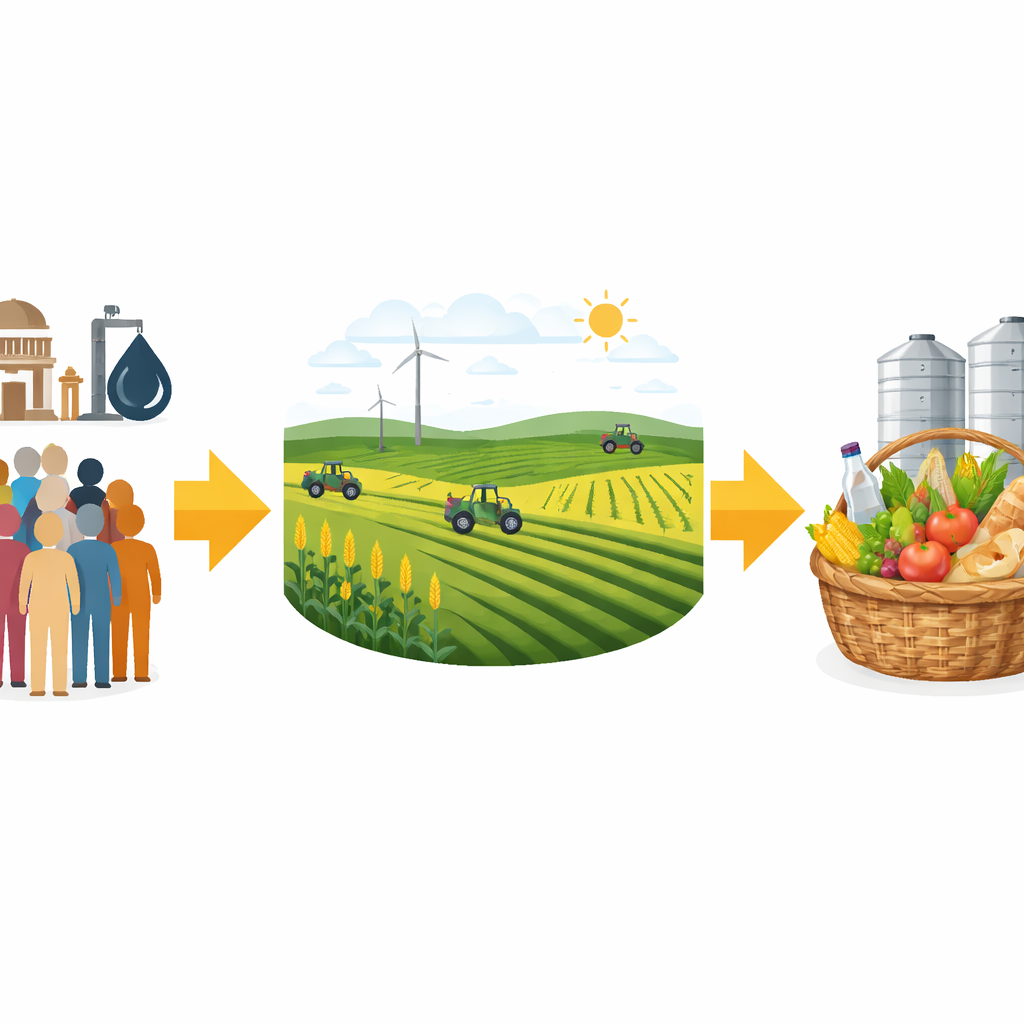
The researchers set out to understand why some major farming nations manage to steadily increase food output while others struggle, even when they share similar technologies or crops. They focused on five broad ingredients of modern agriculture: the quality of institutions and governance (things like rule of law and corruption control), the amount of oil used in farming, the spread of digital tools such as mobile internet, the share of workers employed in agriculture, and how open each country is to international trade. The core question was which of these factors truly matter for sustaining long-term food production, once differences between countries are carefully taken into account.
How the study took a long view
To tackle this, the authors assembled yearly data for 19 top agricultural producers—including China, India, the United States, Brazil, and others—covering a quarter century. They treated food production as the outcome to be explained and the five broad drivers as possible long-run influences. Because countries are interconnected through trade, prices, and climate, the team used econometric techniques designed to handle such cross-linkages rather than assuming each country evolves in isolation. They also allowed the strength and even the direction of these relationships to differ from one country to another, reflecting very different political systems, energy use patterns, and stages of development.
What truly boosts food output
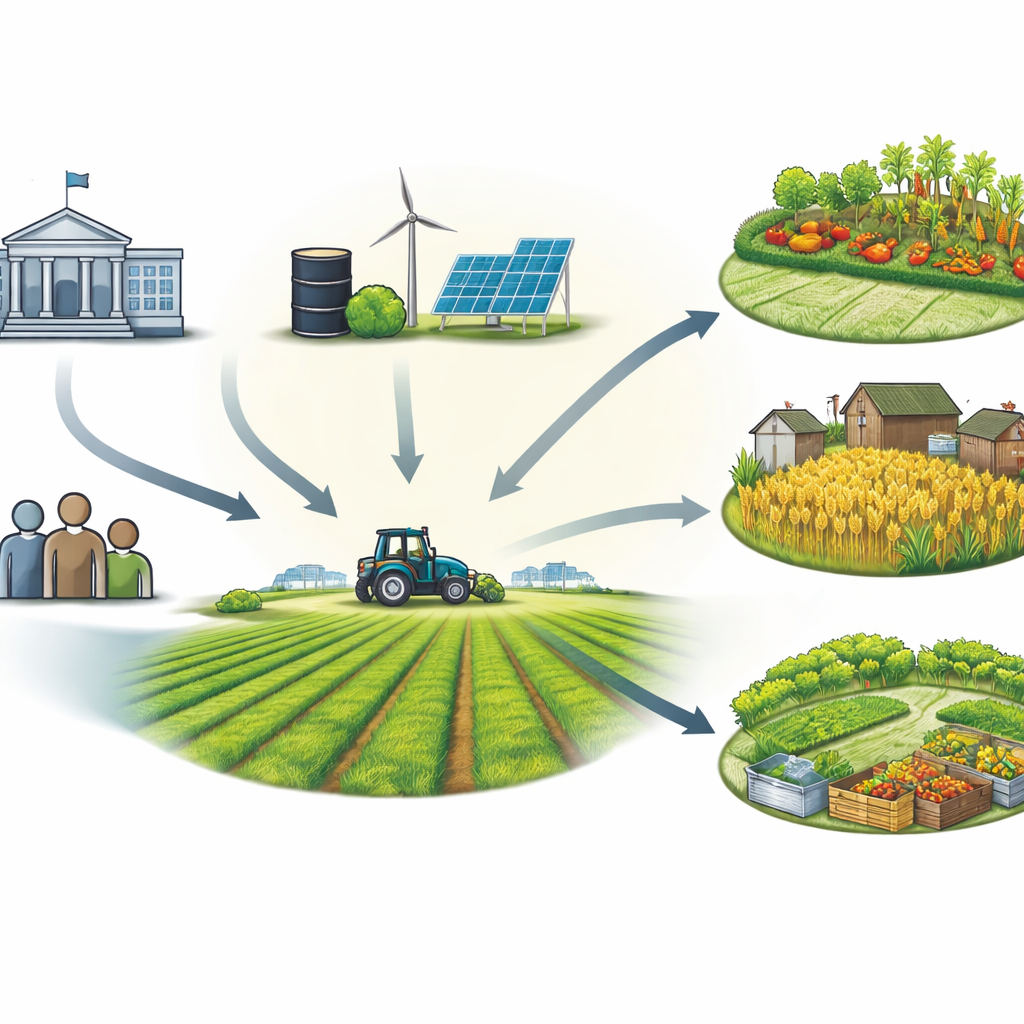
The main finding is that strong institutions, ample energy, and an active farm workforce are the most reliable foundations of higher food production. Across the full panel of countries, better governance is linked to more abundant harvests, likely because clear rules, lower corruption, and effective public services make it easier to invest in irrigation, machinery, and rural infrastructure. Greater oil use—standing in for energy-intensive, mechanized farming—also goes hand in hand with higher output, especially in countries such as China, Russia, and Australia. Agricultural employment still matters too: where a larger share of people work in farming, such as Türkiye, Egypt, Thailand, and the Philippines, food production tends to be higher, underscoring that labor remains crucial even as machines spread.
When technology and trade are not automatic winners
Surprisingly, digital tools and trade openness do not show a simple, across-the-board positive effect. At the overall panel level, mobile internet access and broader information technologies do not significantly raise food production on their own. In some countries, like India, digital connectivity appears to support farming, while in others—such as Viet Nam, Thailand, the Philippines, and France—it is associated with weaker gains. This suggests that technology helps only when farmers and institutions are ready to use it well, for example through training, advisory services, and reliable rural networks. Trade openness is similarly mixed: while it supports food production in some advanced economies, in several middle-income countries greater exposure to global markets is linked to weaker domestic output, possibly because cheap imports undercut local producers or because countries specialize in exporting a narrow set of crops.
What this means for future food security
For readers concerned about future food security, the study’s conclusion is clear: the foundations that matter most are good governance, sensible energy use, and a capable rural workforce. Strong institutions help ensure that investments reach farms, contracts are enforced, and corruption does not drain resources meant for irrigation, seeds, or storage. Access to energy—ideally shifting over time from oil to cleaner sources—enables irrigation pumps, tractors, and transport to markets. And retaining and training people in agriculture helps translate technology and inputs into real harvests. By contrast, simply rolling out more digital tools or opening borders to trade will not automatically deliver fuller plates; these steps must be matched with institutional strength and policies that protect and empower local producers. In short, lasting food security depends less on any single gadget or trade deal and more on building fair, well-run, and energy-smart food systems.
Citation: Çelik, H., Aytekin, İ. & Kızılkaya, S. The role of institutional quality, energy consumption, and trade openness in food production in major 19 agricultural economies. Sci Rep 16, 13525 (2026). https://doi.org/10.1038/s41598-026-41797-5
Keywords: food production, agricultural policy, governance, energy use, trade and farming