Clear Sky Science · en
A multivariate decomposition analysis of urban–rural disparities in contraceptive use among women in Ethiopia
Why Family Planning Gaps Matter
For many women, the choice of when and whether to have children shapes nearly every part of life: health, education, work, and family finances. In Ethiopia, that choice looks very different depending on whether a woman lives in a city or in the countryside. This study digs into why urban women are far more likely to use contraception than rural women, and which aspects of women’s lives—such as schooling, income, and knowledge—drive this divide. Understanding these patterns can help governments and communities design fairer, more effective family planning programs that reach women wherever they live.
Different Lives in Cities and Villages
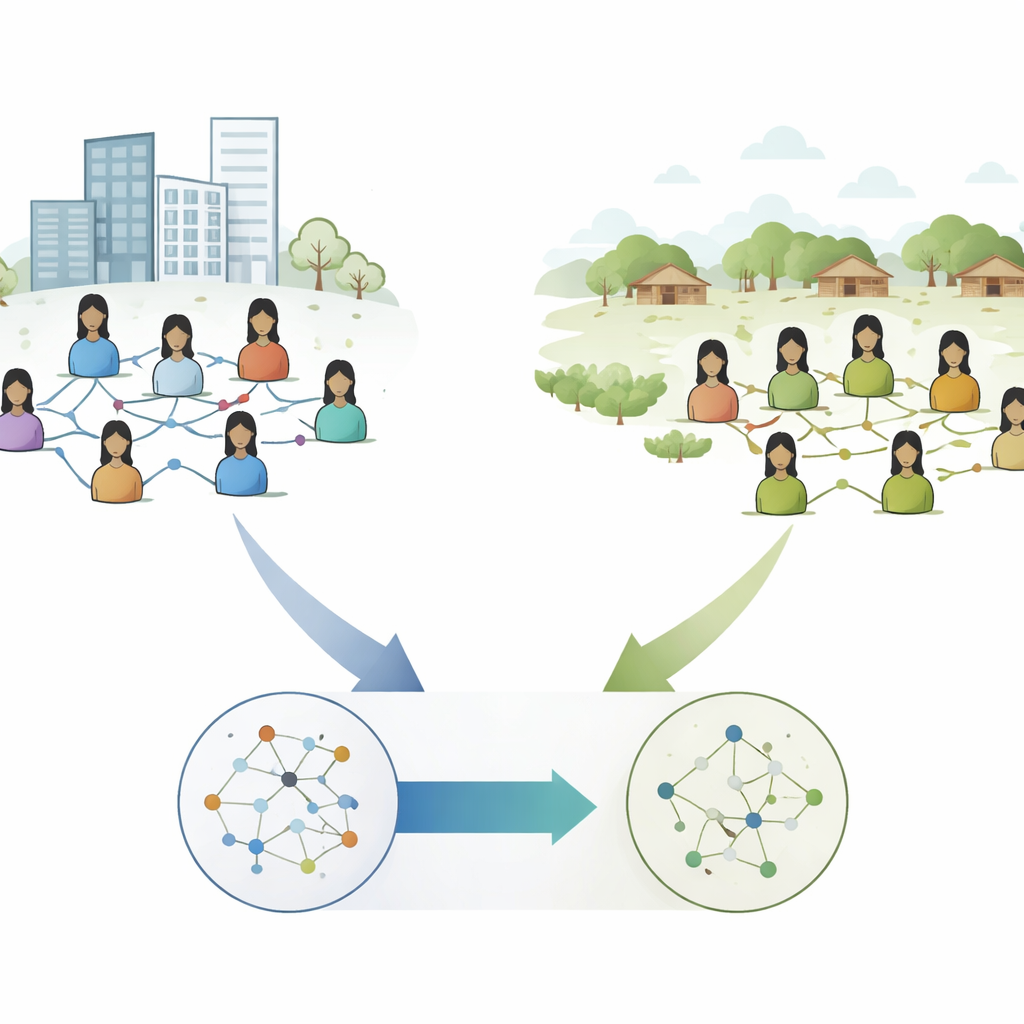
The researchers analyzed information from the 2019 Ethiopian Mini Demographic and Health Survey, a national study that interviewed 8,885 women aged 15 to 49 across the country. About one in three of these women lived in urban areas, while two-thirds lived in rural communities. The team compared how often women used any contraceptive method—modern or traditional—and how this related to age, schooling, marital status, household wealth, births in recent years, number of children, and awareness of contraceptive options. By looking at both city and rural residents in the same national survey, the study could clearly show how place of residence shapes reproductive choices.
Unequal Use of Contraception
Overall, fewer than one in four Ethiopian women in the survey were using contraception. But this average hides a sharp split: urban women used contraception more often than rural women. While about a quarter of urban women reported using a method, the share was noticeably lower in the countryside. This gap matters because not using contraception, especially when women want to delay or avoid pregnancy, can lead to unintended births, unsafe abortions, and health risks for both mothers and children. It also reflects deeper inequalities in access to health services and in women’s ability to make decisions about their own bodies.
What Drives the Urban–Rural Gap
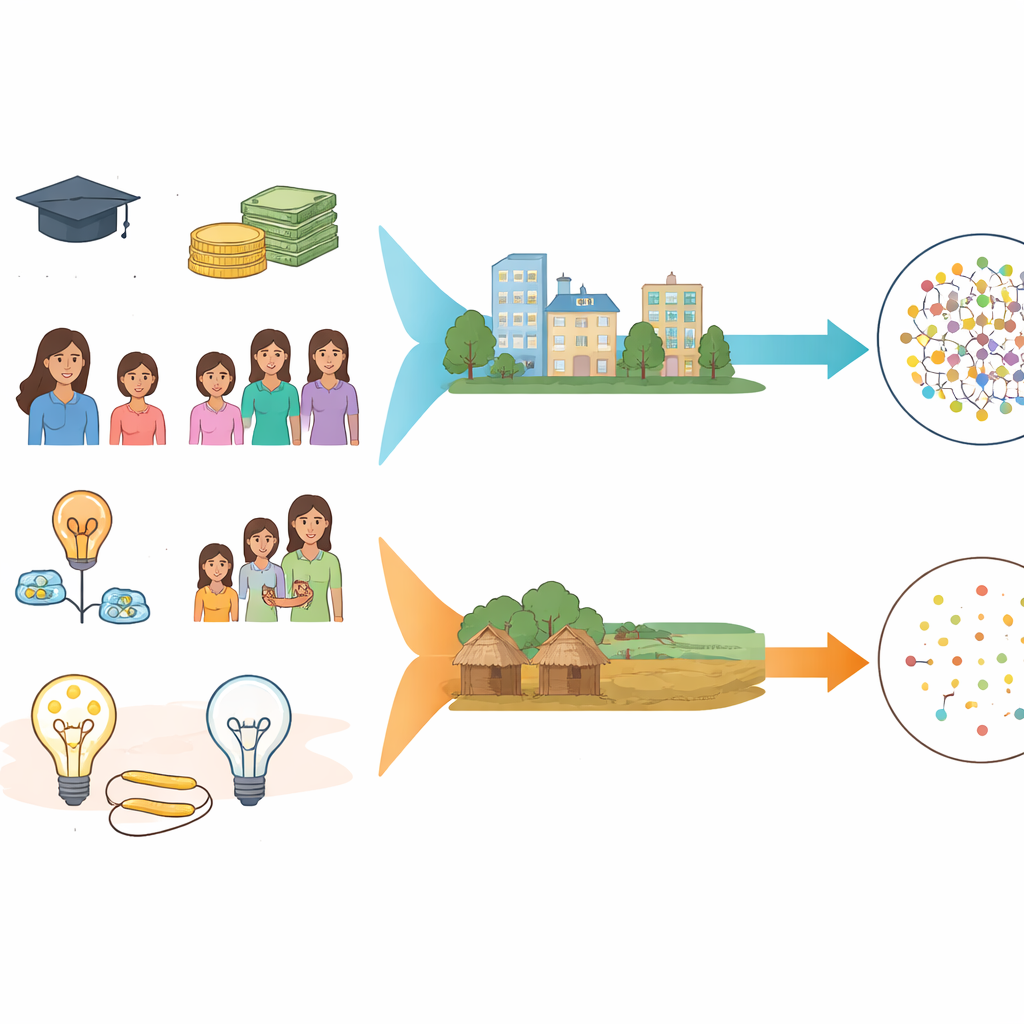
To move beyond simple comparisons, the researchers used a statistical technique that separates the gap into two parts: differences in women’s characteristics (such as how much schooling they have) and differences in how those characteristics translate into contraceptive use. They found that about 95 percent of the urban–rural difference was explained by the first part—what they call “endowments.” City women are, on average, more educated, wealthier, more likely to know about contraceptive methods, and less likely to have very large numbers of children. These advantages strongly tilt the odds toward contraceptive use in urban settings.
Key Roles for Schooling, Income, and Knowledge
Education stood out as one of the most powerful forces. Women with secondary or higher schooling contributed greatly to narrowing the gap, because such levels of education are far more common in cities than in villages. In contrast, stopping at primary school did not help and even appeared to widen the difference, suggesting that only more advanced education truly changes contraceptive behavior. Household wealth also played a major role: women from middle-income and richer homes, who are concentrated in urban areas, were much more likely to use contraception. Knowing about contraceptive methods—far more common among urban women—was another major contributor. Reproductive history mattered as well: having more births in the past five years pushed women toward use, while having six or more living children was linked to lower use and helped widen the gap for rural residents.
Beyond Numbers: How Context Shapes Choices
The analysis also revealed a smaller, more complex component where the same characteristics seem to work differently in cities and in villages. For example, recent childbearing appeared to lead more reliably to contraceptive use in urban settings, suggesting that health facilities and counseling there are better at turning women’s needs into concrete choices. In rural areas, social expectations about large families, distance to clinics, and lower-quality services may hold women back even when they share similar backgrounds with urban women. This hints that improving services and community norms is just as important as changing individual circumstances.
What This Means for Women’s Lives
In plain terms, the study shows that the urban–rural contraceptive gap in Ethiopia is mostly about unequal life chances. City women are more likely to be educated, have better incomes, know about their options, and be reached by health workers—and those advantages translate into greater control over childbearing. Closing the gap will require more than simply making contraceptives available. The authors argue for expanding girls’ and women’s education, strengthening rural economies, and boosting trustworthy information and counseling in rural communities. By investing in these broader supports, Ethiopia can move toward a future where women’s ability to plan their families does not depend on their postal code.
Citation: Asmare, L., Lakew, G., Yirsaw, A.N. et al. A multivariate decomposition analysis of urban–rural disparities in contraceptive use among women in Ethiopia. Sci Rep 16, 14466 (2026). https://doi.org/10.1038/s41598-026-41767-x
Keywords: contraceptive use, urban rural health gap, Ethiopia women, family planning access, reproductive health equity