Clear Sky Science · en
Levels and instability of transthyretin and correlations with core biomarkers in Alzheimer’s disease
Why this matters for brain health
Alzheimer’s disease does not appear overnight; it develops silently over years, beginning with subtle memory problems before progressing to full dementia. Doctors can already measure several chemical clues in spinal fluid and blood that track this process, but they do not capture every aspect of what goes wrong in the brain. This study focuses on transthyretin, a transport protein in blood and spinal fluid that may help mop up the sticky amyloid molecules linked to Alzheimer’s. Understanding how this protein behaves as the disease advances could open doors to earlier diagnosis and new treatment strategies.
A helper protein under the spotlight
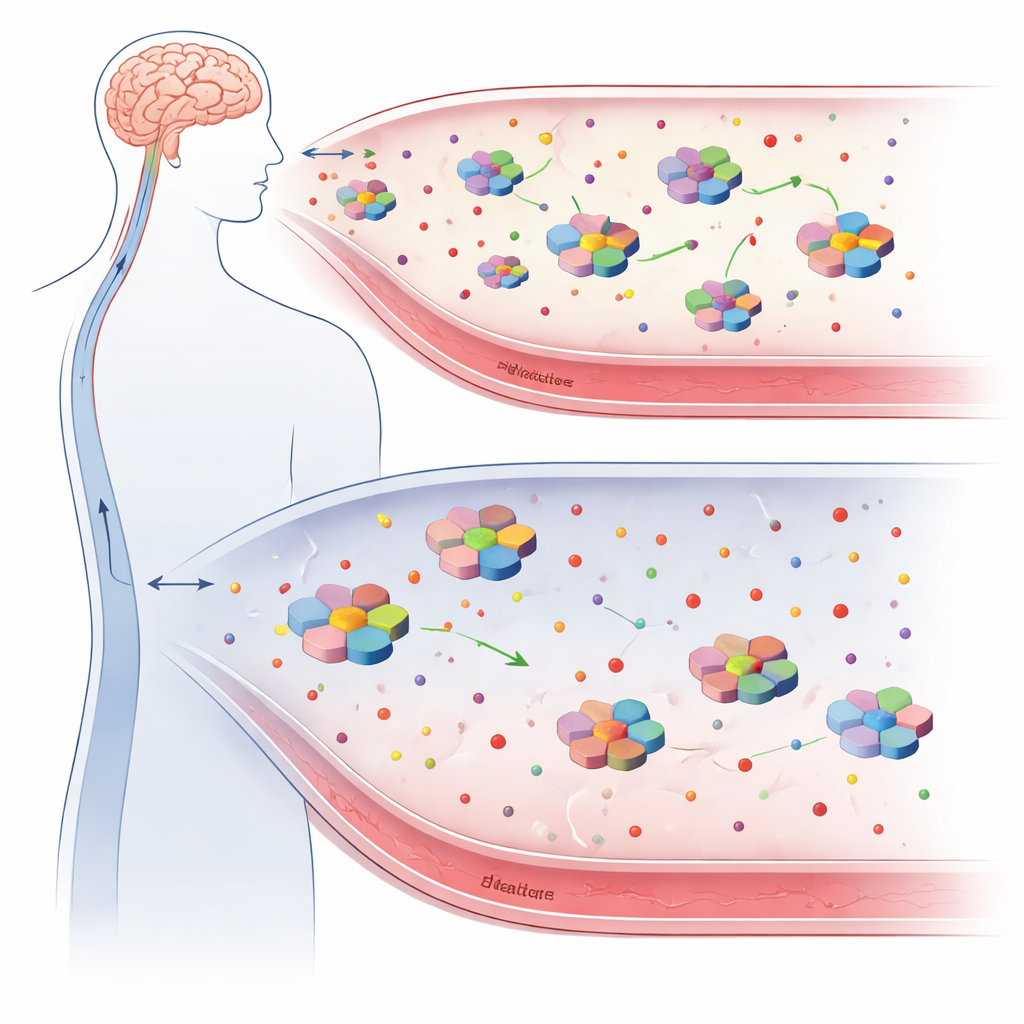
Transthyretin is best known as a carrier of thyroid hormone and vitamin A–related compounds in the body, but over the past few decades it has attracted attention for another reason: it can bind to amyloid-beta, the protein that clumps into plaques in Alzheimer’s disease. Experiments in animals suggest that when transthyretin is abundant and structurally sound, it can trap amyloid-beta, stop it from aggregating, and even help move it out of the brain into the bloodstream. When transthyretin levels fall, or when its four-part structure becomes unstable, this protective action may weaken, potentially allowing more amyloid damage to occur.
Following patients across the Alzheimer’s pathway
The researchers studied 66 people who all had clear laboratory evidence of Alzheimer-type changes in their spinal fluid. Some were at the earlier, mild cognitive impairment stage, when memory and thinking problems are noticeable but daily life is still largely independent. Others had progressed to full dementia. From each person, the team collected blood and cerebrospinal fluid, then measured how much transthyretin was present and how stable its four-part, or tetrameric, structure was. They compared these measures with standard Alzheimer’s markers, including different forms of amyloid-beta, the nerve-fiber protein Tau, and indicators of nerve cell damage.
What changes in early versus late disease
In blood, people with dementia had lower transthyretin levels than those with mild cognitive problems, and this drop was especially marked in women. Yet in the spinal fluid, overall transthyretin levels looked similar between the two stages, hinting that blood and brain compartments are regulated differently. When the team looked more closely at the early mild impairment group, a clearer pattern emerged: individuals with lower transthyretin in spinal fluid tended to have higher levels of Tau, neurofilament light chain, and certain forms of amyloid-beta—signals of more intense brain injury and amyloid stress. At the same time, when transthyretin in spinal fluid was more unstable, levels of one key amyloid fragment (Aβ42) were lower, consistent with heavier amyloid deposition in the brain itself.
Links with genes and direct laboratory testing
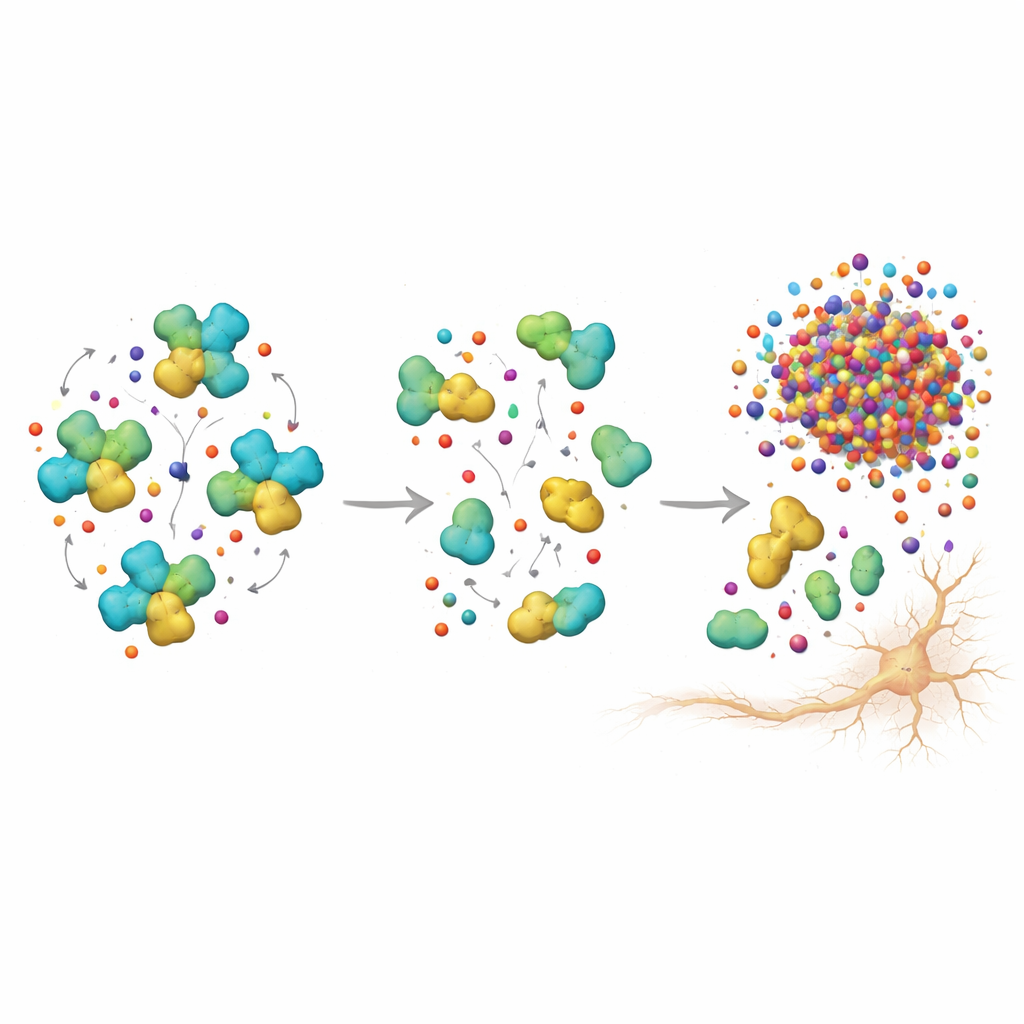
The study also considered a well-known genetic risk factor, the APOE ε4 variant. Among carriers of this risk gene, those who had progressed to dementia showed not only lower blood transthyretin but also signs of greater transthyretin instability in spinal fluid. This suggests that APOE ε4 may make the protective protein more fragile within the brain environment. To test whether amyloid itself can destabilize transthyretin, the scientists performed a laboratory experiment: they mixed purified transthyretin with Aβ42, the amyloid fragment most strongly tied to Alzheimer’s, and gently incubated the mixture. They observed that contact with Aβ42 pushed transthyretin away from its stable four-part form toward less stable pieces, supporting the idea that rising amyloid burdens can undermine transthyretin’s structure and function.
What this means for future diagnosis and treatment
Put simply, this work suggests that transthyretin acts as an early responder in Alzheimer’s disease. In the mild impairment phase, its levels and stability in spinal fluid closely mirror the build-up of amyloid and the first signs of nerve cell damage. Later, once dementia is established, blood transthyretin levels are clearly lower, but the tight links to brain markers fade, perhaps because other processes dominate. For a layperson, the takeaway is that transthyretin looks like a protective waste-collector for harmful amyloid; as amyloid accumulates, it may destabilize this collector, weakening a natural defense system. Tracking how much transthyretin is present—and how intact its structure remains—could help clinicians identify people at higher risk earlier and may eventually point toward therapies aimed at stabilizing this protein to preserve brain health.
Citation: Gião, T., Tábuas-Pereira, M., Baldeiras, I. et al. Levels and instability of transthyretin and correlations with core biomarkers in Alzheimer’s disease. Sci Rep 16, 13024 (2026). https://doi.org/10.1038/s41598-026-41717-7
Keywords: transthyretin, Alzheimer’s disease, amyloid-beta, mild cognitive impairment, biomarkers