Clear Sky Science · en
Isotope analyses reveal chronological and bioarchaeological consistency at a tribal community of the Sântana de Mureș-Chernyakhov culture in Transylvania
Life on the Edge of a Fading Empire
What happened to ordinary people when the Roman Empire pulled out of a province and tribal groups took over? This study looks for answers in an early fourth‑century cemetery in Transylvania, using chemistry locked in ancient bones and teeth. By reading subtle signals from isotopes of carbon, nitrogen and strontium, the researchers reconstruct when this small community lived, how much they moved, and what they ate in the turbulent centuries after Rome’s retreat.
A Short Chapter After Rome Leaves
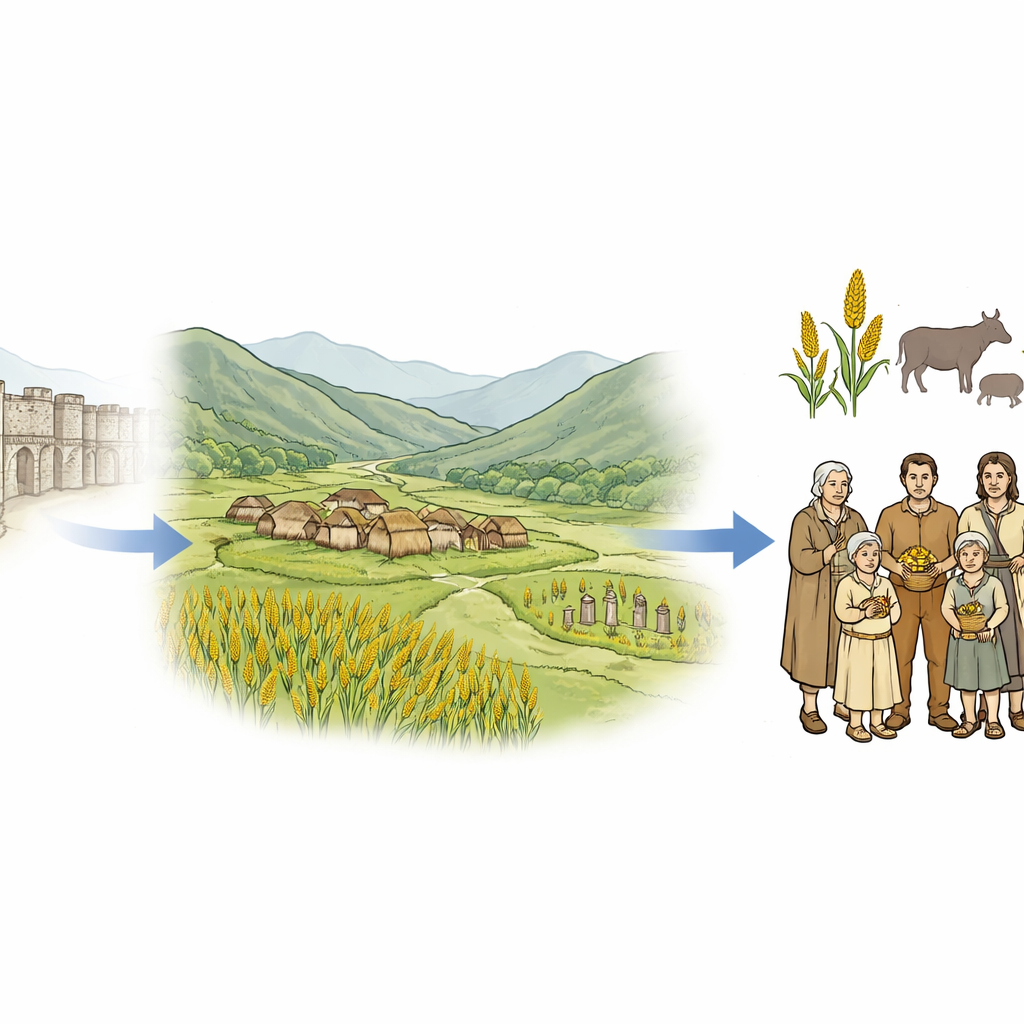
The cemetery at Sântana de Mureș in present-day Romania was discovered in the early 1900s and belongs to the Sântana de Mureș‑Chernyakhov culture, a tribal world linked to the Goths and their allies. Historical sources say Rome abandoned the province of Dacia around 271 CE, but it was unclear how soon new groups settled there or how long they stayed. By radiocarbon dating bones from 24 graves and combining those results with historical information, the team shows that this cemetery likely began a few years to a few decades after the Roman withdrawal and was used for only about one to three generations. Rather than a long‑lasting town, it appears to have been a brief but coherent community chapter at the Empire’s former border.
A Community That Stayed Close to Home
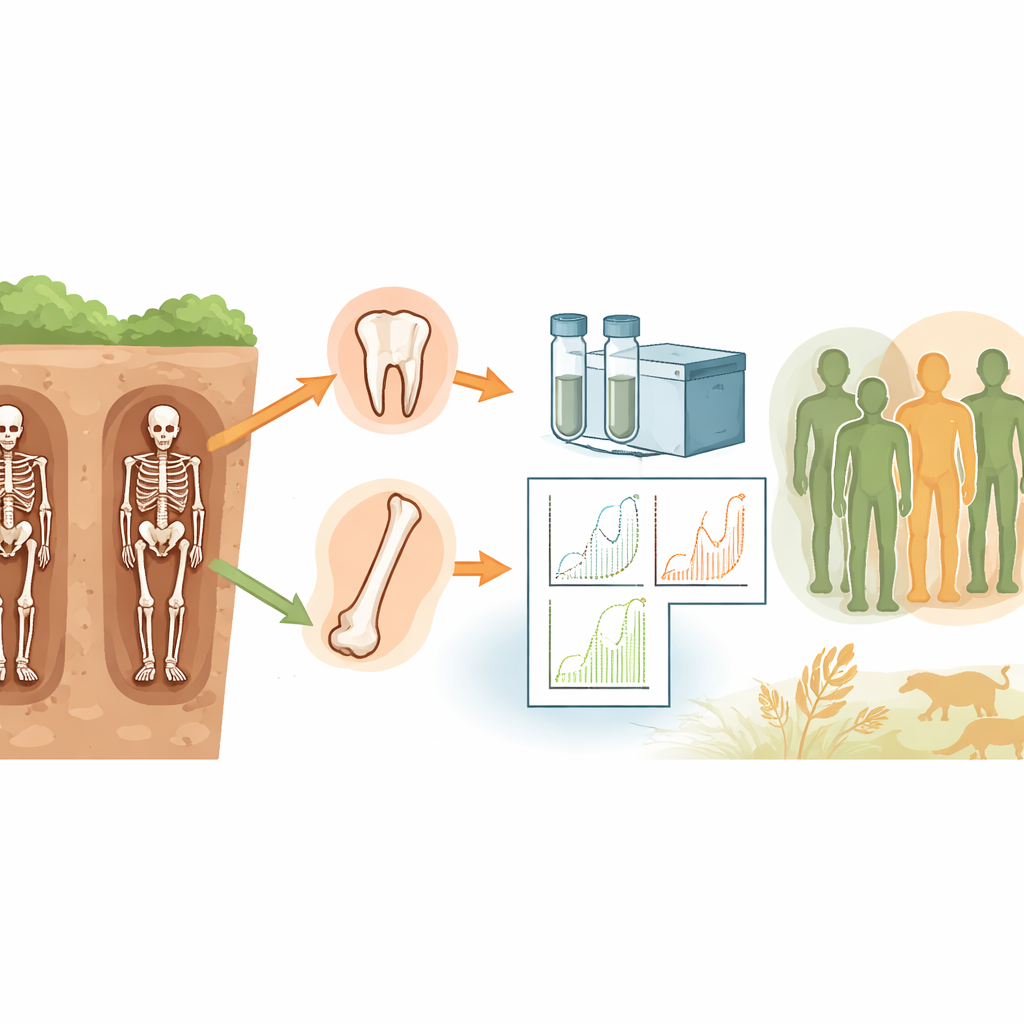
Strontium isotopes in tooth enamel act like a lifelong address tag, reflecting the geology of the place where a person grew up. The researchers compared strontium signals from human teeth and bones with those from local animals and soil to define the “local” chemical fingerprint. Almost all of the 26 studied individuals, including those who lived into old age, matched this local range. Only two middle‑aged women had slightly different values, suggesting they may have come from nearby mountains rather than from faraway lands. Overall, there is no sign of a large incoming founding group or later mass movements. This community seems to have been surprisingly rooted in the Mureș region, despite the wider age of migrations unfolding across Europe.
Hard Work, Poor Health
Anthropological study of the skeletons reveals a population that, while not ravaged by warfare, endured a demanding and unhealthy daily life. There is no skeletal evidence for violent deaths or major battles. Instead, many bones show wear-and-tear changes linked to heavy physical labor, such as strong muscle attachments and joint damage in both men and women. Dental disease was common, and several skulls show marks tied to long‑term nutritional stress or blood disorders. Together, these signs paint a picture of people who worked hard, lived modestly, and often suffered from chronic health problems rather than sudden trauma.
Millet on the Menu
The team then turned to diet by examining carbon and nitrogen isotopes in bone collagen. These measurements distinguish between types of plants and how much animal protein people ate. The values from Sântana de Mureș show a clear signal of heavy reliance on a grain called millet, a so‑called C4 plant, rather than on wheat, barley and rye, which were staples in many Roman provincial diets. At the same time, nitrogen values suggest only moderate amounts of meat and dairy, with little contribution from fish. Men appear to have eaten somewhat more animal protein than women, perhaps reflecting different work roles or access to food. Infants and toddlers show especially high nitrogen values, consistent with breastfeeding and possibly millet‑based porridge during weaning.
Old Habits in a New Land
When the authors compare their results with other European sites, a broader pattern emerges. The millet‑heavy, modest‑meat diet at Sântana de Mureș closely resembles that of earlier northern groups such as the Wielbark culture and of neighboring tribal communities like the Sarmatians, rather than the diet typical of the Roman heartlands. This suggests that the newcomers did not simply adopt the food habits of the former province; instead, they carried their own culinary traditions southward and maintained them on Roman soil. In simple terms, this short‑lived community at the edge of a fading empire seems to have stayed local, worked hard, ate a lot of millet and only modest amounts of meat, and preserved a tribal way of life even as the political map of late antiquity was being redrawn.
Citation: Major, I., Horváth, A., Futó, I. et al. Isotope analyses reveal chronological and bioarchaeological consistency at a tribal community of the Sântana de Mureș-Chernyakhov culture in Transylvania. Sci Rep 16, 11138 (2026). https://doi.org/10.1038/s41598-026-41705-x
Keywords: bioarchaeology, Roman frontier, isotope analysis, ancient diet, Transylvania