Clear Sky Science · en
miR-320a enhances radiosensitivity in non-small cell lung cancer by targeting RAD51 and modulating ferroptosis via GPX4
Why making radiation work better matters
Radiation therapy is one of the main treatments for non-small cell lung cancer, the most common form of lung cancer. Yet many tumors slowly learn to live through the radiation, making it harder to control the disease. This study explores a tiny genetic regulator called miR-320a and shows how it can tip the balance between cancer cell survival and death after radiation. By tracing a chain of molecular events inside lung cancer cells, the researchers identify a potential weak spot that could be used to make radiotherapy more effective and more precisely tailored to each patient.
A small molecule with a big say in treatment response
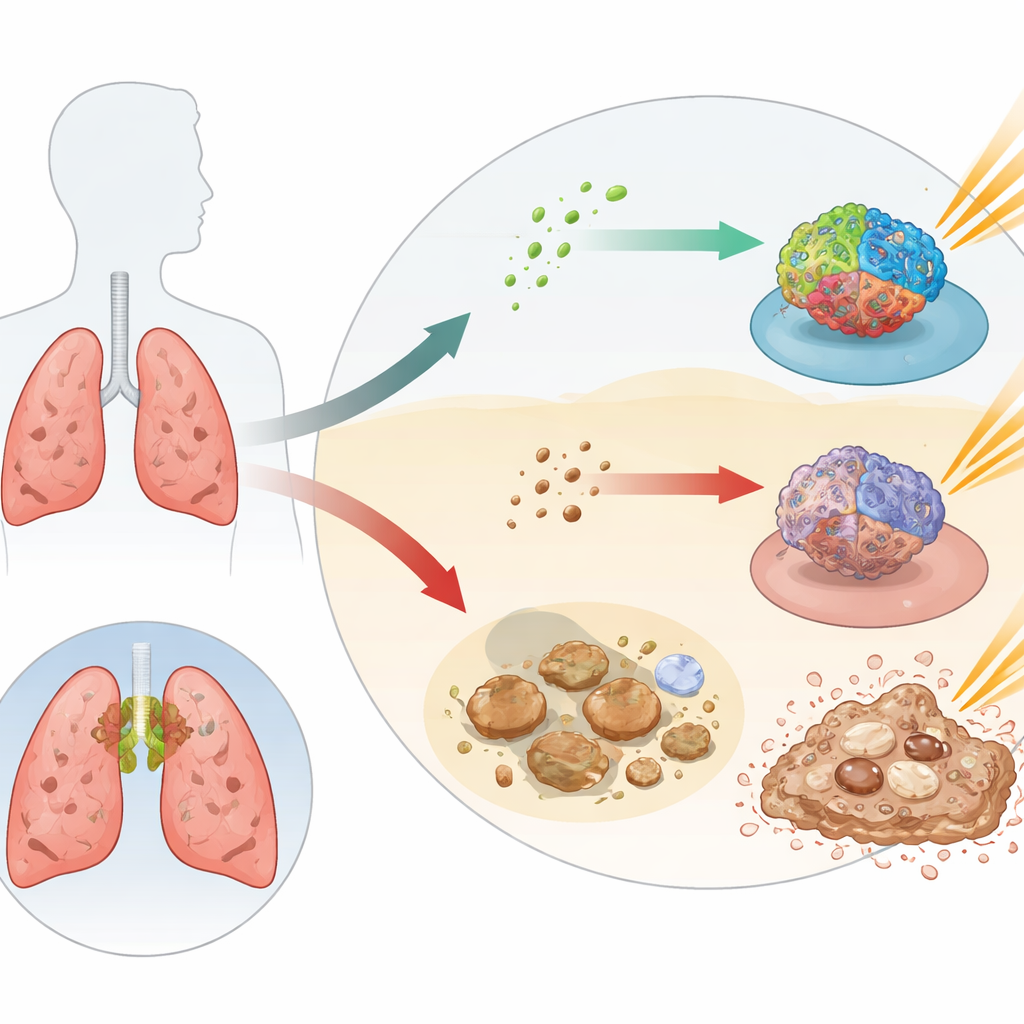
The team began by comparing tumor samples from people with non-small cell lung cancer to nearby noncancerous lung tissue, as well as to normal airway cells grown in the lab. They found that levels of miR-320a were consistently lower in tumors. Patients whose tumors had less of this molecule tended to fare worse after radiotherapy, suggesting that miR-320a might act like a built-in helper for radiation treatment. In cell culture experiments, blocking miR-320a made cancer cells better at surviving and moving after radiation exposure, while boosting miR-320a made them more easily damaged and slower to recover. Together, these patterns pointed to miR-320a as a natural enhancer of radiosensitivity—the ease with which radiation can kill cancer cells.
Disarming cancer’s DNA repair crew
To understand how miR-320a exerts this influence, the researchers looked for its molecular targets—proteins whose production it can dial down. Computational tools repeatedly pointed to RAD51, a key player in repairing broken DNA strands after radiation. In patient data and in lung cancer cell lines, higher miR-320a levels were linked to lower amounts of RAD51. When the scientists artificially reduced miR-320a, RAD51 levels rose; when they increased miR-320a, RAD51 protein levels dropped. A specialized reporter test confirmed that miR-320a can latch onto the genetic message for RAD51 and block its translation into protein. Functionally, turning RAD51 down made cells more vulnerable to radiation, while high RAD51 levels were tied to poorer survival in patients and greater resistance in the lab.
From DNA repair to a special kind of cell death
The work did not stop at DNA repair. The authors next examined ferroptosis, a recently described form of cell death driven by iron and the buildup of damaged fats in cell membranes. They focused on GPX4, a protective enzyme that shields cells from this type of damage. When RAD51 activity was blocked in lung cancer cells, GPX4 levels fell; when RAD51 was boosted, GPX4 rose, especially under a moderate radiation dose. This showed that the DNA repair factor does more than fix genetic breaks—it also helps maintain the cell’s defenses against ferroptosis. Under radiation, cells with more GPX4 survived better, whereas lowering GPX4 made them more fragile. In this way, RAD51 appears to promote radioresistance partly by keeping ferroptotic cell death in check.
A three-step pathway that tilts the balance
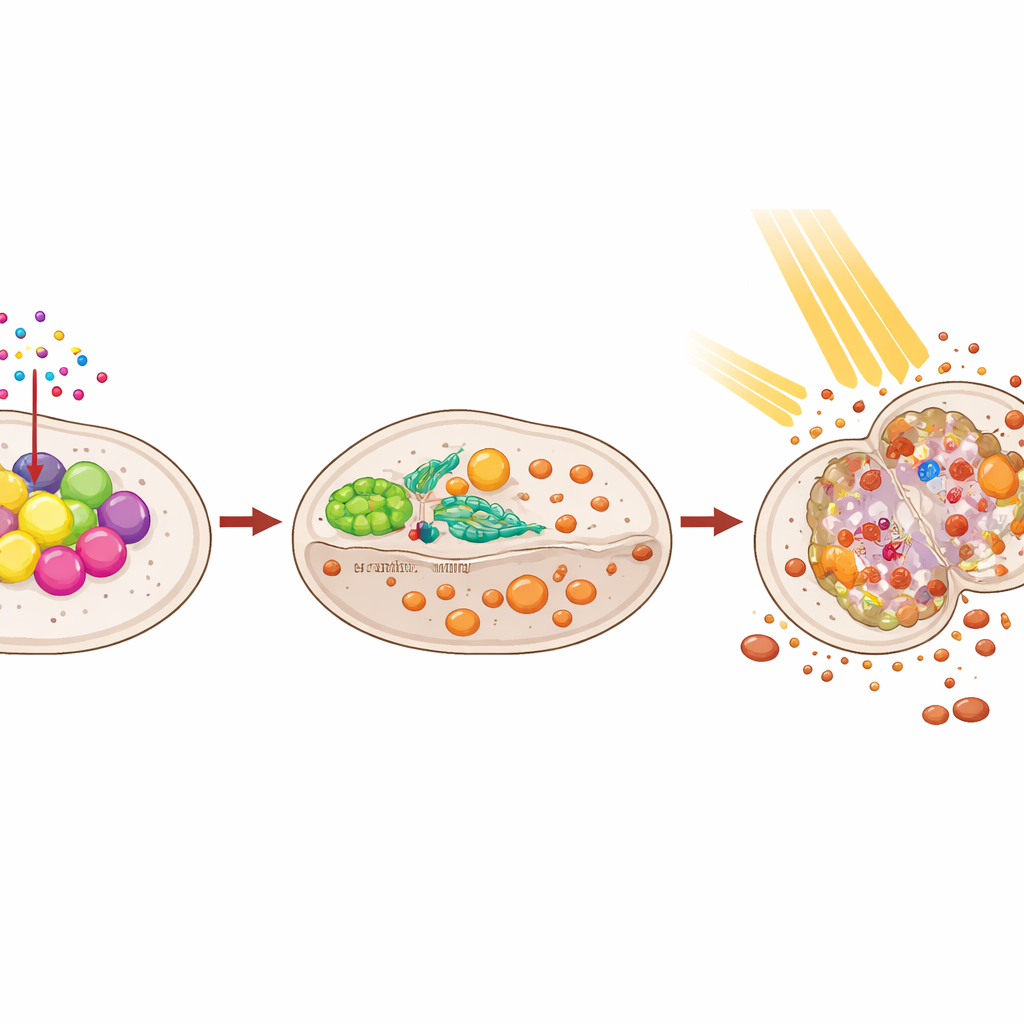
Finally, the researchers connected the dots between miR-320a, RAD51, and GPX4. When miR-320a was inhibited, lipid-based reactive oxygen species—a hallmark of ferroptosis—declined, and GPX4 levels climbed, indicating reduced ferroptotic death and greater radioresistance. Silencing RAD51 at the same time reversed these effects: GPX4 dropped, lipid damage increased, and the cells again became more sensitive to radiation. Analyses of human lung tumor datasets supported this chain, with miR-320a showing negative links to both RAD51 and GPX4. Altogether, the study outlines a regulatory axis in which miR-320a dampens RAD51, RAD51 supports GPX4, and GPX4 shields cells from ferroptosis, collectively shaping how lung tumors respond to radiotherapy.
What this could mean for people with lung cancer
For patients, these findings suggest that a tiny RNA molecule and two downstream proteins help decide whether radiation kills a lung cancer cell or lets it recover and spread. High miR-320a, low RAD51, and restrained GPX4 activity favor radiation’s success by allowing more membrane damage and ferroptotic death; the opposite combination helps tumors resist treatment. Although this work was done mainly in cultured cells and still needs to be confirmed in animals and larger patient groups, it points to several practical possibilities: using miR-320a or RAD51 levels to predict who will benefit most from radiotherapy, and eventually designing drugs that boost miR-320a or inhibit RAD51–GPX4 signaling to make standard radiation more effective without necessarily increasing the dose.
Citation: Lv, J., Zhang, C., Ren, X. et al. miR-320a enhances radiosensitivity in non-small cell lung cancer by targeting RAD51 and modulating ferroptosis via GPX4. Sci Rep 16, 11397 (2026). https://doi.org/10.1038/s41598-026-41692-z
Keywords: non-small cell lung cancer, radiotherapy resistance, microRNA-320a, DNA repair RAD51, ferroptosis GPX4