Clear Sky Science · en
Insomnia contributes to paranoid thoughts through mechanisms involving anxiety and non-constructive rumination
Why Troubled Sleep Matters for How We See Others
Many people know the frustration of lying awake at night and dragging through the next day. But insomnia can do more than make you tired or irritable. This study explores how persistent sleep troubles may also shape the way we think about other people, sometimes fueling unfounded fears that others intend us harm. By tracing the links between poor sleep, anxiety, and repetitive negative thinking, the researchers show why treating insomnia could help protect mental health far beyond the bedroom.
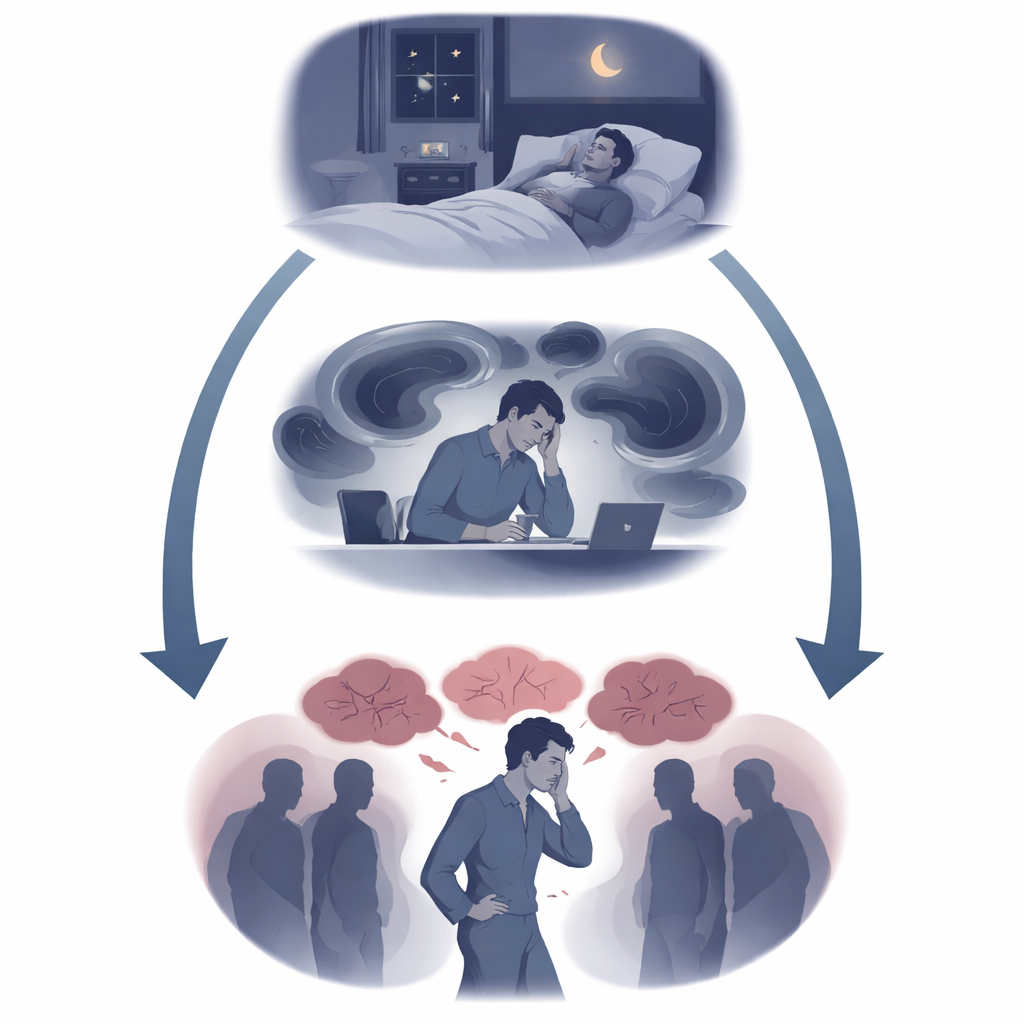
From Sleepless Nights to Difficult Days
The researchers focused on adults with and without insomnia to see how sleep problems connect to worrying and suspicious thoughts. Insomnia here means not just trouble falling or staying asleep at night, but also daytime difficulties such as fatigue, low mood, and poor concentration. A total of 486 French-speaking participants answered online questionnaires about their sleep, anxiety, styles of repetitive thinking, and the extent to which they experienced paranoid ideas, such as feeling targeted or persecuted by others. By comparing people who met criteria for insomnia to those who did not, the team could examine whether the pattern of connections among these experiences changed when chronic sleep problems were present.
Helpful Versus Harmful Thinking Loops
Not all repetitive thinking is bad. The study distinguished between constructive rumination, where people mull over problems in a concrete, solution-focused way, and non-constructive rumination, which involves circling endlessly around worries and painful memories without reaching any resolution. Previous work suggests that this unproductive style is especially tied to emotional difficulties. In this study, people with insomnia tended to report more non-constructive rumination and more paranoid thoughts than those without insomnia, while those without insomnia scored slightly higher on constructive, problem-solving reflections. This contrast hints that the quality of our mental “loops” matters when sleep is disturbed.

How Anxiety and Rumination Link Sleep and Suspicion
To map these relationships, the authors used network analysis, a method that treats each experience—such as anxiety, daytime sleepiness, or paranoid thoughts—as a node in a web, with lines showing how strongly they are related. In the insomnia group, anxiety sat at the center of the network, tightly linked to daytime symptoms, non-constructive rumination, and paranoid thoughts. Daytime problems were more closely tied to paranoia than nighttime symptoms like trouble falling asleep, suggesting that how insomnia affects daily functioning may be especially important. Non-constructive rumination was also directly connected to paranoid thoughts, forming a bridge between troubled sleep, emotional distress, and suspicious interpretations of social situations.
Different Picture for Those Who Sleep Better
The network looked quite different in people without insomnia. Anxiety still connected to other experiences and to rumination, but paranoid thoughts floated largely apart from the rest of the web. Daytime symptoms of insomnia were less central, and the links among anxiety, rumination, and paranoia were weaker or absent. Statistical mediation tests supported this picture: among people with insomnia, both anxiety and non-constructive rumination partly explained the association between sleep problems and paranoid thoughts, with anxiety playing the stronger role when both were considered together. In those without insomnia, these indirect pathways were not reliably present.
What This Means for Help and Hope
For a layperson, the takeaway is that insomnia does not simply cause bad moods; it can tilt our thinking toward the worst possible explanations about others, especially when it breeds daytime exhaustion, heightened anxiety, and repetitive, unhelpful worry. While this study cannot prove cause and effect, it suggests that improving sleep and changing how we respond to our thoughts could reduce the risk of sliding into paranoid interpretations. Approaches such as cognitive-behavioral therapy for insomnia, which targets both sleep habits and unhelpful mental loops, may therefore ease not only sleepless nights but also the fearful stories our tired minds sometimes tell about the world around us.
Citation: Faccini, J., Vistoli, D., Cannas-Aghedu, F. et al. Insomnia contributes to paranoid thoughts through mechanisms involving anxiety and non-constructive rumination. Sci Rep 16, 11324 (2026). https://doi.org/10.1038/s41598-026-41689-8
Keywords: insomnia, anxiety, rumination, paranoia, sleep and mental health