Clear Sky Science · en
Effects of analgesia on the response to a noxious stimulus in Norway lobsters (Nephrops norvegicus)
Why Lobster Feelings Matter
Many people are surprised to learn that animals without backbones, like crabs and lobsters, may feel more than just simple reflexes. As laws begin to recognize some shellfish as sentient, scientists urgently need to know whether common practices—such as electric stunning or live handling—cause them real suffering, and whether anything can be done to ease it. This study looks at Norway lobsters, a major seafood species, and asks a deceptively simple question: when they receive a brief electric shock, does it trigger more than a basic twitch, and can common pain‑relief drugs soften that response?
A Closer Look at Shocked Lobsters
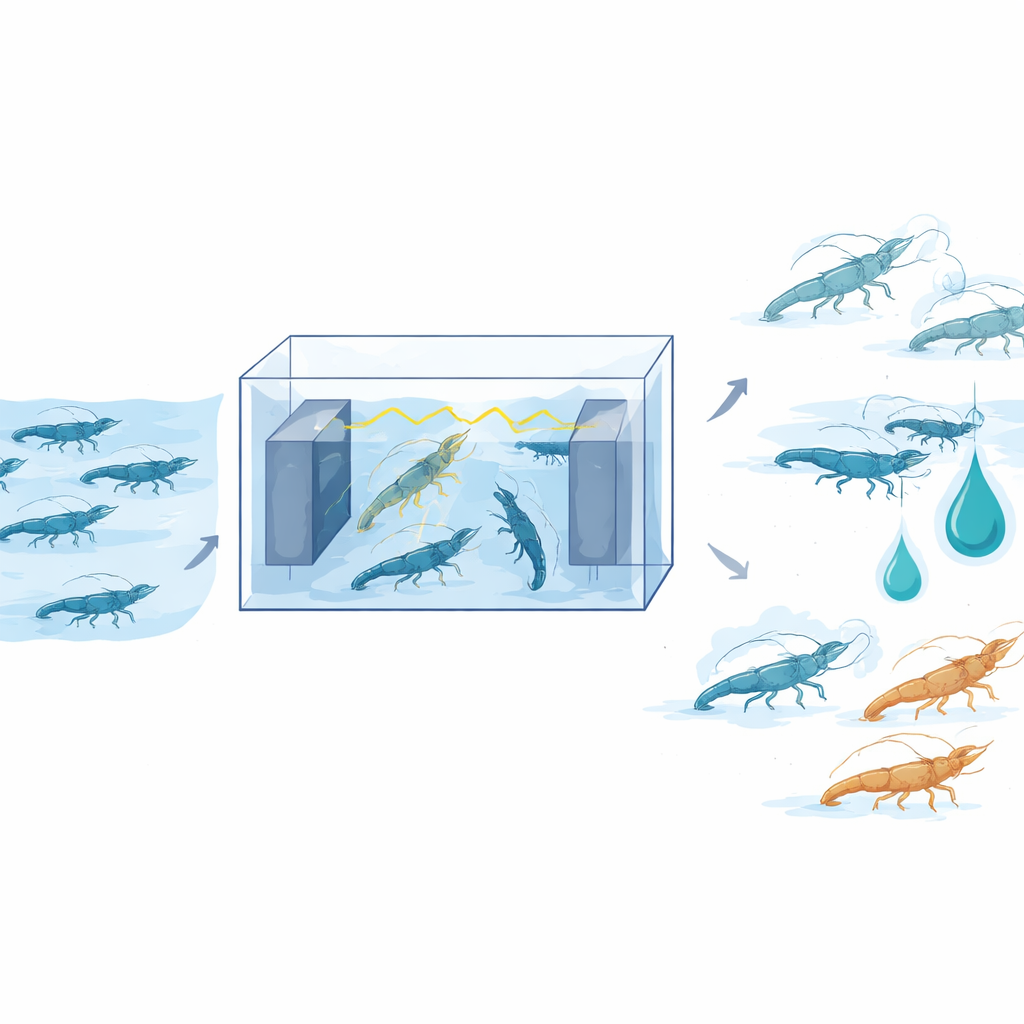
The researchers worked with more than one hundred male Norway lobsters kept in carefully controlled aquarium conditions. Some animals were left alone as untreated controls. Others were gently handled and moved between tanks without shock, while a third set received a ten‑second, low‑voltage electric shock in a small test tank. The team watched the animals’ behavior before the procedure, immediately afterward, and up to two hours later, focusing on overall activity, rapid backward escape movements called tail flips, and grooming or scratching movements that can signal irritation.
Testing Pain Relief Underwater
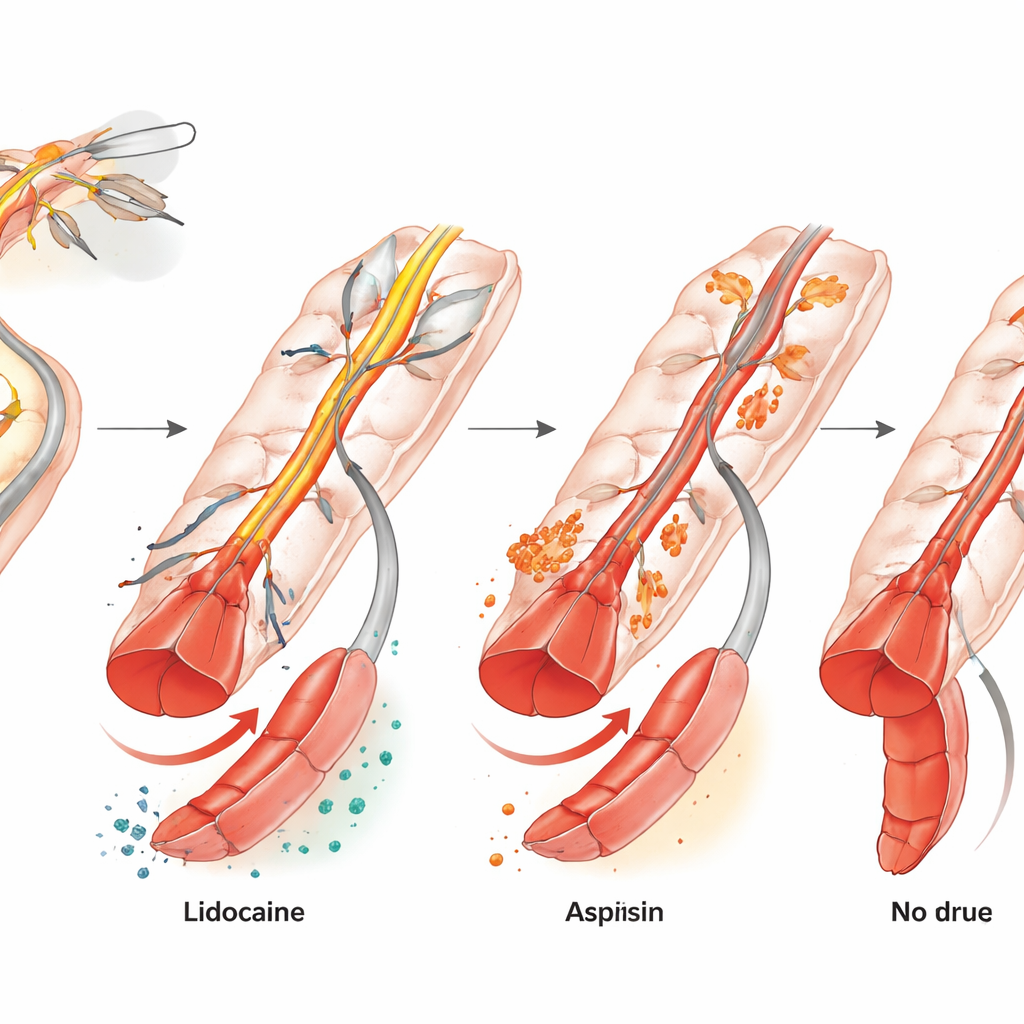
To see whether potential pain pathways were involved, two widely used human medicines were tried. Lidocaine, a local anaesthetic used by dentists to numb tissue, was dissolved in the home tank water before the test. Aspirin, a classic anti‑inflammatory pill, was injected into a limb joint one hour before shock. Lobsters were divided into groups that were shocked or not shocked, with or without each drug. The scientists then measured not only behavior but also chemical signs of stress in the lobsters’ blood‑like fluid, including lactate and glucose, and examined nerve tissue for changes in the activity of key genes linked to stress and nerve signaling.
What the Lobsters Did and Felt
Only lobsters that actually received electric shocks showed vigorous tail flipping during the ten‑second exposure, confirming that the stimulus was strongly aversive. When no drug was given, every shocked lobster flipped its tail repeatedly in an escape response. With lidocaine or aspirin on board, that reaction dropped sharply: many drug‑treated animals showed few or no tail flips at all, implying that the signal from the shock was being dampened rather than simply triggering raw muscle contractions. Handling alone—picking up animals, moving them between tanks—also raised activity levels, indicating that routine manipulations are themselves stressful even without shocks.
Hidden Stress Inside the Body
The picture became more complicated when the team looked at internal chemistry and nerve biology. The brief electric shock did not leave long‑lasting marks on general stress indicators such as blood glucose, and most of the measured nerve‑related genes were unchanged across groups. However, aspirin‑treated lobsters told a different story: they groomed themselves more, had higher levels of lactate (a by‑product of intense effort and stress), and showed reduced activity of one inhibitory nerve receptor gene in the abdominal nerve centers that control the tail. These patterns suggest that while aspirin weakened the immediate escape response, it may also have introduced its own form of physiological strain.
What This Means for Lobster Welfare
For a non‑specialist, the key message is that Norway lobsters do not react to electric shock as if it were a simple reflex; their strong, targeted tail‑flip escapes, and the way those reactions shrink when analgesic drugs are present, fit what we would expect if unpleasant nerve signals were being processed and modulated. Lidocaine, delivered carefully, reduced these responses without clear lasting side effects, making it a promising tool for more humane laboratory procedures or possibly for refining stunning methods. Aspirin also blunted escape behavior but carried extra costs in terms of stress and altered nerve signaling. Overall, the study strengthens the case that decapod crustaceans deserve serious welfare consideration and that thoughtful use of suitable drugs and gentler handling can meaningfully reduce their suffering.
Citation: Kasiouras, E., Rotllant, G., Gräns, A. et al. Effects of analgesia on the response to a noxious stimulus in Norway lobsters (Nephrops norvegicus). Sci Rep 16, 12190 (2026). https://doi.org/10.1038/s41598-026-41687-w
Keywords: Norway lobster welfare, crustacean nociception, electric stunning, lobster analgesia, decapod behaviour