Clear Sky Science · en
Preliminary study on the distribution and risk assessments of microplastic pollution in surface water in Chengdu, China
Why Tiny Plastics in Rivers Matter to Us
Plastic has made modern life convenient, but as it breaks down it leaves behind countless tiny fragments that we can barely see. These "microplastics" are now turning up from the open ocean to city tap water. This study looks at how much microplastic pollution is present in the surface waters of two major river systems running through Chengdu, a fast‑growing megacity in western China, and what that may mean for river life and, ultimately, for people who depend on these waters.
Rivers Through a Growing City
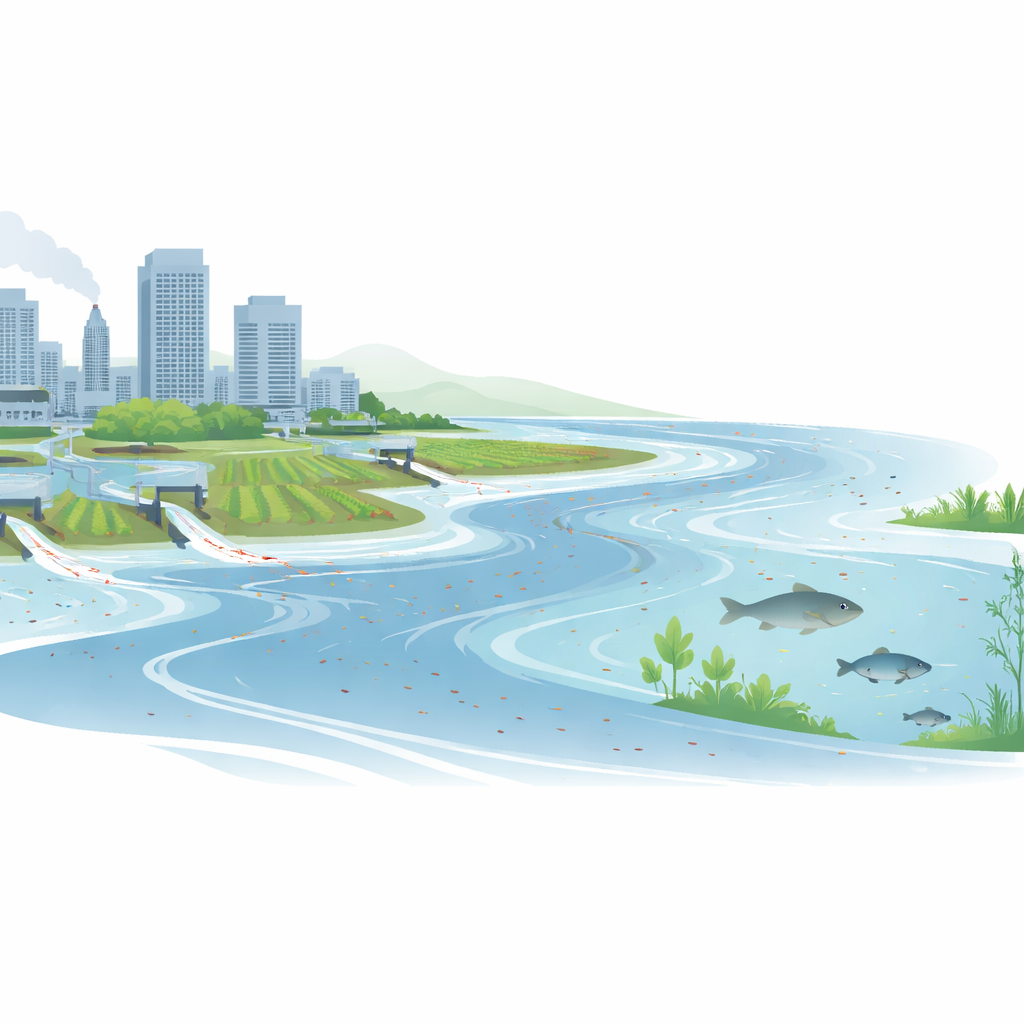
Chengdu is a regional hub for plastic production and consumption, with more than 20 million residents and many plastic‑related industries. Its main rivers, the Minjiang and Tuojiang systems, supply billions of cubic meters of water each year. They also receive large amounts of household and industrial wastewater, which can carry plastic debris into natural channels. The researchers focused on eleven rivers in these two valleys, from relatively clean upstream stretches through densely populated urban areas to downstream reaches where the impacts of many activities accumulate.
How the Team Tracked Tiny Litter
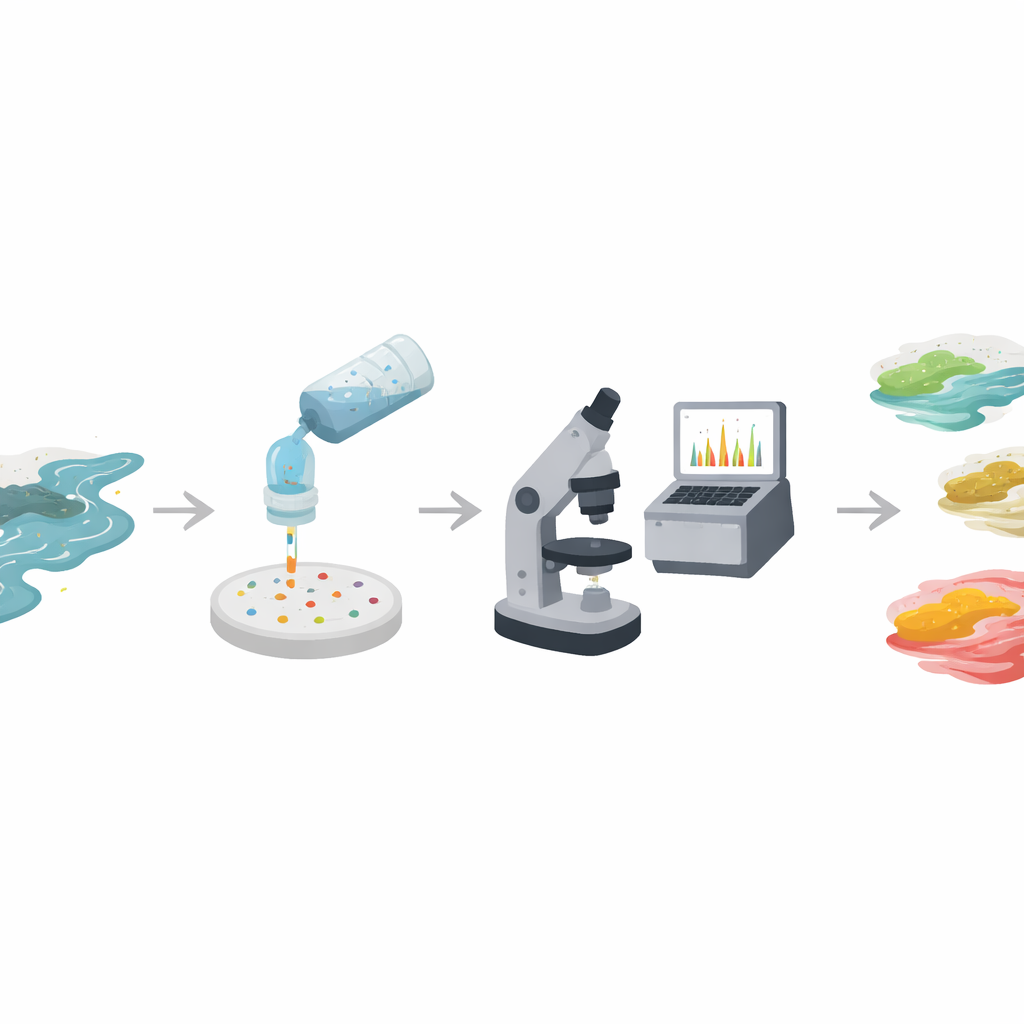
To find out what was in the water, scientists collected surface samples in early summer of 2021 and again in 2023 at 30 locations spread across the river network. They dipped glass samplers just below the surface, combined and split the water into glass bottles, and rushed it to the lab. There, they used chemicals to dissolve organic matter and filtered the remaining particles onto fine glass membranes. Under a microscope they sorted suspected plastic pieces by shape, color, and size, and then used infrared light to confirm what each piece was made of. By counting particles and identifying their plastic type, they could estimate how polluted each river was and how hazardous the mix of plastics might be.
What Was Found in the Water
Microplastics were present in every river tested, with concentrations ranging from about 5 to 18 tiny pieces in each liter of surface water. Overall levels changed very little between 2021 and 2023, but the Tuojiang valley was consistently more polluted than the Minjiang valley. One tributary in particular, the Jianjiang River, stood out with especially high levels; it drains a major farming and agritourism region where household waste, sewage, and plastic‑intensive greenhouse agriculture likely contribute to the load. By contrast, the Shahe River, which has undergone decades of ecological restoration, showed the lowest concentrations, hinting that long‑term clean‑up efforts can pay off. Most of the particles were smaller than half a millimeter, usually transparent or pale yellow, and appeared as irregular fragments or tiny granules rather than long fibers.
Changing Plastic Types and Hidden Dangers
Beyond how many particles were present, the kind of plastic also mattered. In 2021, the most common materials were polyethylene terephthalate (widely used in drink bottles and clothing) and polyethylene (common in bags and packaging). By 2023, polyamide—better known as nylon—had become the dominant type, while polyethylene remained a steady second. Some less abundant plastics, such as polyvinyl chloride, are known to carry much higher toxicity scores than others. The team combined information on particle counts with published toxicity rankings to calculate several risk indexes that capture both how polluted a river is and how harmful its particular plastic mix might be.
What the Risk Numbers Say
All rivers except the restored Shahe were classified as polluted with microplastics according to a standard pollution load index, and this overall pollution level stayed roughly stable between the two sampling years. However, when toxicity was taken into account, a more troubling picture emerged. The rising share of higher‑risk plastics like polyamide increased the calculated ecological risk for most rivers between 2021 and 2023, even without big jumps in total microplastic counts. In other words, the danger comes not just from how much plastic is in the water, but from what those plastics are made of and how they interact with living organisms.
What This Means for Rivers and People
The study shows that microplastic pollution is now a persistent feature of Chengdu’s river systems, with some stretches more heavily affected than others and a clear shift toward more hazardous plastic types. For a layperson, the key message is that these tiny fragments are more than cosmetic litter: they can carry chemicals, host microbes, and move through food webs from river water into fish and, eventually, to humans. The authors argue that long‑term monitoring should start as soon as possible, using risk measures that factor in both quantity and toxicity. Such information can guide better waste management, industrial planning, and river restoration efforts to protect both aquatic ecosystems and public health.
Citation: Chen, J., Chen, Y., Peng, X. et al. Preliminary study on the distribution and risk assessments of microplastic pollution in surface water in Chengdu, China. Sci Rep 16, 11561 (2026). https://doi.org/10.1038/s41598-026-41638-5
Keywords: microplastics, river pollution, Chengdu, ecological risk, plastic waste