Clear Sky Science · en
Ginsenoside Rg1 ameliorates lipopolysaccharide-induced depressive-like behaviors in mice by attenuating neuroinflammation and neuronal damage
Why this matters for mood and brain health
Depression affects hundreds of millions of people worldwide, yet many current antidepressant drugs work slowly and can cause troubling side effects. This study explores whether a natural ingredient from ginseng, called ginsenoside Rg1, can ease depression-like symptoms in mice by calming brain inflammation and protecting vulnerable brain cells. The work offers a window into how inflammation, brain circuits involved in mood, and new treatment ideas may be connected.
Ginseng, inflammation, and low mood
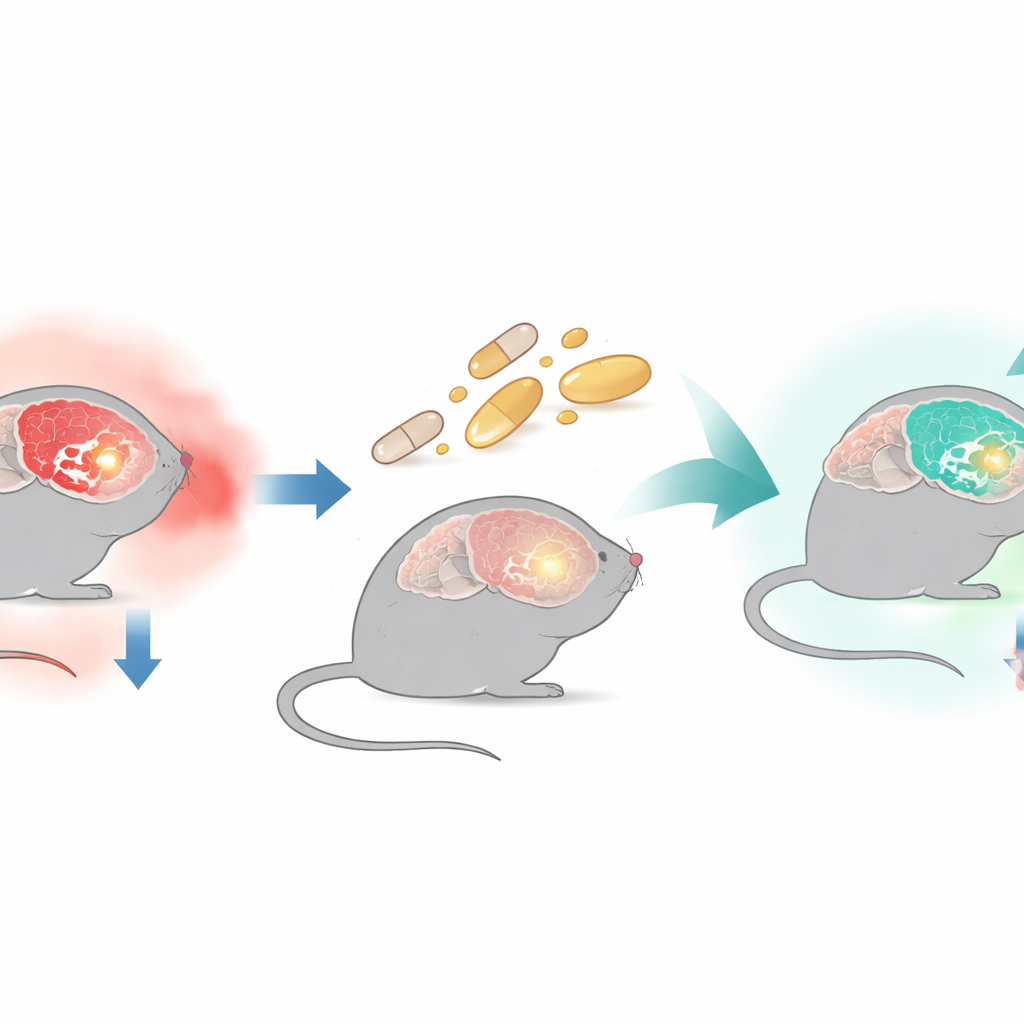
Scientists have long suspected that inflammation in the brain can help trigger or worsen depression. In this study, researchers focused on the hippocampus, a brain region deeply involved in memory and emotion and known to shrink or lose cells in many people with depression. They used a bacterial substance called lipopolysaccharide (LPS) to spark strong inflammation directly in the brains of mice. This single injection reliably produced long-lasting changes that resemble human depression, including reduced pleasure, increased despair-like behavior, and more anxiety-like avoidance of open spaces.
Testing a natural brain protector
After inflammation was triggered, the mice received daily doses of ginsenoside Rg1 for four weeks, at either a low or high dose. For comparison, another group received fluoxetine, a widely used antidepressant. The animals then went through standard behavioral tests: a forced swim test to gauge despair-like immobility, a sucrose preference test to measure loss of pleasure, and an elevated plus maze to assess anxiety and willingness to explore. Mice given LPS alone spent more time immobile, avoided sweetened water, and shunned open arms of the maze. In contrast, mice treated with Rg1 or fluoxetine showed markedly shorter immobility times, higher interest in sucrose, and greater exploration, suggesting that Rg1 eased the depression- and anxiety-like behaviors.
Protecting brain cells from damage
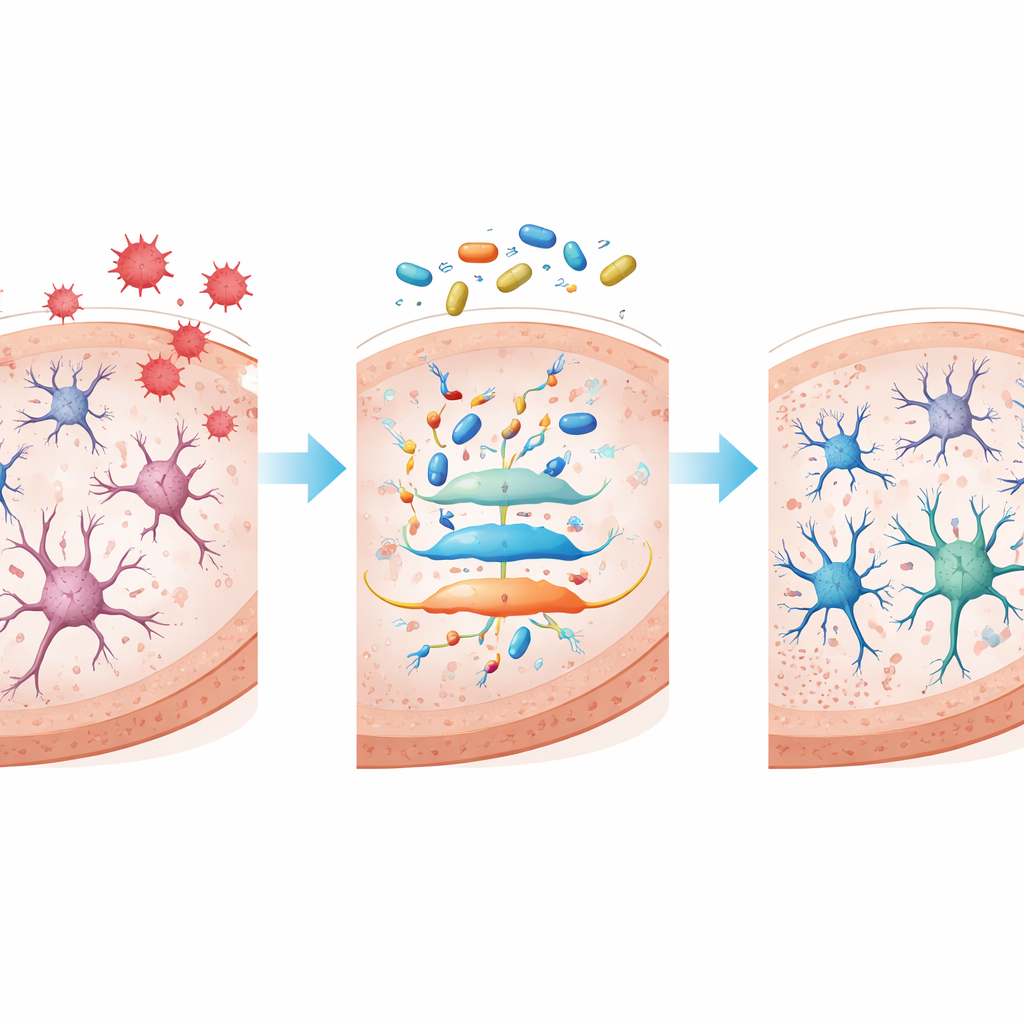
To see what was happening inside the brain, the researchers examined the hippocampus under the microscope. In inflamed mice, hippocampal neurons were disorganized, fewer in number, and showed signs of shrinkage and vacuoles—tiny holes indicating cell damage. Special stains that highlight healthy neurons revealed a drop in mature nerve cells, and electron microscopy showed swollen, damaged mitochondria, the energy factories inside cells. Treatment with Rg1 noticeably improved these features: neurons were more orderly, their structures more intact, and mitochondrial damage was reduced, especially at the higher dose. Levels of key inflammatory molecules in the brain, particularly TNF-α and IL‑1β, were also brought down toward normal, suggesting that Rg1 both dampens inflammation and shields neurons from its harmful effects.
Tracing a hidden control switch in brain cells
Beyond visible damage, the team wanted to know which internal control systems inside brain cells were changing. They used proteomic analysis—an approach that surveys thousands of proteins at once—to compare hippocampal tissue from healthy mice, inflamed mice, and inflamed mice treated with high-dose Rg1. Among thousands of proteins, one network stood out: the Hippo–YAP signaling pathway, a molecular switchboard that helps regulate whether cells grow, survive, or die. In inflamed mice, key Hippo–YAP proteins were overly activated by added phosphate groups, a chemical change that can disrupt normal signaling. Rg1 treatment reversed this pattern, reducing the excessive phosphorylation and restoring a healthier balance in this pathway.
What this could mean for future treatments
Taken together, the findings suggest that ginsenoside Rg1 can lessen depression-like behavior in mice by calming brain inflammation, preserving hippocampal neurons, and normalizing a growth-and-survival control pathway inside brain cells. While much work remains before such a compound could be considered for people, the study strengthens the idea that targeting inflammation and cell-protection pathways in the brain may offer new ways to treat depression beyond traditional antidepressant drugs.
Citation: Zhang, L., Tang, J., Fang, Z. et al. Ginsenoside Rg1 ameliorates lipopolysaccharide-induced depressive-like behaviors in mice by attenuating neuroinflammation and neuronal damage. Sci Rep 16, 11948 (2026). https://doi.org/10.1038/s41598-026-41622-z
Keywords: depression, neuroinflammation, ginsenoside Rg1, hippocampus, Hippo YAP pathway