Clear Sky Science · en
Evaluating the relationship between heat waves and urban heat islands in tropical cities: a case study of Kuala Lumpur and George Town
Why Hot Cities Matter to Everyday Life
For people living in big tropical cities, hot days can feel endless, and sticky nights offer little relief. This study looks at how two Malaysian cities—busy inland Kuala Lumpur and coastal George Town—trap and build up heat, especially during heat waves. By comparing city and countryside weather and introducing a new way to measure how much extra heat people actually feel, the researchers show why some seasons and places are far more stressful for the human body than a simple temperature reading suggests.
City Heat Versus Countryside Cool
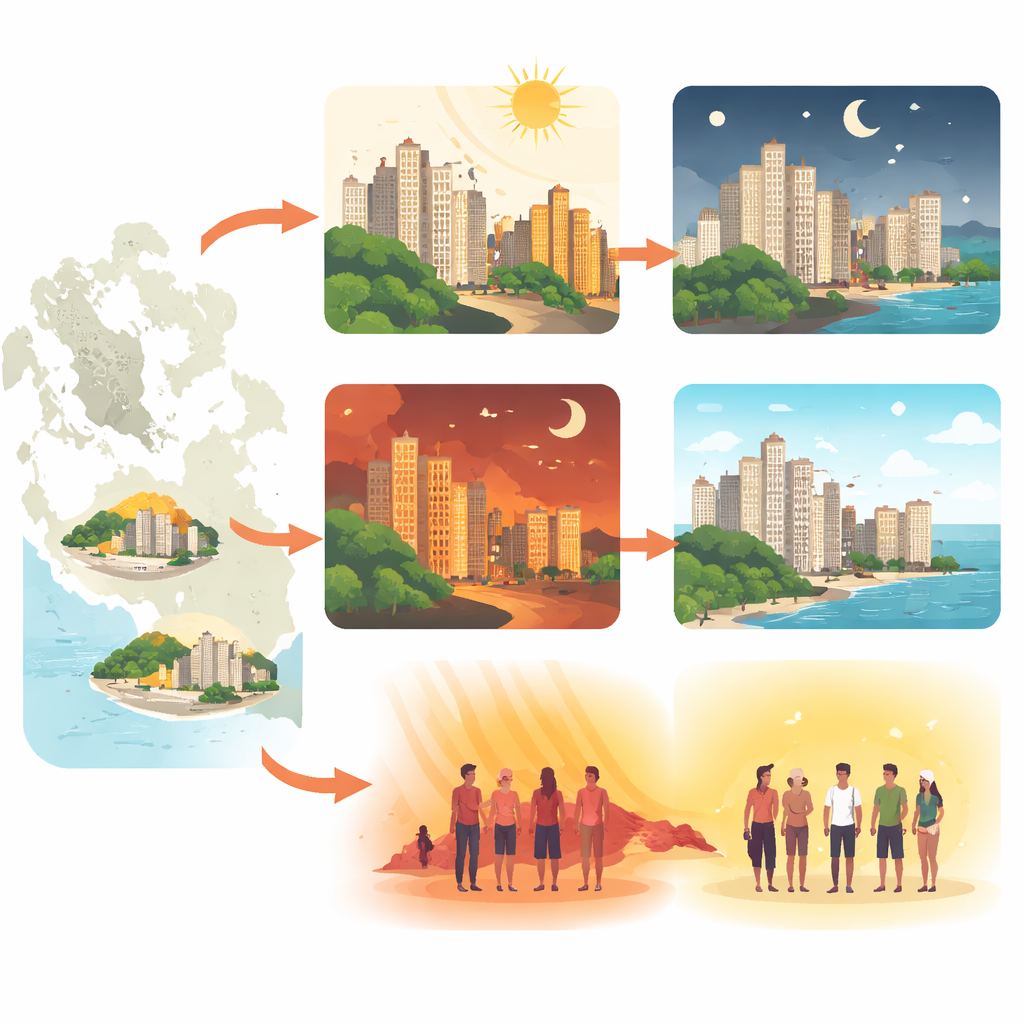
Cities are usually warmer than their surroundings, a pattern called the urban heat island. In this work, the team used hourly weather data from both urban and nearby rural stations to see how strong this effect is in Kuala Lumpur and George Town. They tracked not just plain air temperature but also two measures that better reflect human discomfort by including humidity and sunshine. On average, city air was a couple of degrees hotter than the countryside—about 2.1 °C warmer in Kuala Lumpur and 2.9 °C warmer in George Town, with the strongest gaps in the late afternoon and evening. In George Town, sea breezes sometimes created a midday dip in city heat, while the inland city tended to stay warm throughout the day.
When Heat Waves and City Heat Collide
The researchers then asked what happens when naturally hot spells—heat waves—hit these already warm cities. They defined heat waves using very hot days relative to each place’s recent history, rather than a single fixed temperature, and found that urban stations experienced more of these events than rural ones. During heat waves, the city–countryside difference in temperature often grew, with Kuala Lumpur’s evening gap rising toward 3 °C and George Town’s even higher. But the pattern was not simple: in some hours and seasons the gap shrank because rural areas also heated up sharply. This mixed behavior shows that city heat and heat waves do not always add together in a predictable way; wind, humidity, and coastal breezes can either soften or sharpen the contrast.
Adding Up the Hidden Burden of Heat
Standard heat measures often focus on single peaks—how hot the hottest day gets or how many heat waves occur. To better capture what people actually endure, the team created a new metric called cumulative heat exposure. Instead of looking only at extremes, this measure adds up every hour when heat goes above a high threshold, giving a sense of how much “extra” warmth builds up over daytime hours. Using this lens, they found that residents of urban Kuala Lumpur received roughly 0.53 °C of extra heat every hour in March, and urban George Town residents about 0.35 °C in April, compared with what would be expected under more typical conditions. Importantly, months with modest city–countryside differences could still deliver high cumulative exposure, meaning that a day that does not look especially extreme on paper may still be taxing for the human body.
What Drives Dangerous Heat in Tropical Cities
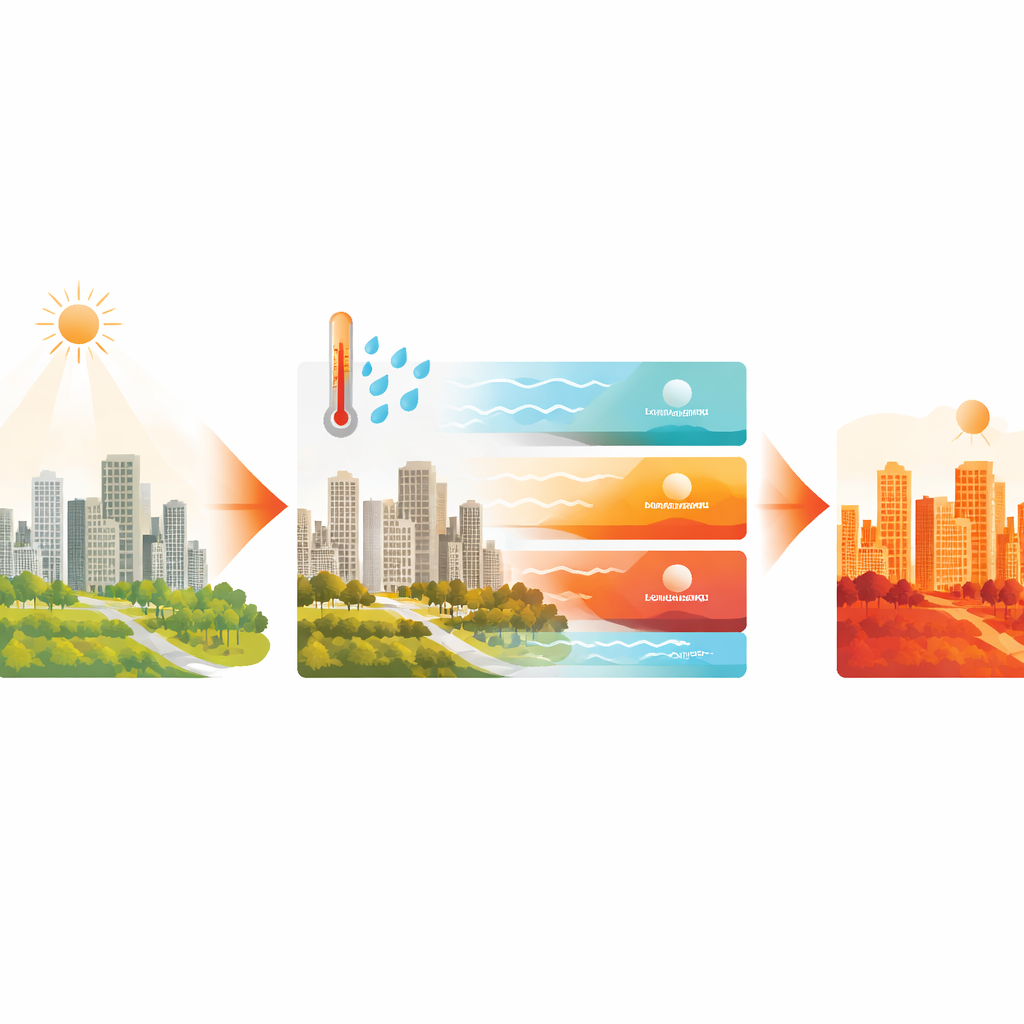
To understand which weather factors matter most, the authors used a machine-learning approach that can handle complex, non-linear relationships. Across both cities and both urban and rural sites, air temperature emerged as the main driver of cumulative heat exposure, with humidity and wind playing secondary roles. High humidity, especially near the coast, limited the body’s ability to cool itself through sweat, while stronger winds generally helped reduce heat build-up by moving warm air away. The analysis also revealed city-specific temperature “trigger points”: in some locations, sustained exposure above about 27–30 °C sharply increased the chance of harmful heat build-up, even when individual hourly readings did not seem extreme.
What This Means for People on the Ground
In clear terms, the study shows that people in Kuala Lumpur and George Town are living with prolonged, not just occasional, heat stress, and that this burden peaks from roughly February to June. Because both the level and duration of heat matter, city leaders cannot rely on single temperature cutoffs alone. Instead, they need city-specific plans that anticipate months when cumulative heat exposure will be highest—shifting outdoor work and school activities to cooler times, ensuring access to shade and water, and reshaping urban areas with more greenery, reflective surfaces, and better airflow. Though focused on two Malaysian cities, the findings offer a warning and a toolkit for many other hot, humid cities facing a future of longer, more intense heat.
Citation: Khan, N., Sutanto, M.H., Khadir, F.K.B.A. et al. Evaluating the relationship between heat waves and urban heat islands in tropical cities: a case study of Kuala Lumpur and George Town. Sci Rep 16, 11815 (2026). https://doi.org/10.1038/s41598-026-41562-8
Keywords: urban heat island, heat waves, tropical cities, heat stress, cumulative heat exposure