Clear Sky Science · en
Multiplex real-time PCR with high-resolution melting analysis for rapid identification of carbapenem and colistin resistance genes in clinical Enterobacterales isolates
Why faster infection tests matter
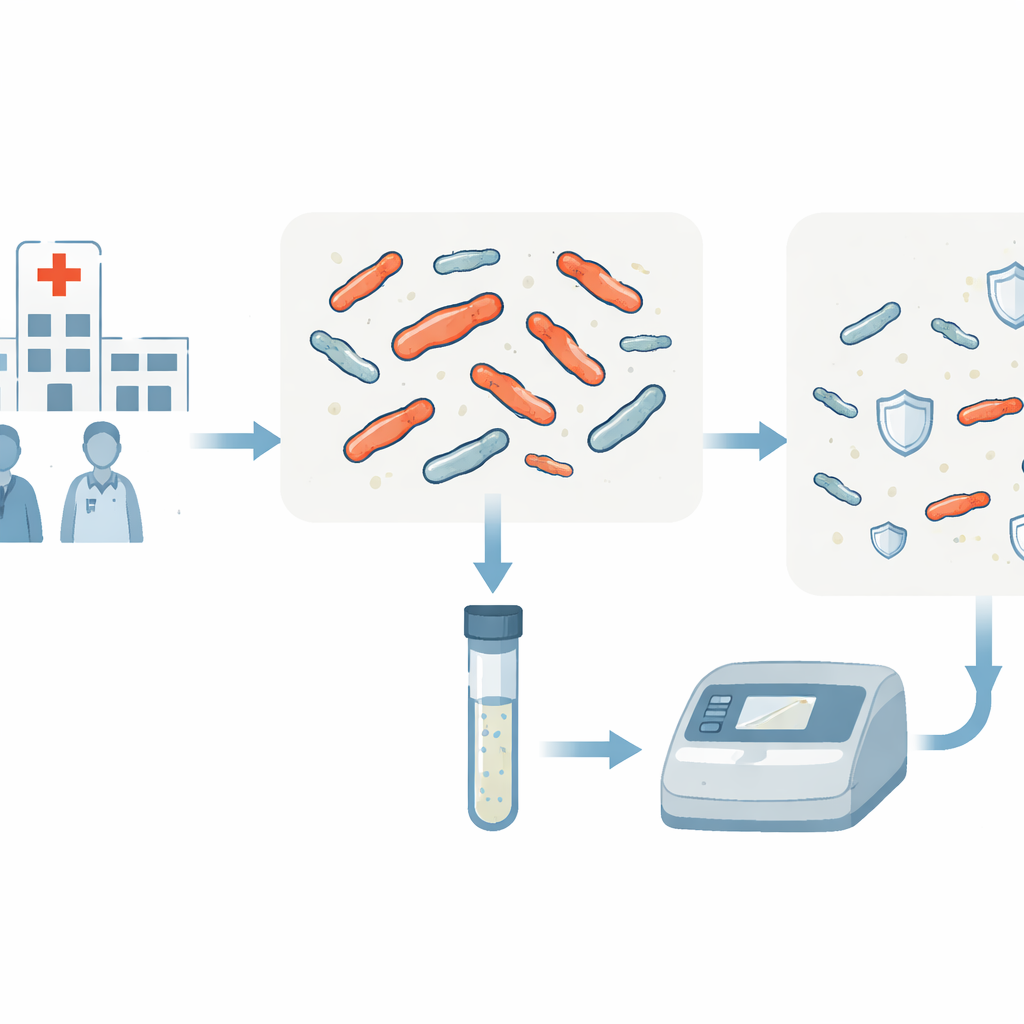
When people land in the hospital with serious infections, doctors often face a race against time. Some common gut bacteria have evolved ways to shrug off even our strongest antibiotics, turning routine infections into life‑threatening emergencies. Standard lab tests can take days to reveal which drugs will work, delaying the right treatment and allowing dangerous, highly resistant strains to spread. This study describes a fast, affordable genetic test that can spot key resistance traits in these bacteria within hours, using equipment that many hospitals already own.
Old antibiotics, new threats
The work focuses on a group of bacteria called Enterobacterales, which include familiar names such as Escherichia coli, Klebsiella pneumoniae, and Salmonella. These microbes can cause infections in the bloodstream, lungs, urinary tract, and gut, both in hospitals and in the community. For years, doctors have relied on powerful drugs called carbapenems to treat infections that resist many other antibiotics. As those drugs have faltered, an older drug, colistin, has become a last‑resort option. Alarming reports now show that some bacteria are becoming resistant even to colistin, raising the specter of infections that are almost impossible to treat.
Genes that disarm our best drugs
The key to this rising threat lies in a handful of resistance genes. Certain genes, known broadly as carbapenemase genes, allow bacteria to destroy carbapenem antibiotics. Others, grouped under the name mcr, can protect bacteria from colistin. Many of these genes are carried on mobile pieces of DNA that can hop between bacteria, speeding their spread. In Thailand and across Asia, strains of Klebsiella and E. coli that carry multiple carbapenemase genes at once have become increasingly common, and mobile colistin resistance genes mcr‑1 and mcr‑3 are being found in Salmonella and other Enterobacterales. Knowing whether a patient’s infecting strain carries these specific genes can guide doctors toward newer drug combinations that are more likely to work, but traditional tests are too slow or too limited to keep up.
A single fast test for many bad actors
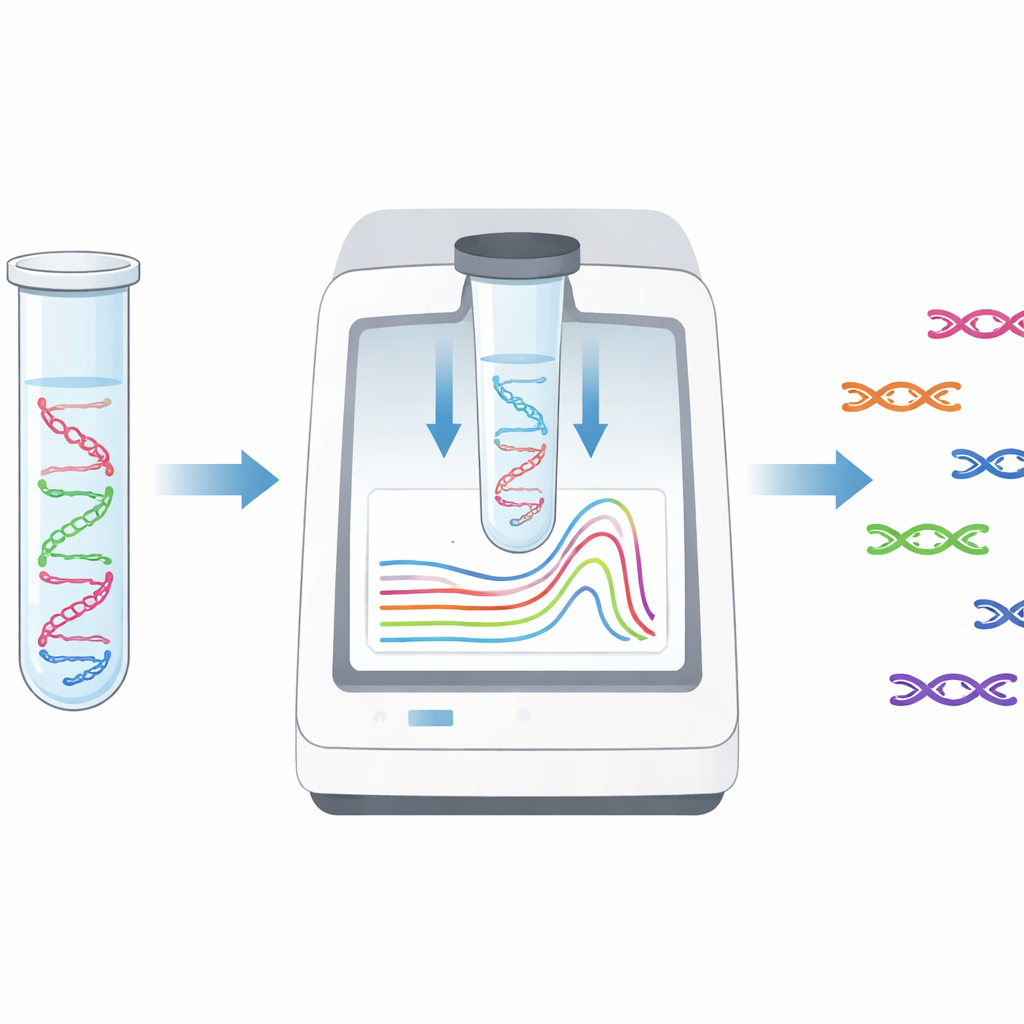
The researchers developed a test that can detect seven important resistance genes in a single tiny tube, in less than four hours from purified bacterial DNA. The method relies on real‑time PCR, a standard technology that became widespread during the COVID‑19 pandemic. Instead of using expensive fluorescent probes, the team paired PCR with a technique called high‑resolution melting, which watches how pieces of DNA melt apart as they are gently heated. Each target gene produces a DNA fragment with a slightly different melting behavior, like a barcode made of temperature. By designing carefully tuned primers, the team ensured that the seven genes of interest—five carbapenem resistance genes and two colistin resistance genes—each produced a clear, distinct melting signal.
Putting the test to work in real hospitals
To see how well this approach worked in practice, the team examined 576 multidrug‑resistant Enterobacterales isolates collected from Thai hospitals, plus a well‑characterized reference strain. They compared their new test against conventional PCR, a widely accepted genetic method. The new assay correctly identified resistance genes with an overall sensitivity of about 97% and a specificity of about 99.5%, meaning it almost never missed a gene or produced a false alarm. It performed particularly well at spotting common carbapenemase genes in Klebsiella and E. coli and mcr‑1 and mcr‑3 in colistin‑resistant Salmonella and Klebsiella. In about a quarter of colistin‑resistant isolates, the test detected mcr genes, and it revealed many strains that carried more than one resistance gene at once.
Seeing overlapping signals more clearly
Some of the most worrisome bacteria carry two carbapenemase genes together, notably NDM and OXA‑48‑like, which are common in Thailand and neighboring countries. Because the melting signals for these genes partially overlap, they can be hard to tell apart when both are present. To solve this, the researchers used advanced analysis software that lines up and compares melting curves against reference patterns. This extra step improved the test’s ability to detect dual‑gene strains, raising sensitivity for combined NDM and OXA‑48‑like from about 83% to nearly 93%. The assay also showed strong performance in quantitative tests using cloned DNA standards, reliably detecting as few as roughly one hundred copies of a gene.
What this means for patients and hospitals
For patients, this kind of test does not replace standard culture and drug‑sensitivity testing, but it can give doctors an early heads‑up about whether they are facing a routine infection or a highly resistant one. For hospitals and public health agencies, it offers a practical way to track the spread of critical resistance genes and to spot dangerous combinations before they become entrenched. Because the assay is probe‑free, uses off‑the‑shelf reagents, and runs on widely available real‑time PCR machines, it could be rolled out in many laboratories at relatively low cost. In short, this study shows that a single, rapid genetic assay can provide a broad view of some of the most important resistance threats in Enterobacterales, helping to support better antibiotic choices and stronger infection control.
Citation: Luk-In, S., Phopin, K., Bangmuangngam, S. et al. Multiplex real-time PCR with high-resolution melting analysis for rapid identification of carbapenem and colistin resistance genes in clinical Enterobacterales isolates. Sci Rep 16, 11901 (2026). https://doi.org/10.1038/s41598-026-41530-2
Keywords: antimicrobial resistance, carbapenem-resistant bacteria, colistin resistance, rapid PCR diagnostics, hospital infections