Clear Sky Science · en
Understanding private landowner strategies for wild pig management using cluster analysis and structural equation modeling
Why these hidden neighbors matter
Across much of the southern United States, wild pigs have quietly become one of the most destructive animals on the landscape. They tear up fields and forests, threaten livestock with disease, and cost farmers and landowners hundreds of millions of dollars each year. Yet the success or failure of any control effort hinges on a less visible factor: how the people who own the land think and feel about managing these animals. This study looks closely at private landowners in Arkansas, Louisiana, and East Texas to understand who is already fighting wild pigs, who is not, and why their beliefs and social circles shape what they are willing to do.
Three kinds of landowners on the front lines
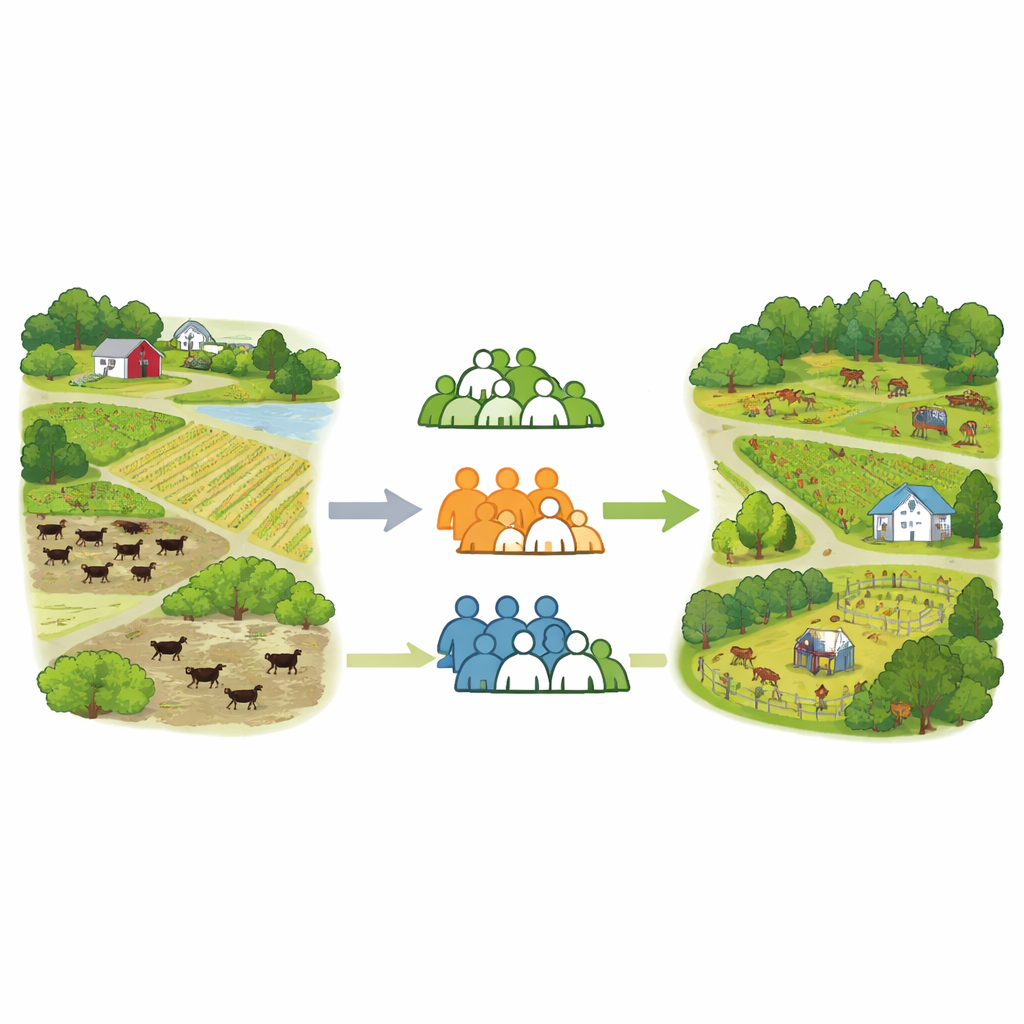
The researchers mailed detailed questionnaires to thousands of private landowners who owned at least 30 acres in the Western Gulf Coastal Plain. From more than 800 usable responses, they grouped landowners into three broad types based on their experience with wild pigs and their past actions. “Unaware Bystanders” had seen little damage, knew less about wild pigs, and rarely tried to control them. “Frontline Responders” had suffered heavy damage, were very familiar with wild pigs, and were actively trapping or otherwise fighting them. Sitting between these extremes were “Cautious Observers,” who had noticed some pigs and some damage but had taken only modest steps to respond.
What beliefs sit behind action or inaction
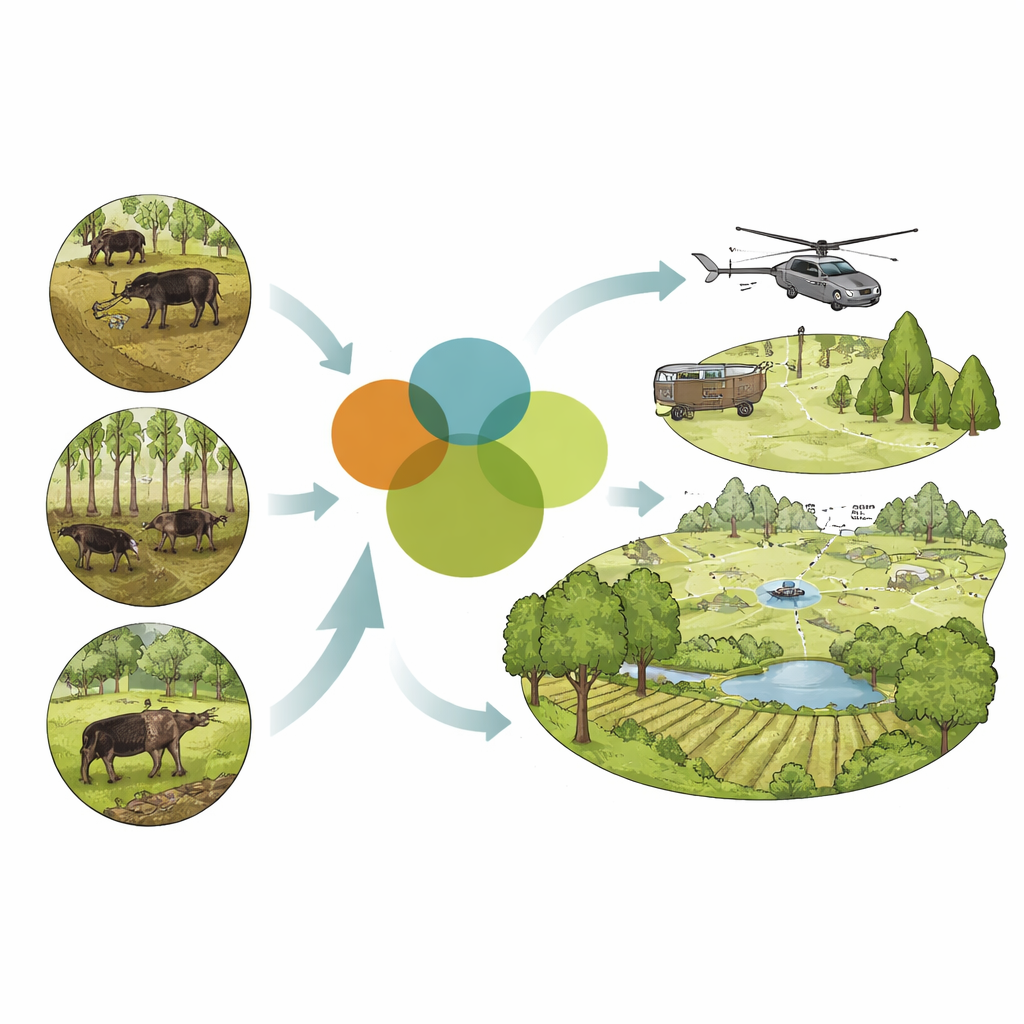
To dig deeper, the team used a well-established psychology framework called the Theory of Planned Behavior. In simple terms, it says that people’s actions grow out of three things: what they believe and feel about a behavior (their attitudes), what they think important others expect them to do (social norms), and how much control or confidence they feel they have (perceived control). In this study, attitudes included how acceptable landowners found different control methods, from trapping and sharpshooting to helicopter hunts and technical assistance. Beliefs covered whether they saw wild pigs as a nuisance, a threat to nature and the economy, and something that should be eliminated wherever possible.
How thoughts turn into willingness to act
Using a statistical approach called structural equation modeling, the researchers mapped how these inner factors related to landowners’ stated intentions—such as willingness to work with neighbors, to manage pigs on their own land, or to learn more about control. For the full sample, people who strongly believed wild pigs were harmful tended to hold more favorable attitudes toward control options, and these positive attitudes in turn were the strongest driver of their intention to act. Social pressure from neighbors and local peers had a smaller but still meaningful influence. Surprisingly, simply feeling confident in their ability to manage pigs did not, on its own, predict stronger intentions.
Different groups, different levers to pull
When the same analysis was run separately for each landowner type, important differences emerged. Among Unaware Bystanders and Frontline Responders, beliefs and attitudes carried the most weight, while neighbor influence and feelings of control mattered less. For Cautious Observers, however, both attitudes and a sense of control helped explain their willingness to act, and social norms played a somewhat larger role. In practice, this means that owners who have little experience with wild pigs may first need basic information about risks and damage, while heavily affected owners respond better to detailed, evidence-based guidance on which control methods work. Those in the middle may be swayed by seeing peers take visible, rewarded action and by getting practical help that boosts their confidence.
Turning insight into better on-the-ground results
For agencies and extension programs, the study’s message is clear: a one-size-fits-all campaign against wild pigs is unlikely to succeed. Instead, outreach should be tailored to each landowner segment—broad awareness efforts and simple materials for the least engaged, advanced technical support and peer-leader roles for the most engaged, and social network–based nudges and low-barrier incentives for the hesitant middle. By designing programs that align with landowners’ beliefs, attitudes, and social environments, policymakers can turn scattered individual decisions into coordinated, landscape-scale action—giving farms, forests, and communities a better chance to stay ahead of this fast‑spreading invasive animal.
Citation: Tian, N., Gan, J. Understanding private landowner strategies for wild pig management using cluster analysis and structural equation modeling. Sci Rep 16, 12095 (2026). https://doi.org/10.1038/s41598-026-41507-1
Keywords: wild pigs, private landowners, invasive species management, landowner attitudes, rural outreach