Clear Sky Science · en
Short term real-world effectiveness of faricimab in neovascular age-related macular degeneration patients in the Republic of Korea
Why this matters for everyday sight
As people live longer, more of us face diseases that quietly steal vision. One of the most serious is a “wet” form of age‑related macular degeneration, which can blur the center of what we see and threaten driving, reading and independent living. This study looks at how a newer eye injection, faricimab, performs in everyday clinics across Korea—not just in carefully controlled trials—offering clues about what patients and families can realistically expect.
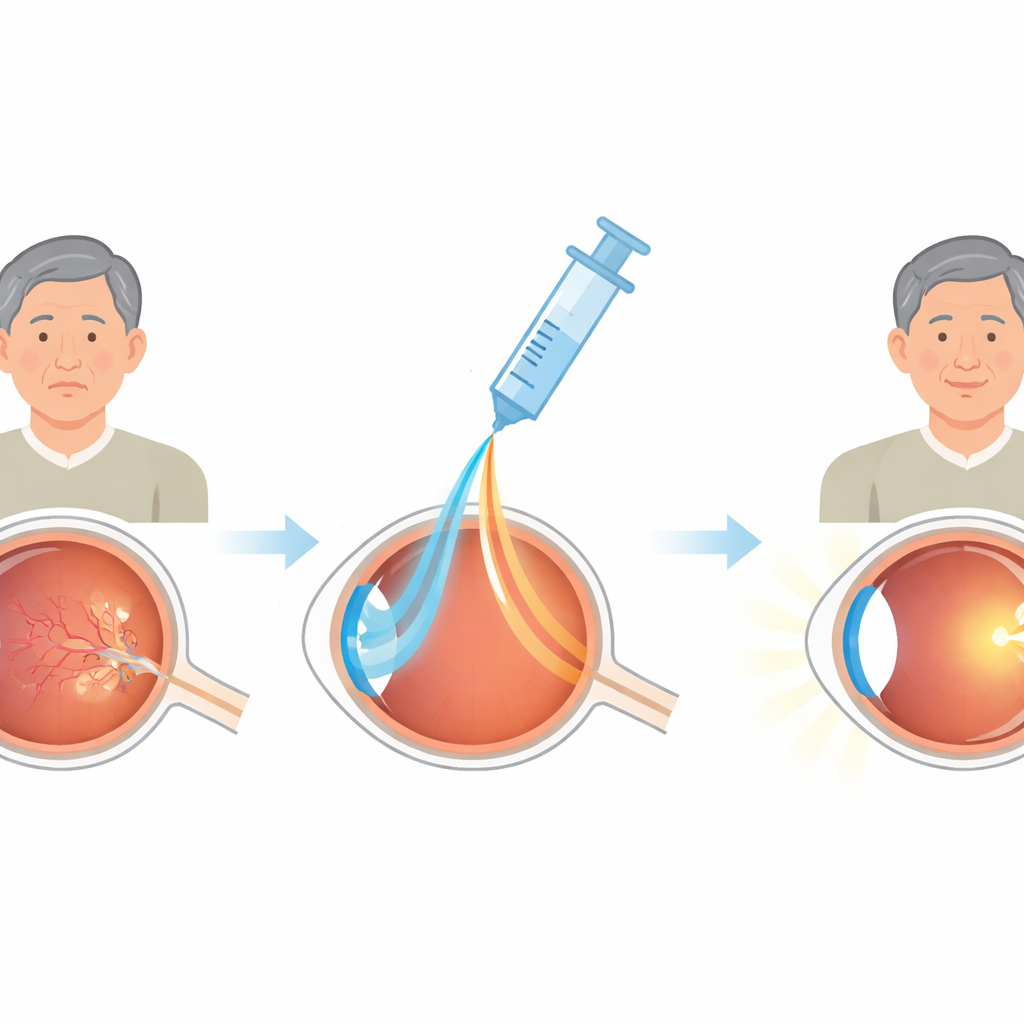
A common cause of vision loss in older adults
Age‑related macular degeneration (AMD) damages the macula, the tiny spot at the center of the retina that we use for sharp vision. In the “wet,” or neovascular, form, fragile new blood vessels grow under the retina and leak, causing swelling and scarring. Standard treatment is to inject drugs into the eye that block vascular endothelial growth factor, a signal that drives those vessels to grow. These medicines have transformed care but often require frequent visits and repeated injections, which can be exhausting for patients and their caregivers.
A medicine that targets two troublemakers
Faricimab is a newer injectable drug designed to block not just one, but two key signals involved in leaky blood vessels and inflammation. Alongside vascular endothelial growth factor A, it also targets angiopoietin‑2, another molecule linked to unstable vessels. Large international trials showed that faricimab could keep vision stable while allowing some patients to stretch treatment visits as far as four months apart. But trial volunteers are usually closely monitored and highly selected, so doctors wanted to know: Would similar benefits appear in typical Korean patients with mixed health histories and real‑life challenges?
Real‑world results from eight hospitals
Researchers gathered anonymized data from 286 people (293 treated eyes) with wet macular degeneration who received faricimab at eight university hospitals between early 2024 and mid‑2025. Most had already tried other eye injections, while about one in five were receiving their first injectable treatment. Doctors measured two main outcomes over up to a year: how clearly patients could see letters on an eye chart and how thick the center of the retina was on imaging scans, a marker of swelling. On average, vision modestly improved after treatment and was significantly better at three months than at the start. Retinal swelling dropped sharply within the first month and stayed lower throughout the year, showing a strong and consistent anatomical response.
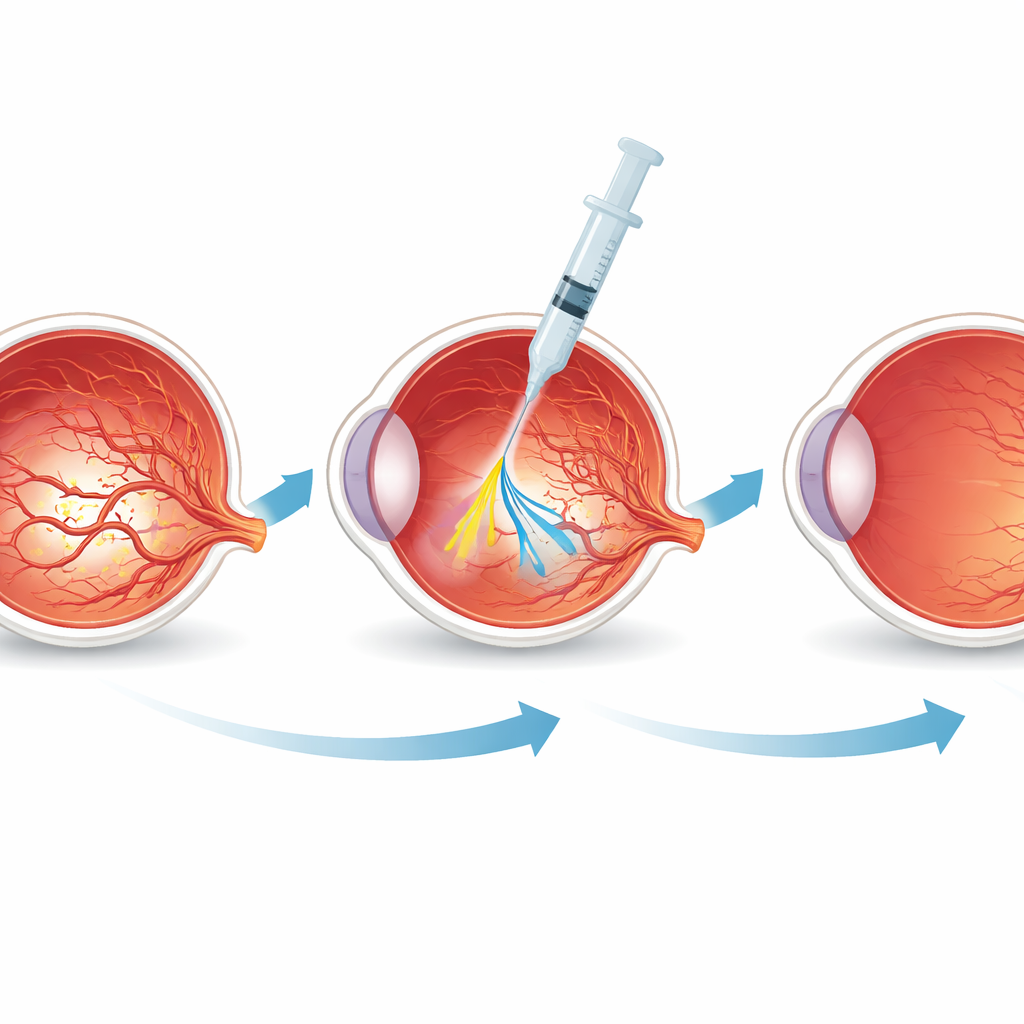
Who fared best with treatment
When the team looked more closely at different groups, some patterns emerged. Men and women did similarly. Younger patients, especially those under 60, tended to see better than older groups over time, even though their retinal thickness did not always improve as much; they also started with slightly healthier retinas. Eyes receiving injections for the first time generally did better than those that had already been through many rounds of other drugs, showing stronger early gains in both vision and swelling. The study also tracked how much each patient’s retinal thickness bounced up and down between visits. Eyes with steadier, less “wobbly” thickness tended to have better vision at six months, hinting that keeping the retina stable may be as important as any single measurement.
What this means for patients and families
For people living with wet macular degeneration in Korea, this real‑world study offers cautious good news. Faricimab reliably dried out swollen retinas and provided modest vision gains for many patients, with especially encouraging results in younger individuals and those treated early in their disease course. While it is not a cure—and some patients still needed to switch back to other drugs—it appears to be a promising option that may help preserve sight and reduce the long‑term burden of care. The findings support the idea that starting effective therapy early and keeping retinal swelling as stable as possible can help patients hold on to the clear central vision needed for everyday life.
Citation: Chung, D.H., Jee, D., Roh, Y.J. et al. Short term real-world effectiveness of faricimab in neovascular age-related macular degeneration patients in the Republic of Korea. Sci Rep 16, 12316 (2026). https://doi.org/10.1038/s41598-026-41488-1
Keywords: age-related macular degeneration, faricimab, retinal injections, vision preservation, real-world ophthalmology