Clear Sky Science · en
Systematic multi-reference vertebrate ACE2 sequence similarity analysis predicts species susceptibility to SARS-related sarbecoviruses
Why this research matters to everyday life
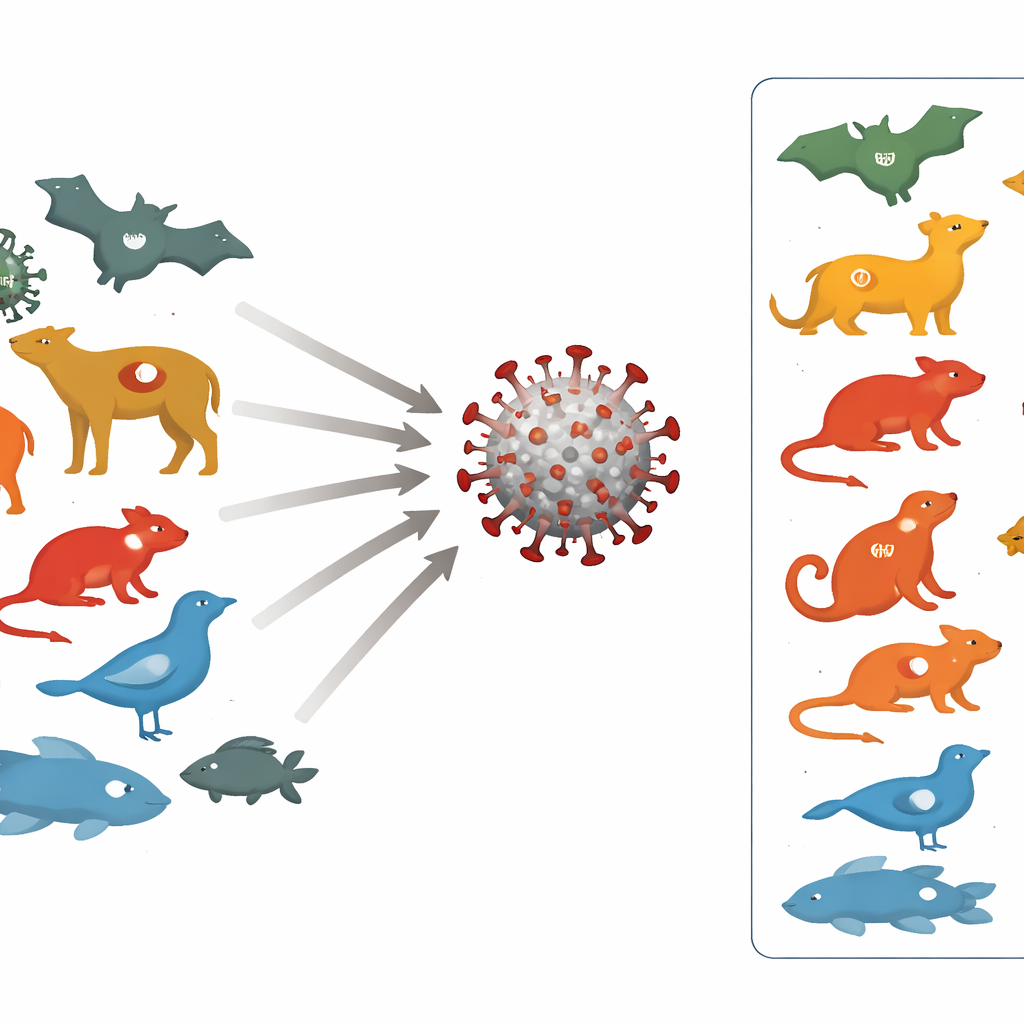
Viruses like SARS-CoV-2 do not respect species boundaries. They can leap from bats to people, from people to pets, and into farm or wild animals. Each new jump is a chance for the virus to adapt and for new variants to emerge. This study introduces a practical way to scan hundreds of animal species and estimate which ones are most likely to be infected by SARS-related coronaviruses, based on a single key protein these viruses use to enter cells. The goal is to help scientists, wildlife managers, and public health officials focus limited surveillance resources on the animals that matter most for preventing the next spillover event.
A single doorway shared across species
Many coronaviruses, including SARS-CoV and SARS-CoV-2, use the same cellular “doorway” called ACE2 to infect their hosts. ACE2 is present in humans and in many vertebrate animals, but its exact structure varies from species to species. Those small differences can make it easier or harder for a virus to grab on and enter cells. The authors reasoned that if you compare the part of ACE2 that actually contacts the virus across many animals, you can estimate which species are most likely to be susceptible, without doing complex structural modeling or large-scale animal experiments.
Building a broad comparison tool
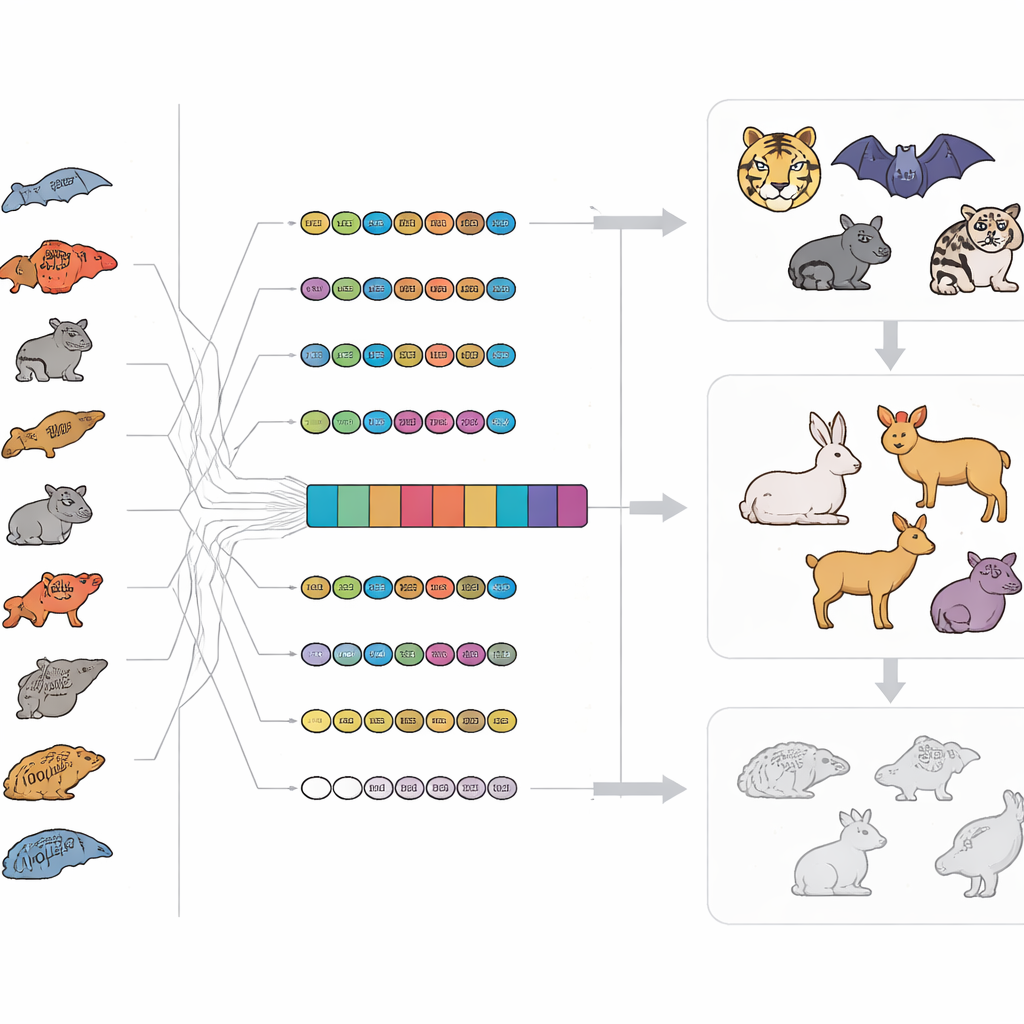
The researchers created a pipeline they call Multi-reference Similarity Analysis of Receptor Sequences, or MrSARS. They collected 825 ACE2 sequences from vertebrates, focusing on the specific amino acids that physically touch coronavirus spike proteins. Instead of comparing every species only to humans, they chose five reference animals whose ACE2 is known to support infection by SARS-CoV-2 or its variants: human, mouse, white-tailed deer, American mink, and a horseshoe bat. For each test species, MrSARS calculates how similar its ACE2 contact region is to each reference, normalizes the scores, and sums them into a single “aggregate similarity” value. Higher scores indicate a stronger overall resemblance to ACE2 from species already known to be infected.
Who looks most vulnerable on paper?
Using this approach, mammals dominated the list of likely hosts. Primates, even-toed hoofed animals such as deer and cattle relatives, many carnivores like cats and mink, rodents, and bats scored highest. Non-mammalian vertebrates, including birds and fish, generally appeared resistant at the receptor level. To make the rankings easier to interpret, the team repeatedly re-ran the analysis with randomly chosen reference species to see how often each animal’s true score rose above those random expectations. This allowed them to classify species into high-confidence susceptible, medium-confidence, or putatively resistant groups. Notably, most bats fell into the medium-confidence category, reflecting both their long history with sarbecoviruses and the wide diversity of ACE2 variants they carry.
Putting predictions to the test
Predictions are only useful if they hold up in the lab. The authors therefore took ACE2 genes from a selected set of animals representing different score ranges—such as a lemur, reindeer, narwhal, pigs, bats, hedgehog, birds, and frogs—and expressed these receptors in human cells. They then challenged the cells with harmless surrogate viruses coated with spike proteins from the original SARS‑CoV‑2 strain, several variants of concern (including Beta, Delta, and Omicron sublineages), and related bat coronaviruses. In most cases, species in the high-confidence group allowed strong spike-driven entry, while those predicted to be resistant did not. Some ACE2 variants, especially from bats, showed virus- and variant-specific behavior: resistant to one sarbecovirus, permissive to another. Overall, the experimental data supported the MrSARS rankings for the majority of tested ACE2 proteins.
Fitting into the bigger scientific picture
To see how their tool compares with existing work, the team reviewed more than a hundred earlier studies that had predicted or measured animal susceptibility using many different methods—from simple sequence comparisons to machine learning, binding assays, cell culture, and real infections in animals. High-confidence species identified by MrSARS captured most animals that other in silico and in vitro studies flagged as susceptible. Agreement with cell culture and live-animal infection data was more modest, reflecting the fact that real-world host range depends on far more than just the receptor: habitat overlap, transmission routes, tissue expression of ACE2, and the animal’s immune defenses all play crucial roles.
What this means for future outbreaks
This work shows that a relatively simple, transparent comparison of a virus’s entry protein receptor across species can provide a powerful first-pass map of where that virus might go next. MrSARS is flexible—it can, in principle, be applied to any virus that uses a known receptor—and lightweight enough to run on a standard computer. Its predictions are not a final answer about which species will actually fuel an outbreak, but they offer a practical way to narrow down thousands of possibilities to a manageable list of priority targets for experiments and field surveillance. Used alongside ecological and immunological data, such tools can help the global community better anticipate and hopefully prevent dangerous viral spillovers.
Citation: Frank, J.A., Gan, E.X., Hooper, W.B. et al. Systematic multi-reference vertebrate ACE2 sequence similarity analysis predicts species susceptibility to SARS-related sarbecoviruses. Sci Rep 16, 13995 (2026). https://doi.org/10.1038/s41598-026-41410-9
Keywords: zoonotic spillover, ACE2 receptor, SARS-related coronaviruses, animal host range, virus surveillance