Clear Sky Science · en
Gaze transition entropy and automation trust in a multitasking workspace
Why watching eye movements matters in cockpits
Modern aircraft cockpits flood pilots with moving gauges, warning lights, and automated helpers. In this busy visual world, pilots must constantly decide when to trust automation and when to check it. This study explores a deceptively simple question with big safety implications: can we learn about a pilot’s trust in automation just by studying how their eyes move around the screens? By measuring how predictable or random gaze shifts are, the researchers look for a new, objective window into the relationship between visual attention and trust in automated aids.
Many screens, one pair of eyes
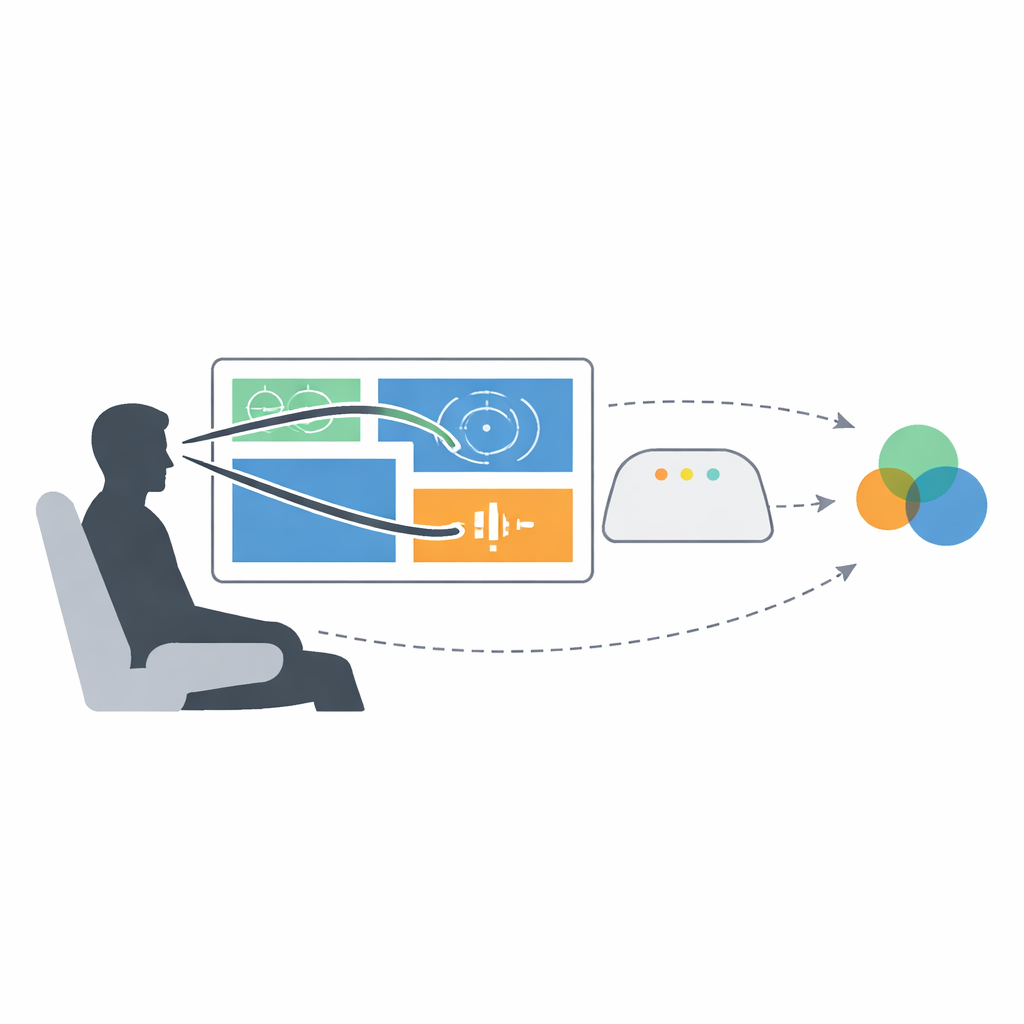
The researchers reexamined data from an earlier simulator study in which 40 volunteers played the role of pilots in a multitasking environment called the Multi-Attribute Task Battery. Participants juggled three main tasks on a large screen: a system monitoring task that watched over simulated engines, a tracking task that kept a moving cursor centered, and a communication task that mimicked radio messages. An automated signaling system sometimes warned them about engine problems, but it was imperfect: it could correctly detect problems or trigger false alarms. While participants worked through easier and harder versions of the tracking task, a high-speed eye tracker recorded where they looked and how their gaze shifted between the three key display regions.
What “gaze entropy” tells us about searching
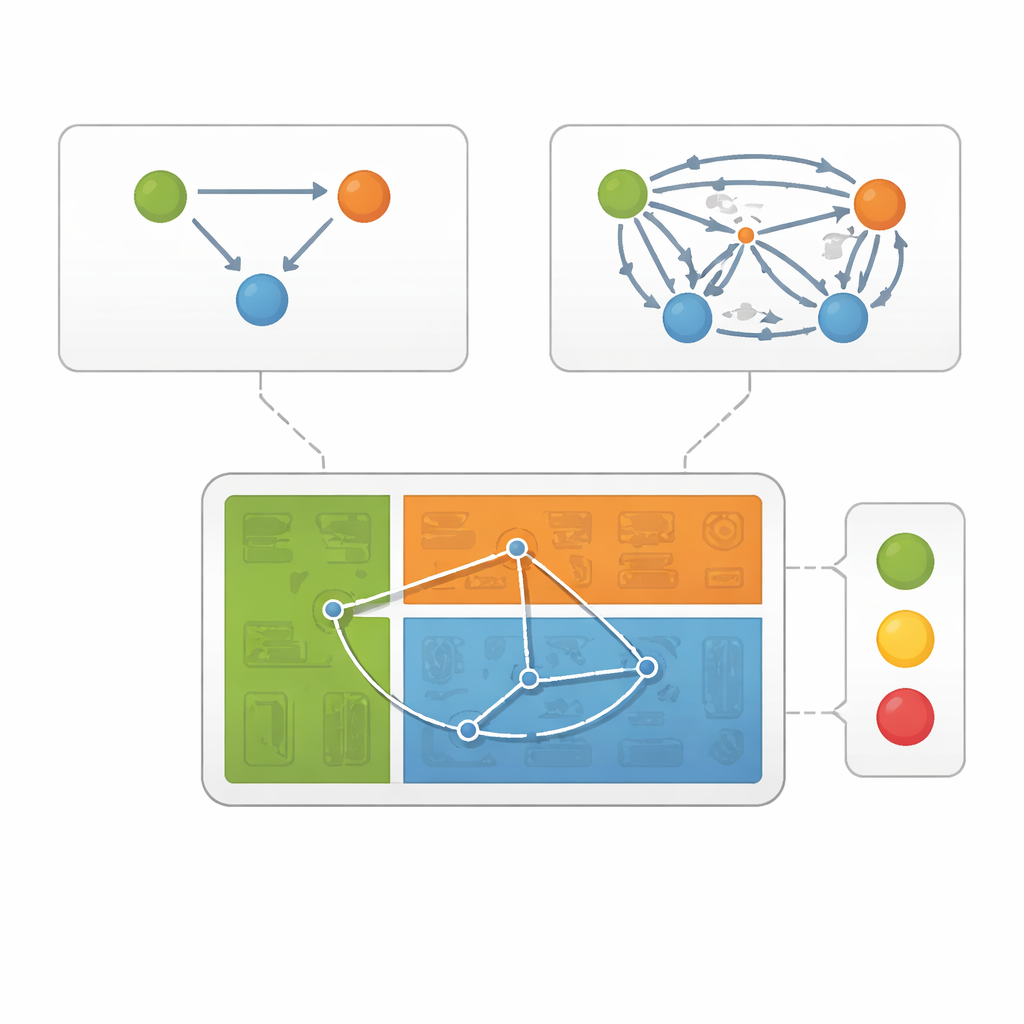
Instead of simply counting how long people looked at the automation, this study focused on two related measures of randomness, or entropy, in eye movements. Stationary gaze entropy captures how evenly someone’s gaze is spread across different areas of the screen. Gaze transition entropy captures how predictable or unpredictable their gaze jumps are as they move from one area to another. Higher values mean broader, more exploratory scanning and less routine, repetitive eye movements. Together, these measures offer a richer picture of how people visually explore complex workspaces, beyond traditional metrics that treat each display area in isolation.
Trust built on what automation actually does
To connect eye behavior with trust, participants rated the automated signaling system using two questionnaires. One provided a general trust score, while the other broke trust into three parts: trust based on how well the system performs, trust based on understanding how it works, and trust based on its underlying purpose or intent. The researchers used Bayesian statistical models to see which of these trust dimensions best predicted gaze entropy. Surprisingly, only performance-based trust—the trust grounded in what the automation actually does—showed strong links to both kinds of gaze entropy. When people reported higher performance-based trust, their eye movements were more widespread and less predictable, suggesting more exploratory scanning across the display.
Attention patterns under changing workload
The study also compared eye movements when the tracking task was easy versus difficult. Under harder tracking conditions, both gaze entropy measures decreased, meaning participants’ eyes focused more narrowly and followed more routine patterns. This fits with the idea that heavier workload forces people to concentrate on the most demanding task and leaves less capacity for broad exploration. Yet even after accounting for difficulty, performance-based trust still aligned with more exploratory gaze. In contrast, trust based on understanding how the automation works, or on beliefs about the designer’s intentions, did not show reliable ties to these eye movement patterns. This suggests that gaze entropy is particularly sensitive to trust formed from visible system behavior, not deeper beliefs about algorithms or motives.
What this means for safer automation
For a general audience, the key takeaway is that the way operators move their eyes around complex displays can reveal how much they trust an automated helper—especially when that trust is grounded in observed performance. More exploratory, less predictable scanning appears to accompany higher performance-based trust, at least in this lab setting. While real cockpits are more complicated and experienced pilots may scan differently than student volunteers, gaze entropy offers a promising tool for designers and regulators. By monitoring eye patterns, future systems might detect when trust in automation is drifting too high or too low and adjust training, displays, or alerts to keep humans and machines working safely together.
Citation: Yamani, Y., Jackson, A., Sato, T. et al. Gaze transition entropy and automation trust in a multitasking workspace. Sci Rep 16, 11122 (2026). https://doi.org/10.1038/s41598-026-41338-0
Keywords: automation trust, eye tracking, cockpit displays, human factors, multitasking