Clear Sky Science · en
Atorvastatin reduces recurrent decompensation events in advanced cirrhosis in a randomized placebo-controlled trial
Why this study matters
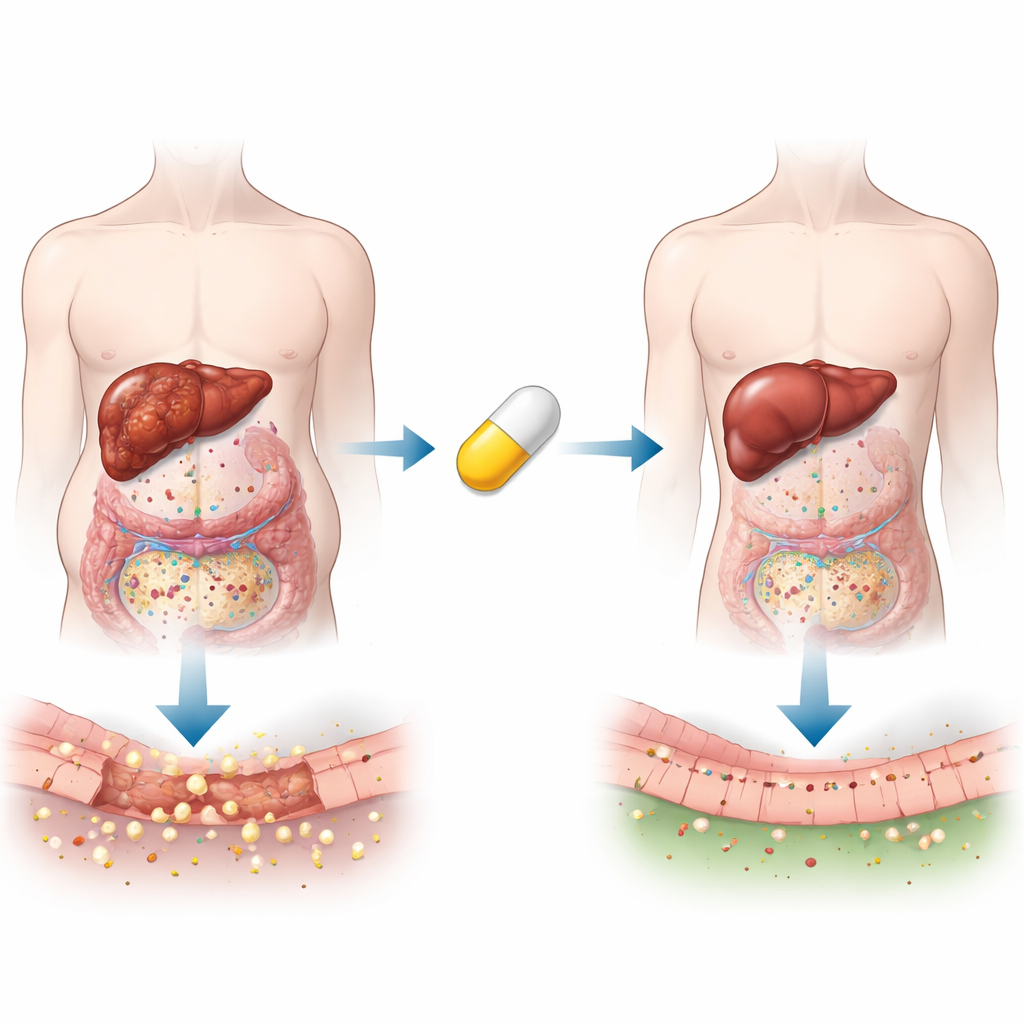
Liver cirrhosis is a common end point of many liver diseases, and once it "decompensates"—meaning fluid buildup, confusion, bleeding, or kidney trouble—patients often cycle through repeated hospital stays and face a high risk of death. This study asks a surprising question with very practical stakes: can a familiar cholesterol pill, atorvastatin, help break that cycle and prevent some of the most dangerous flare‑ups in people with advanced cirrhosis?
A familiar drug in a new setting
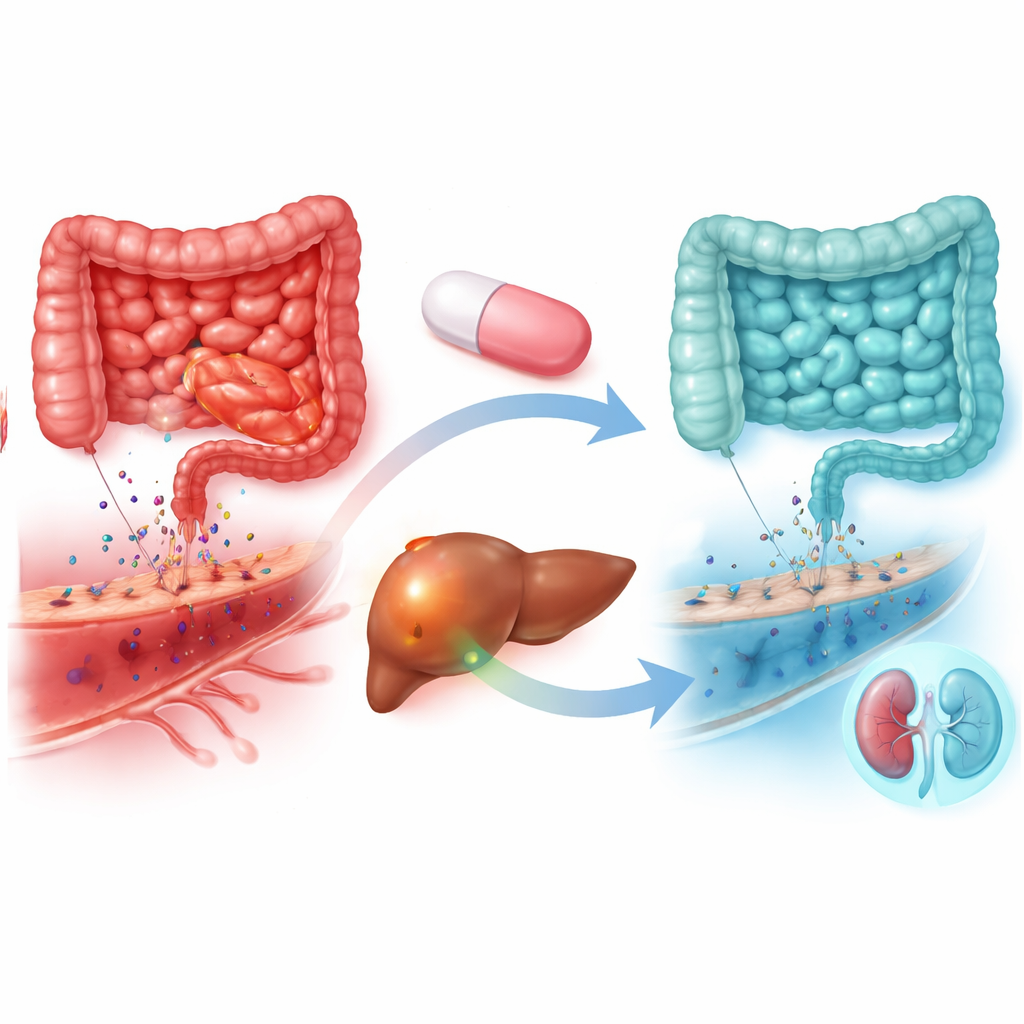
Statins such as atorvastatin are best known for lowering cholesterol and preventing heart disease. But over the past decade, research has shown that they also calm inflammation, reduce scarring, and improve blood flow in many organs, including the liver. The authors reasoned that these broader effects might stabilize fragile cirrhotic livers, particularly by easing strain on the circulation between the gut, liver, and kidneys—a network sometimes called the gut–liver axis. If true, a widely available, inexpensive pill could become an add‑on therapy for very sick liver patients who currently have few options beyond careful supportive care and, in some cases, transplant.
How the trial was done
The team in Egypt ran a rigorous, double‑blind, placebo‑controlled trial at a university hospital. One hundred adults with decompensated cirrhosis—people who had already experienced major complications such as abdominal fluid, confusion, internal bleeding, or kidney failure—were enrolled after they had recovered from an acute episode. Half received atorvastatin 20 mg once daily for six months in addition to standard treatments (like diuretics, beta‑blockers, lactulose, and rifaximin), while the other half received identical placebo capsules. Neither patients nor doctors knew who was getting the real drug. The main outcome was whether serious liver‑related complications came back; the researchers also tracked blood markers linked to inflammation, oxidative stress, and "leakiness" of the intestinal barrier.
What happened to complications
Across six months, recurrent serious problems were noticeably less common in the atorvastatin group. Only about a third of treated patients had new cirrhosis‑related complications, compared with nearly three‑quarters of those on placebo—a relative reduction of about 50 percent, with roughly three patients needing treatment to prevent one person from relapsing. The standout effect involved hepatorenal syndrome, a dangerous form of kidney failure that arises from failing liver circulation: none of the patients on atorvastatin developed this problem, whereas one in five patients on placebo did. There was also a hint that severe bleeding from swollen veins in the esophagus or stomach occurred less often with atorvastatin, though the numbers were too small to be conclusive. Rates of other complications, such as abdominal fluid, confusion, or jaundice, were similar between groups over the relatively short follow‑up.
Clues from blood chemistry
The biological readouts echoed the clinical picture. In patients taking atorvastatin, levels of malondialdehyde—a marker of oxidative damage—fell markedly, while they stayed about the same with placebo. Signals of systemic inflammation, including nuclear factor κB activity, C‑reactive protein, and sedimentation rate, also dropped more strongly with atorvastatin. Two markers linked to the gut–liver connection changed in a favorable direction: zonulin, associated with loosened junctions between intestinal cells, and lipopolysaccharide, a bacterial component that enters the bloodstream when the gut is "leaky." Both decreased substantially with atorvastatin but not with placebo, suggesting tighter gut barriers and less bacterial material reaching the liver and circulation. Kidney function tests improved in the atorvastatin arm, consistent with the lower rate of hepatorenal syndrome, while basic blood counts and electrolytes remained largely stable.
Safety and limits
Overall, atorvastatin was well tolerated in this fragile population. Muscle aches were more frequent in the treatment arm than with placebo, and liver enzyme levels rose modestly, but these changes were mild and did not signal serious injury. Skin rashes and digestive or neurologic complaints occurred at similar rates in both groups. Still, the study had important limits: it followed patients for only six months, was conducted at a single center in Egypt with mostly virus‑related cirrhosis, and did not measure portal pressure directly. The number of specific events such as bleeding episodes was small, so some apparent benefits may reflect chance and need confirmation.
What this means going forward
For people already living with advanced cirrhosis, this trial offers cautious hope. A standard‑dose atorvastatin pill, added to usual treatments, was linked to fewer serious setbacks—especially kidney failure tied to liver disease—and to measurable calming of inflammation and gut leakiness. For a layperson, the takeaway is that a long‑used heart drug may also help "cool down" the angry, over‑stressed gut–liver–kidney system that drives many cirrhosis crises. However, this was a relatively small, short study, and the authors stress that larger, multi‑center trials are needed before atorvastatin can be routinely recommended for this purpose.
Citation: Glal, K.A., El-Haggar, S.M., Abdel-Salam, S.M. et al. Atorvastatin reduces recurrent decompensation events in advanced cirrhosis in a randomized placebo-controlled trial. Sci Rep 16, 9669 (2026). https://doi.org/10.1038/s41598-026-41326-4
Keywords: liver cirrhosis, atorvastatin, hepatorenal syndrome, gut–liver axis, statins